























Discussing Hedges v. Obama
February 7, 2013
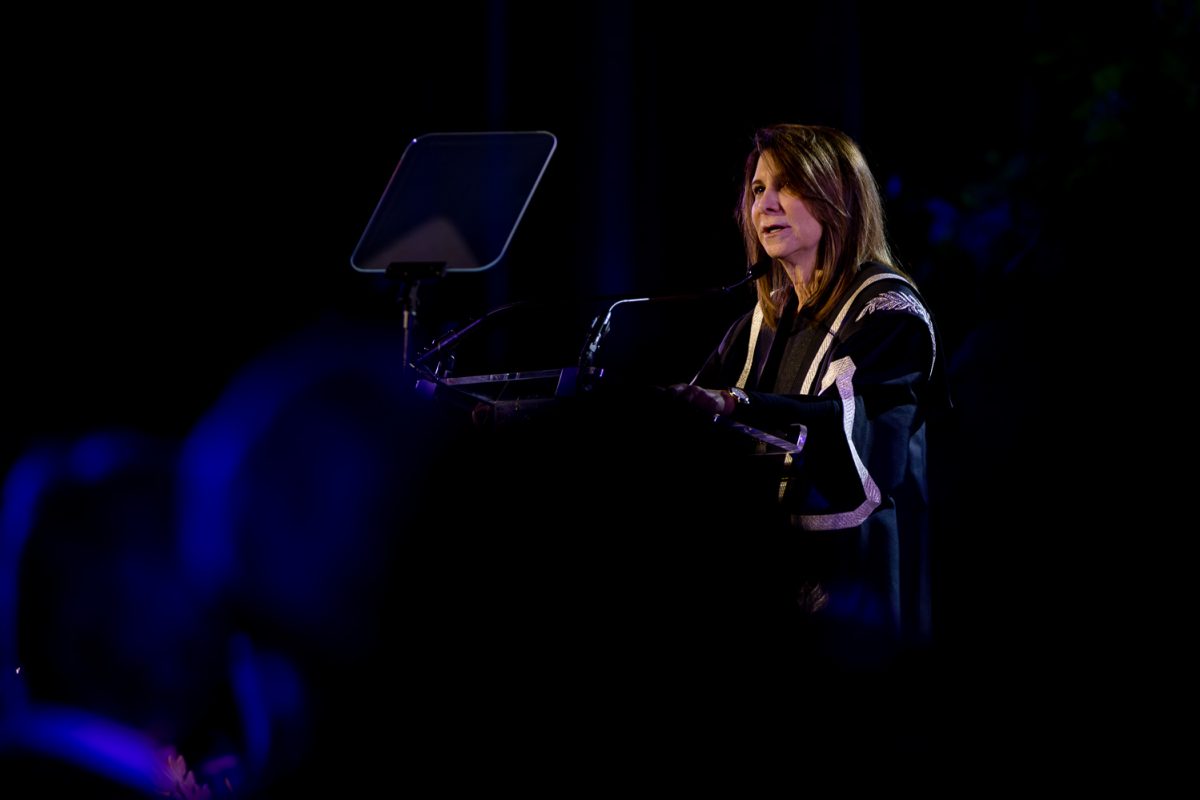
Last night, a panel of lawyers, whistleblowers and the plaintiffs from the Hedges v. Obama case met at the Culture Project to discuss the lawsuit.
Pulitzer Prize-winning journalist Christopher Hedges filed the litigation on Jan. 13, 2012 in response to Section 1021 of the National Defense Authorization Act, which allows the U.S. military to indefinitely detain anyone it believes is a supporter of terrorism anywhere in the world without charge or trial.
Hedges and his co-plaintiffs said the section violates the First and Fifth Amendments.
Judge Katherine Forrest ruled a preliminary injunction of the NDAA in May 2012 and a permanent injunction in September 2012 unconstitutional.
Immediately following the ruling, the government appealed the court’s decision. Yesterday, the plaintiffs went to court again to counter the government’s appeal.
The panelists included Hed-ges, journalist Alexa O’Brien, RevolutionTruth executive director Tangerine Bolen, Pentagon Papers whistleblower Daniel Ellsberg, National Security Agency whistleblower Thomas Drake, whistleblower attorney Jesselyn Radack, filmmaker Michael Moore and Hedges v. Obama case lawyers Carl Mayer and Bruce Afran.
The panelists made several points about their concerns regarding the NDAA.
“The journalists on our panel are concerned about the illegal expansion of government power,” said O’Brien, who held back two of her articles related to the War on Terror because she felt she would not have enough protection if she was wrongly prosecuted under the NDAA.
The Obama administration states that the section of the NDAA currently under scrutiny simply reaffirms the Authorization for Use of Military Force resolution, which was passed in 2001.
Afran said, however, that the AUMF only permits the military to detain people of combat, while the section of NDAA does not limit the possible detainees.
He also said that anyone could find himself or herself in a situation that the government could claim is worthy of incarceration, which is the reason Hedges and other journalists who are in contact with groups on both sides of the war fear they could be wrongly accused of supporting terrorist groups and stripped of their basic rights.
“What this comes down to is, are we going to have a civil justice system in the United States or a military justice system?” Mayer said.
Some of the panelists suggested that the government has exaggerated the threat of terrorism to expand its power.
“The government has been using fear-mongering to basically get away with doing all sorts of unconstitutional things,” Radack said.
The panelists do not know what the ultimate decision of the case will be, but they are confident in their argument and believe in the necessity of awareness.
“Every American should be concerned about this because it affects every American,” O’Brien said.
A version of this article appeared in the Thursday, Feb. 7 print edition. Nicole Brown is investigative editor. Email her at [email protected].
Featured artwork courtesy of Tom Bachtell and Mr. Fish.

Anon. • Feb 7, 2013 at 2:52 pm
So, if we can prove through WIki-Leaks that the CIA is substantially funding al-Qaeda, and that there are distinct members of Congress who have channeled funding for this purpose – will they be detained until hostilities cease?