





































































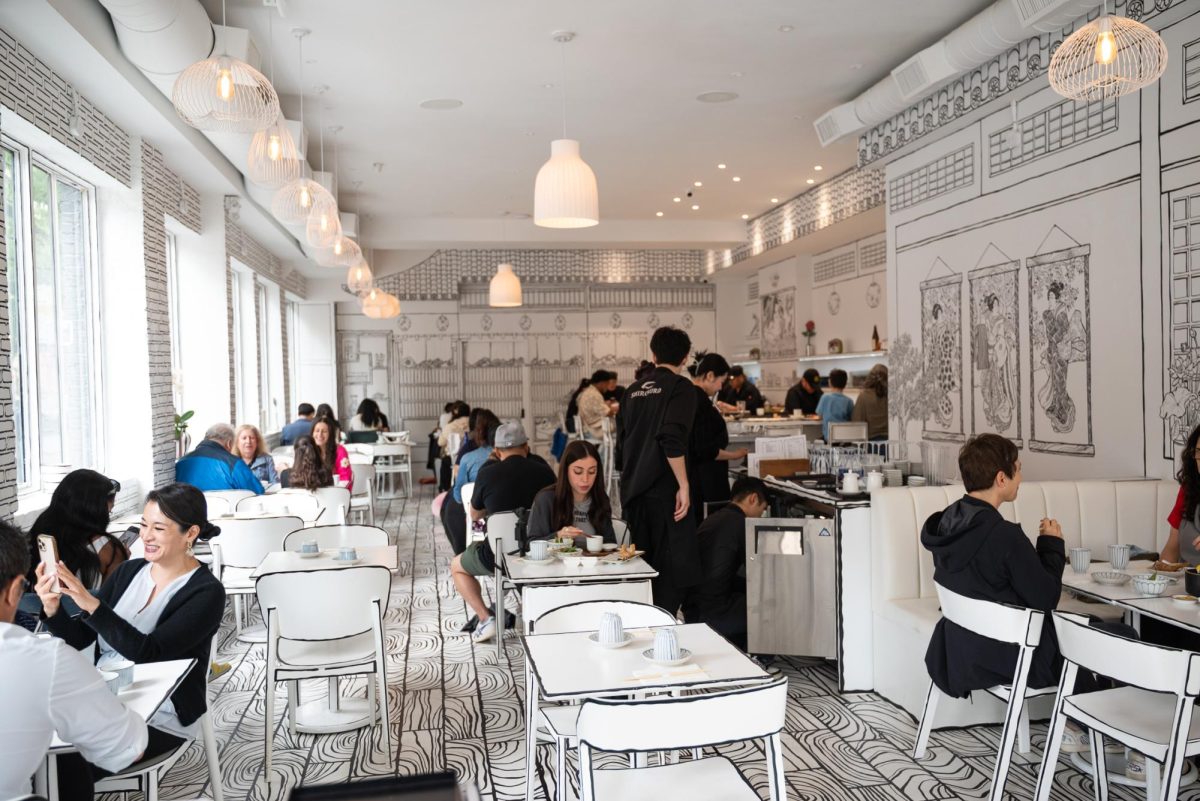








































To anyone going to the Team Gallery building on Wooster Street in SoHo, the view from inside will reveal a front lawn, a bedroom, a bathroom and a living room all colored white, with the word “Nemesims” written on the mailbox. This unusual setup is the latest creation from Markus Muntean and Adi Rosenblum, a pair of Austria-based artists who have recreated a house from the popular video game, “The Sims.”
“The Sims,” a video game series created by Will Wright, focuses on following a group of people, called Sims, and ensures they are as happy as possible. Often, increasing their happiness levels involves buying consumer goods such as furniture and artwork.
For Muntean and Rosenblum, “The Sims” creates a culture in which worldly objects are required to make people happy. The artists believe the game is impossible to win, and players can only keep their Sims happy by accumulating wealth.
“‘The Sims’ can be thought of as a virtual training ground for contemporary consumer culture, making explicit capitalist conceptions of happiness,” said Emma Fernberger, an assistant curator at Team Gallery.
If players choose, they can starve or emotionally deprive their Sims, as the god-like status of the player allows for numerous possibilities. “The Nemesims” plays with its viewers by placing them inside a house, as if they are Sims themselves.
“The viewer moves through the artificial living space as the avatar, experiencing the constructed environment from within, thusly becoming the malleable consumer rather than the god-like controlling hand,” Fernberger said.
The focus of the exhibit is on the pieces of art decorating the walls rather than the house itself. These paintings, by artists including Alexander Calder, William Eggleston, Gilbert & George, Keith Haring and many others, convey the main theme the exhibit seeks to portray: consumerism in modern culture. The artwork satirizes and berates the fascination with worldly objects that are necessary to the Sims’ happiness and the happiness of people in modern society.
Some disagree with the idea that “The Sims” has an unintentional capitalist agenda. Buying things for the characters is only one of the numerous ways to make them happy while many of the newer versions of the game also focus on building relationships between the characters.
“The point of The Sims isn’t consumerism, it’s escapism,” said Tisch freshman Valeria Rotella. “It’s creating your own ideal world and getting away from real problems. A lot of people like ‘The Sims’ for its emotional parts, as opposed to just building big houses.”
Regardless of these competing ideas, “Nemesims” is an interesting experience for anyone curious about consumerism or modern art.
“Nemesims” will be on display through Dec. 21 at the Team Gallery at 47 Wooster.
A version of this article appeared in the Thursday, Nov. 15 print edition. Jonathan Keshishoglou is a contributing writer. Email him at [email protected].