
















































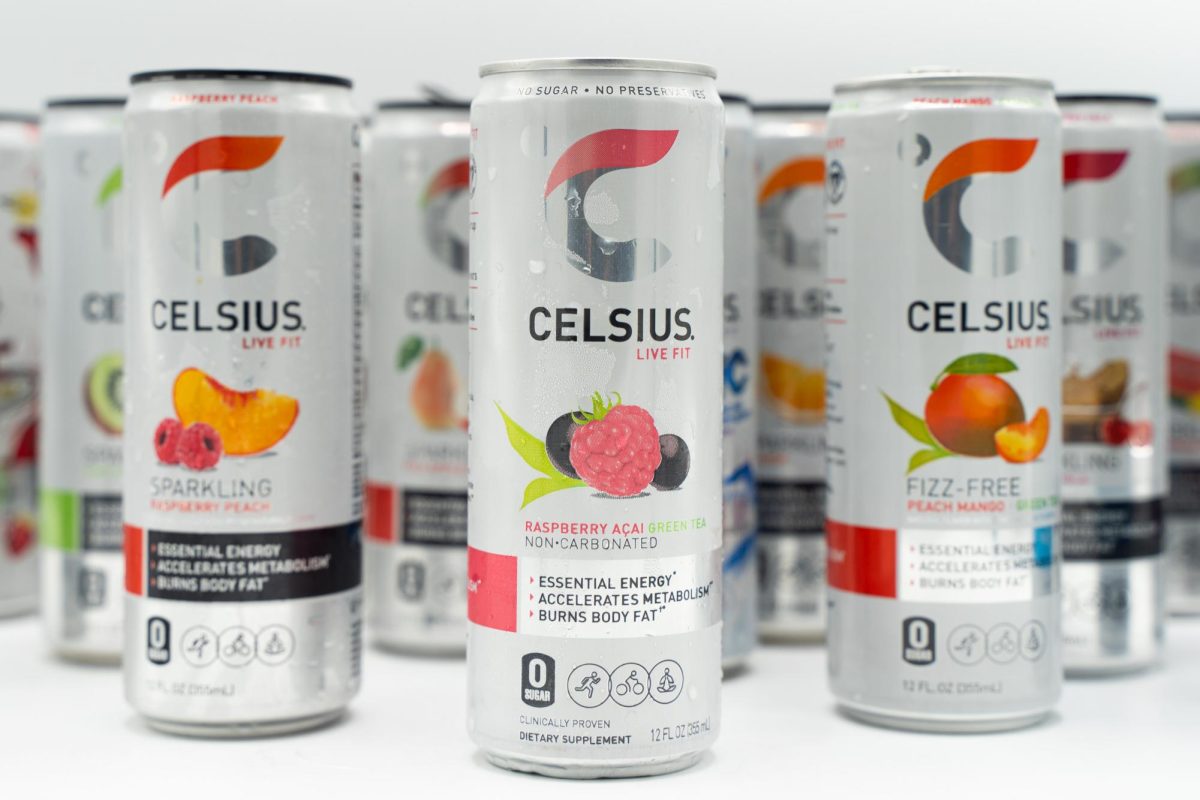
























































A study released by The New England Journal of Medicine last month revealed that the consumption of sugar-sweetened beverages among adolescents has affected the rise of obesity in the United States.
David S. Ludwig and Cara Ebbeling, a director and associate director for the New Balance Foundation Obesity Prevention Center, respectively, conducted the two-year-long study.
During the first trial of the study, which was conducted at Boston Children’s Hospital, 224 overweight or obese adolescents who reported consuming at least one serving of an SSB daily were selected at random for the study and divided into two groups.
For one year, the experimental group received home deliveries of bottled water and diet beverages, which virtually eliminated their consumption of SSBs. This group only gained an average of 3.5 pounds, while the control group, drinking sugary beverages at what was presumed their usual rate, gained an average of 7.7 pounds.
A second trial was held at VU University Amsterdam, where 641 randomly selected average-weight schoolchildren between the ages of four and eleven were separated into two groups. The children who consumed eight ounces of a non-
caloric, sugar-free beverage daily gained an average of 6.39 kilograms while the control group who consumed a 104-calorie SSB daily gained 7.36 kilograms on average. Researchers then conducted a one-year follow-up, assessing the results and drawing conclusions. They found that adolescents who eliminated SSBs not only gained less weight, but also had no increase in body mass index compared to the control group.
“No other single food product has been shown to change body weight by this amount over a year simply through its reduction,” Ludwig said in a press release.
According to the release, these findings altogether suggest that teens are more likely to make healthier choices when they are more easily accessible.
However, Arlene Spark, professor of Nutrition and Public Health at Hunter College, said regular consumption of SSBs are not the only cause of obesity.
“Regular consumption of SSBs is really a proxy for a poor diet that is rich in refined carbohydrates and likely also rich in fat and low in fiber,” Spark said. “For people who are regular consumers of SSBs, eating well is not generally a priority.”
The Board of Health recently approved Mayor Bloomberg’s ban on supersized sugary beverages. By eliminating the sale of SSBs in cups larger than 16 ounces, the Bloomberg administration hopes to slash New Yorkers’ calorie consumption.
Though Spark acknowledged the increase in public awareness since the ban was enacted, she worries that it may take away individual choice.
For CAS sophomore Jayson Dorsett, learning about SSBs’ affect on weight gain did not alter his previous opposition to Bloomberg’s ban.
“It’s public awareness advertisements that have an actual impact on public opinion, not the authoritative bans that eliminate choice,” Dorsett said. “Use the truth to sway public opinion, not the law.”
A version of this article appeared in the Tuesday, Oct. 2 print edition. Kayana Jean-Philippe is a deputy city/state editor. Email her at [email protected].
In the previous version of this article, WSN incorrectly reported that Mayor Bloomberg approved a ban on supersized sugary beverages. In fact, the Board of Health approved the ban. WSN regrets the error.