








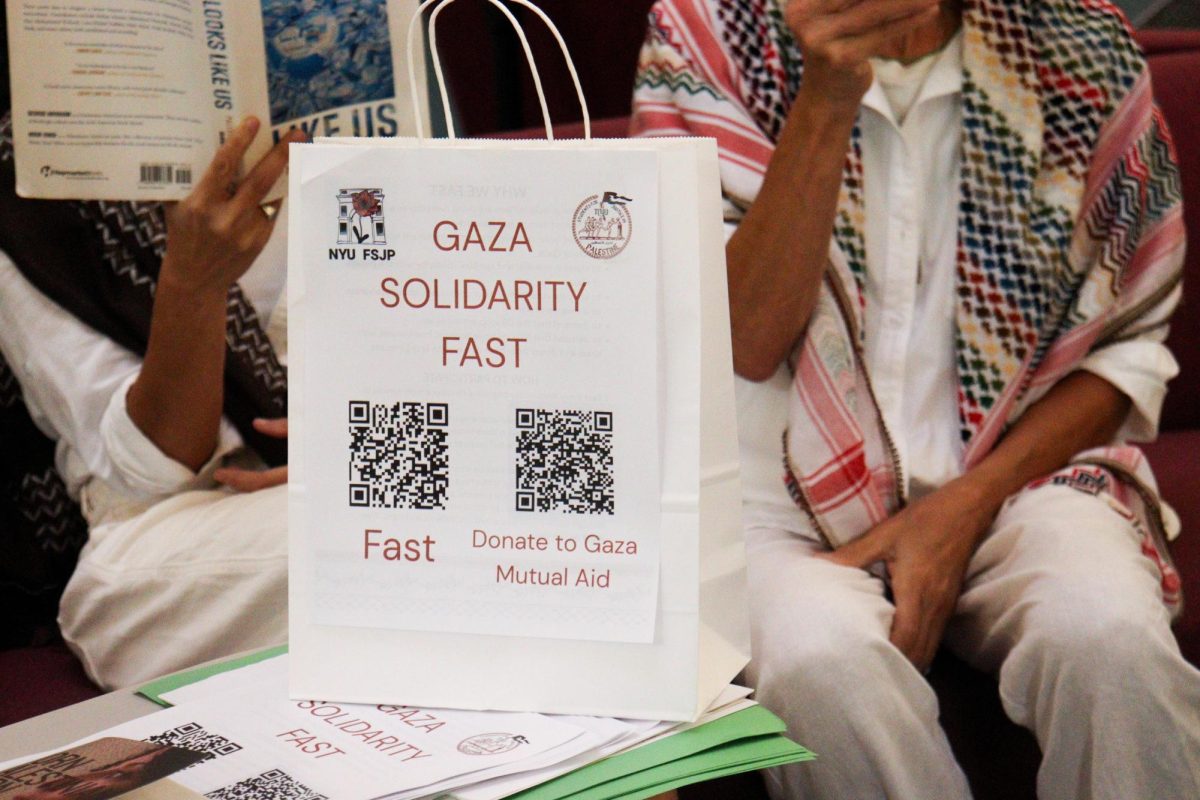




















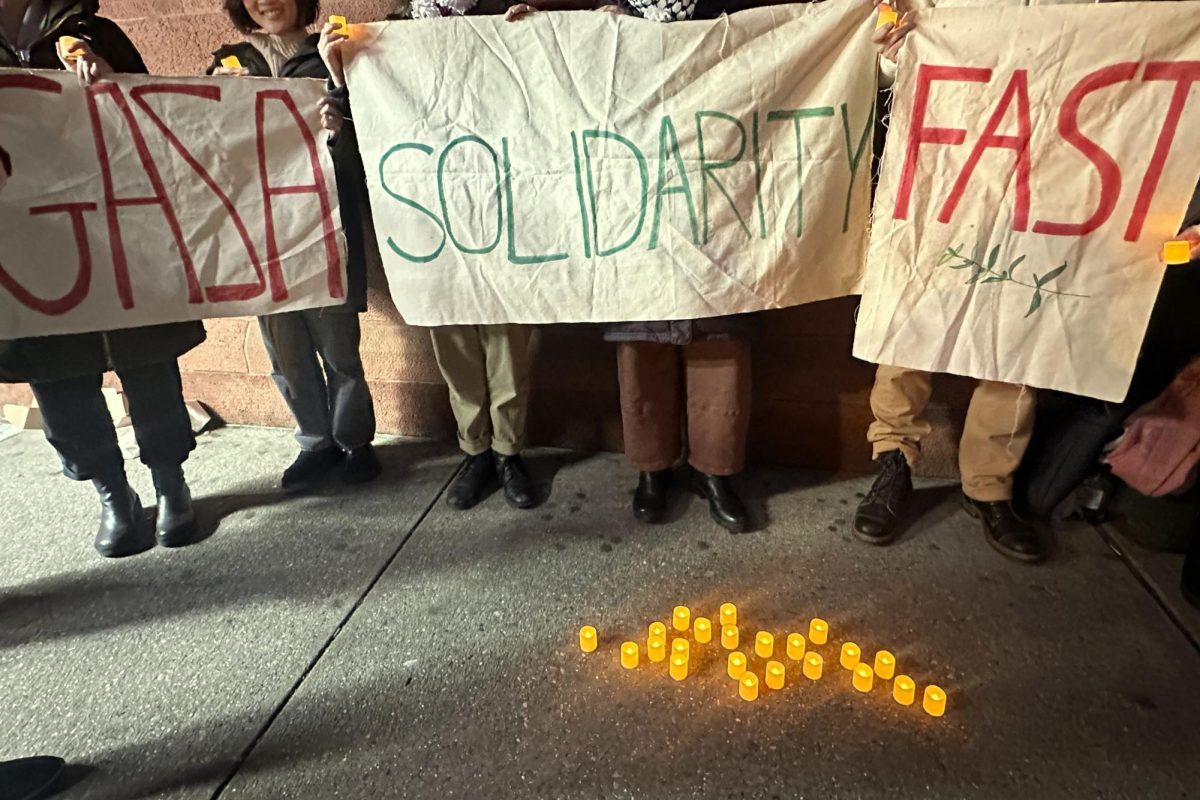
Around a dozen faculty and students held a Wednesday vigil for Palestine outside Bobst Library to conclude their weekly “Gaza Solidarity Fast,” which aims to bring attention to the ongoing famine in Gaza. The event featured an activist who joined a Gaza Freedom Flotilla fleet and was detained by Israeli authorities last month, where she participated in a five-day hunger strike while in prison.
NYU’s chapter of Faculty and Staff for Justice in Palestine organized the vigil — its third this semester — and has been leading weekly sunrise-to-sunset fasts that started last month and will continue through December. Participants held candles and banners that read “GAZA SOLIDARITY FAST,” and several attendees made brief remarks about their fasting experiences.
Among the speakers was French citizen Ambrealys Petonnet-Augeix, who was one of nearly 100 volunteers aboard the Conscience fleet sent by the Gaza Freedom Flotilla Coalition. The fleet planned to deliver medical personnel and journalists to Gaza before being intercepted by the Israeli government.
“Whatever we experienced as Western passport holders is mild compared to what Palestinians actually endure,” Petonnet-Augeix told WSN. “It was some forms of torture, including isolation, food deprivation and access to sanitation facilities.”
The fleet departed from Italy on Sept. 30 and was stopped by Israeli authorities on Oct. 8, seven days after they detained the Global Sumud flotilla that carried environmental activist Greta Thunberg. The group’s first weekly fast marked the height of Israel’s interception of flotilla vessels, which members said emphasized the need of persistent protest efforts. Petonnet-Augeix, who was held in solitary confinement during her hunger strike, said the experience motivated her to attend the FSJP vigil.
CAS professor and FSJP member Sonya Posmentier told WSN the group holds the vigils outdoors as a reminder to passersby of continued restrictions on aid to Gaza despite the recent ceasefire. During her remarks, she also pointed to a recent United Nations Security Council resolution that passed on Monday endorsing President Donald Trump’s proposal for Gaza’s governance.
“There’s still an enormous amount of Israeli control over how much aid is — and is not — entering Gaza,” Posmentier said. “There’s still massive amounts of people who are starving and don’t have the infrastructure to rebuild their lives.”
FSJP’s fasts have previously featured teach-ins held by faculty, vigils in collaboration with City University of New York’s chapter of FSJP and fundraising for Umm al-Kheir, a village in the West Bank facing demolition. Last month, the group held an event with UN Special Rapporteur on the Right to Food, Michael Fakhri, who has issued reports on famine in various regions of the world.
On Oct. 29, the group held an emergency meeting with the NYU Community Care Collective, a mutual-aid organization that distributes food around Greenwich Village, to discuss local food insecurity amid cuts to SNAP funding during the recent government shutdown. The groups encouraged students on meal plans to donate unused swipes or contribute the cost of a meal to mutual aid groups. Although the fasts are scheduled to end next month, Posmentier said organizers are working to continue the program in the spring semester.
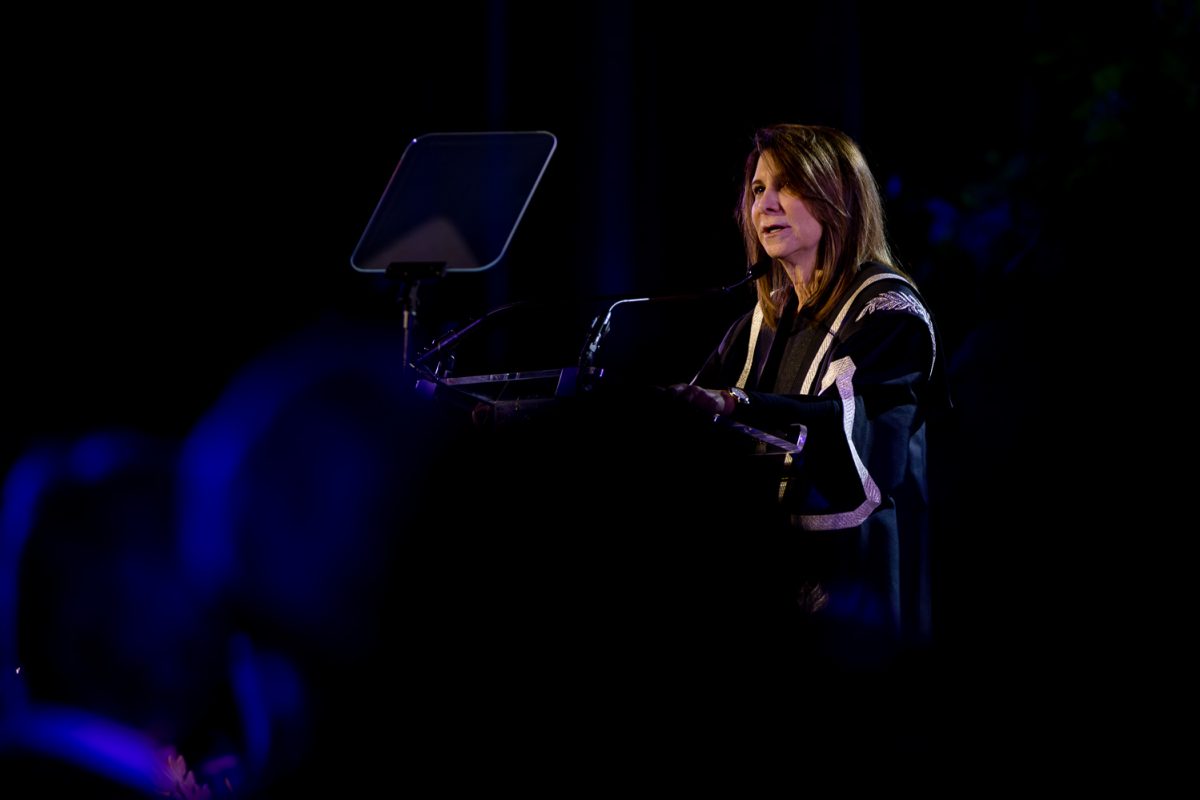
In December, NYU suspended 13 students for who participated in a sit-in on the 12th floor of Bobst, which houses President Linda Mills’ office, demanding the university disclose its investments in companies tied to Israel. In March, over 20 NYU Law students were barred from most university buildings following a similar sit-in.
“There is something really important about participating in a vigil, that anyone who walks by and stands in solidarity with us can join us,” Posmentier said. “It’s night, it’s dark, we have candles — it’s an atmosphere of mourning and solidarity.”
Contact Leena Ahmed at [email protected].