




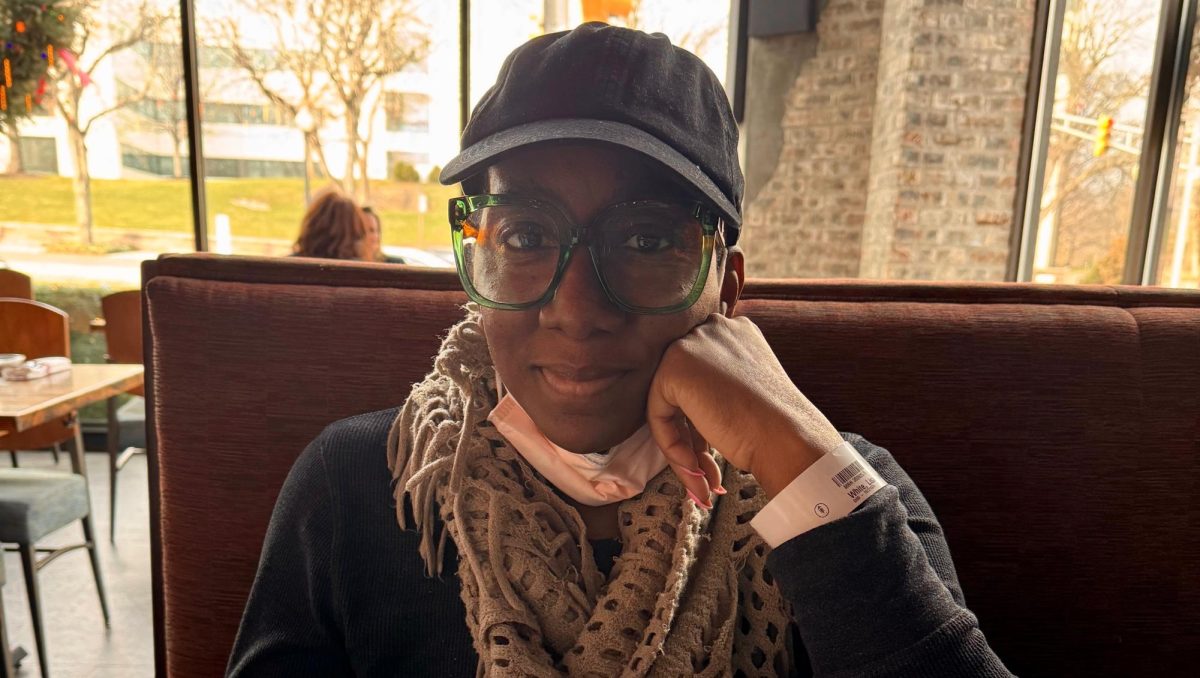























Ra’Mya Latiah Aikens had never uttered a word of Shakespeare until she auditioned for the Tisch School of the Arts’ prestigious Grad Acting program, which she graduated from last year. Her audition required her to perform two classical monologues alongside two contemporary ones. One of Aikens’ undergraduate professors gave her two Shakespeare speeches to use for the audition: Constance from “King John” and Julia from “The Two Gentlemen of Verona.”
“I fully prepared them in a British accent, because I thought, ‘That’s Shakespeare — he was British, so I have to be British.’” Aikens told WSN. “I didn’t even look up how to do a British accent, I just assumed. It was terrible. But she told me, ‘You don’t have to do it like that. You can do it like yourself.’”
Now, just one year after graduating from Tisch with a Master of Fine Arts, Aikens will be playing Juliet in The Public Theater’s Shakespeare in the Park production of “Romeo & Juliet” at the Delacorte Theater in Central Park.
“I saw Shakespeare in the Park for the first time last summer, and I remember at the end of the performance — especially with that star-studded cast — just looking up on stage and feeling like that is a dream,” Aikens said. “For it to happen less than a year after that is just crazy.”
Aikens spoke with WSN about how she approaches a play as famous as “Romeo & Juliet,” the challenges of performing in an outdoor venue and why Shakespeare’s play is still important today.
This interview has been edited for length and clarity.
WSN: So much of the battle with Shakespeare is learning that it’s okay to be yourself while performing his plays — how did you get over that learning curve?
Aikens: These plays have been done for hundreds of years. It’s just silly that we think that there is a right way of doing it, because if we were all trying to do it the same way that people had been doing it for hundreds of years, I’m sure we’d be tired of it by now. Finding innovative ways to make it personal is so special, and I found that it’s less about doing it the right way and more about finding how much of your heart you can muster in the performance. That’s the only right way to do it, and in that way, it’s for everyone.
WSN: How do you begin to approach embodying a character as iconic as Juliet?
Aikens: I’m still asking myself that same question. My mom passed in December, and I was not excited about any audition after that happened. Everything just became so bleak, and it was like, ‘How can I even muster the care for anything right now?’ But then this audition came along, and I cared so much, and it was the first time in months that I was excited about something. My way into Juliet right now is through the lens of her grief: her grief of a life that she wants to live but isn’t allowed to, and for her cousin Tybalt, who is murdered by the love of her life. And then in the end the third layer of grief, which is the one that we all think of when we think of ‘Romeo & Juliet,’ is that the love of her life is gone.
WSN: Why do you think ‘Romeo & Juliet’ and other Shakespeare plays are still resonating with audiences today?
Aikens: There is so much grief in the world. The world feels tragic right now, and we as a society are witnessing the young and innocent morally die and actually die because of wars that they did not have a say in. And I think it’s the same with ‘Romeo & Juliet’ — they’re two children who die because they didn’t have a say in the wars that the older people in their society were inflicting upon one another. Specifically, in director Saheem Ali’s adaptation of this production, it’s about immigration and conversations about who belongs here. That’s always relevant, but I think especially now.
WSN: You played Hermia in the Classical Theatre of Harlem’s production of ‘A Midsummer Night’s Dream’ in 2024, which was performed outdoors in Marcus Garvey Park. What is unique about performing in open-air venues?
Aikens: Most times in theater, when you’re not breaking the fourth wall too much, you have to imagine what’s actually out there besides the audience. But with Shakespeare, especially ‘Midsummer’ and ‘Romeo & Juliet,’ having the reality of being outside — you don’t have to imagine the stars, the trees, the breeze or the birds. It’s all right there, and that does so much to ground you in the reality of the circumstances, rather than looking back and seeing two exit signs.
The other side of the same coin is the uncontrollable elements that come with performing outside. I have this memory of ‘Midsummer’ where there was a helicopter right above us for the entire performance. We were mic’d up and everything, but girl, they didn’t know what we were saying because it was so loud. But in another funny way, you look out at the audience and it’s like that moment in ‘The Office’ when you look into the camera and you’re like, ‘We’re just playing pretend.’
WSN: What are you most looking forward to sharing with audiences at the Delacorte this summer?
Aikens: I’m excited to continue passing down the belief that classical work is still important. Having that foundation of classical work is so important in the world of artificial intelligence and social media. The further we look back in the past, the more we can be reminded of our humanity. What I would want to say to anybody grieving is that it’s okay to carry that with you wherever you go. I know for me it’s been weird — I’ll be in a crowded room and feel like I want to talk about it randomly, but that it’s not right to bring it up. If there’s anybody in the audience this summer who has ever lost someone, and is bringing that with them: Never be ashamed to let that impact stay with them.
“Romeo & Juliet” is running at the Delacorte Theater from May 22 to June 28. Free tickets are distributed the day of each performance throughout the five boroughs and through a lottery online.
Contact Chantal Mann at [email protected].