




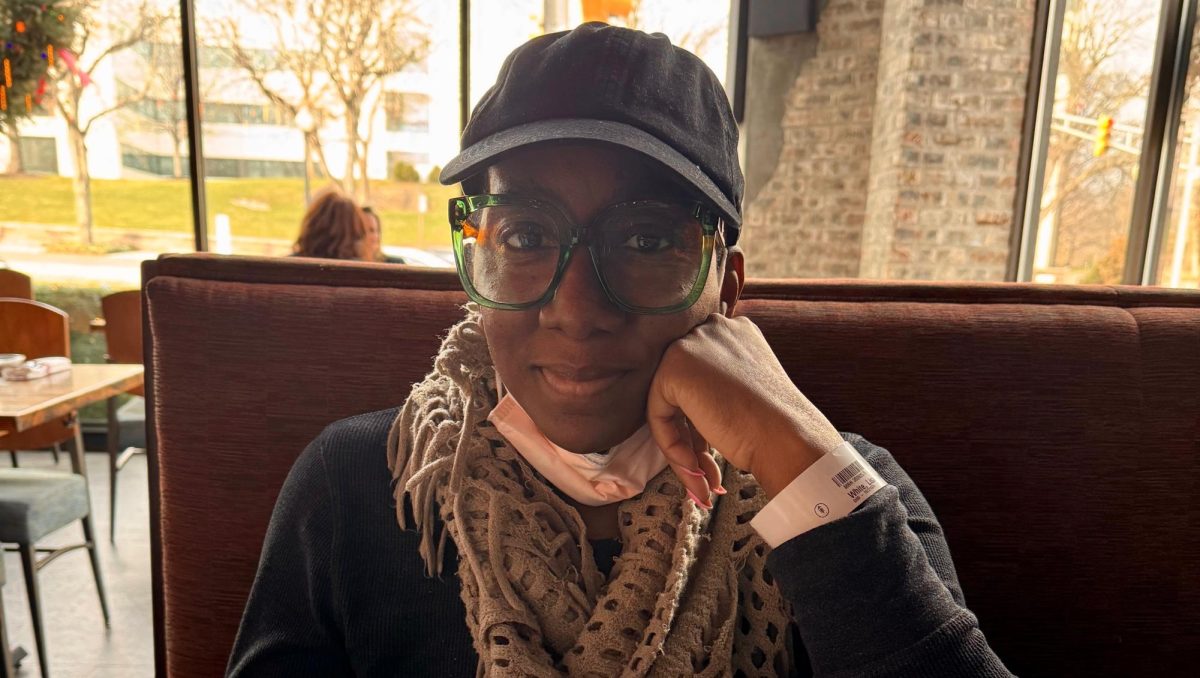







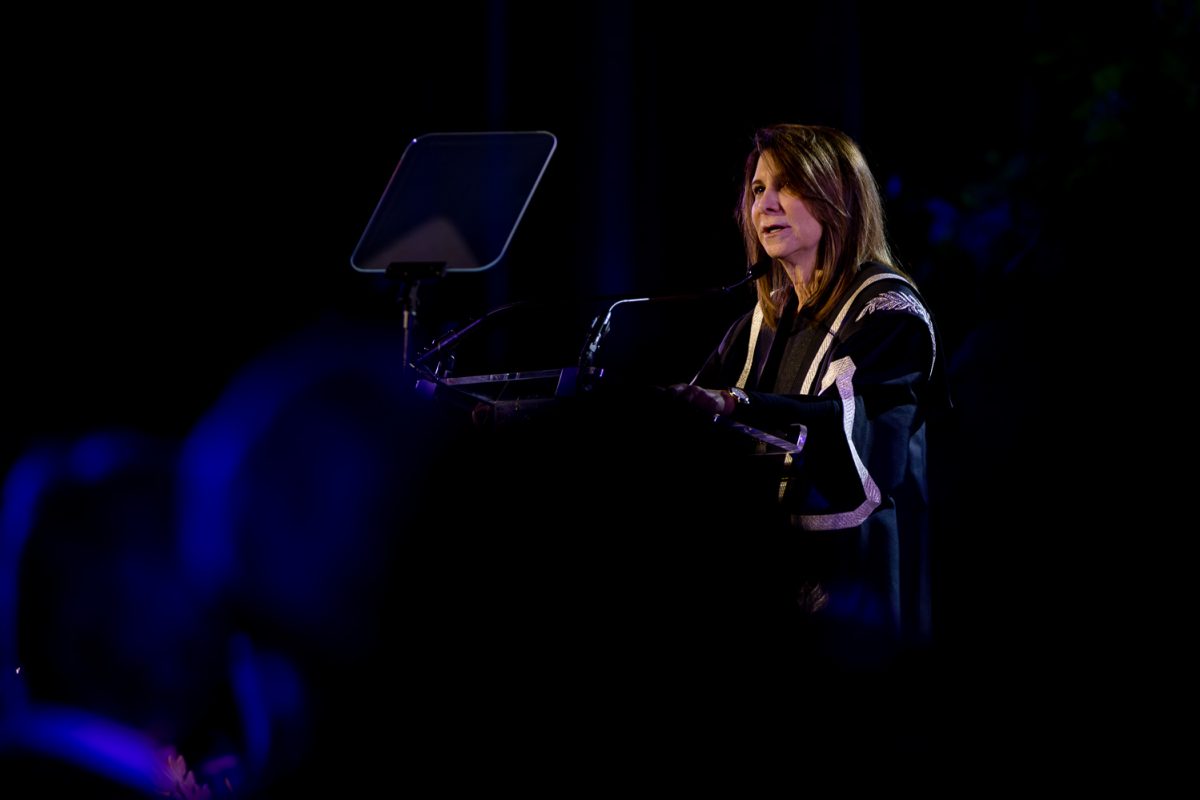

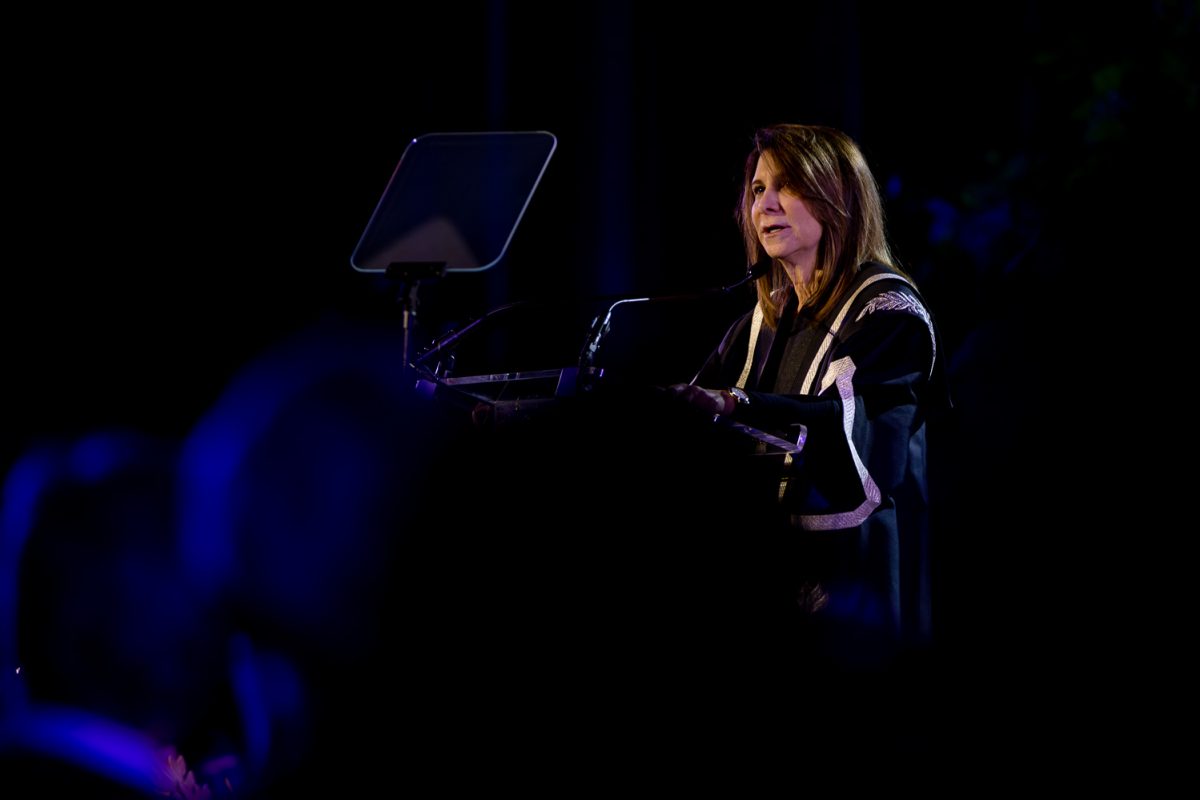








Diane Hodson spent nearly a decade in the public school system teaching global history, often working with students who had recently moved to the United States. Using film to engage her classes, she would watch her students’ eyes light up when concepts finally clicked.
Realizing how influential media could be, Hodson slowly pivoted to storytelling as a profession, taking on jobs working in documentaries and podcasts. Now, the producer of a Pulitzer-finalist podcast spends her days balancing creative projects with her day job as a professor.
Hodson spoke with WSN about her experience in teaching and shift to a career in media production.
This interview has been edited for length and clarity.
WSN: How did your time at NYU shape your career path?
Hodson: I felt really constricted in high school — I didn’t have a lot of options. Coming to Gallatin was a breath of fresh air of being able to explore what I was most interested in. A part of my degree was creating narratives out of a bunch of disparate information. In some ways, that very much set me up for what I do now. What I realized at Gallatin was that I wasn’t really interested in any one thing. I just really loved learning, so the thing I wanted to figure out in life was how to get paid to learn. NYU is just such a touchstone for me in all of those ways — it’s the thing that organized how I entered the city, and it still shapes my experience of it.
Hodson realized she wanted to pursue a career in education after taking a course where she got to teach formerly incarcerated New Yorkers. She would work in public high schools in New York for about eight years after graduating from the Gallatin School of Individualized Study in 2004, where she focused on media studies and culture.
When she wasn’t practicing for the Washington Square Harp and Shamrock Orchestra, Hodson hosted an Irish radio show called “Get Your Jig On” for WNYU-FM. Her time at the university’s radio station marked her first experience in the audio space.
WSN: You’ve held various teaching roles for nearly 23 years. What draws you to the profession?
Hodson: What I like about teaching is kind of what I like about story editing, which is helping people get where they want to go. Students are often so thoughtful and eager — they may be confused and uncertain about the future and I try to help them a little bit along the way. It’s really satisfying and fun to get to be a pit stop on their journey. You get to sit in awe of all these wonderful people and projects. Every semester I’ve ever taught, there’s at least a couple pieces, if not more, where you can’t help but be blown away and get so excited that they’re gonna join your world on the other side after graduation.
In 2012, Hodson returned to academia to pursue a Master of Fine Arts in documentary filmmaking at Wake Forest University where she also worked as a TA. She came up with the idea for her first documentary project before she arrived at the school when she stumbled upon a Museum of Modern Art map depicting Brooklyn’s Brownsville neighborhood, which eventually led her to creating the documentary film “Unmappable.” Four years later, Hodson c0-founded Unmappable Productions, LLC as an official space for documentary projects.
WSN: How is working in film production different from podcasts?
Hodson: When you work in film, it’s so laborious. You’re having to physically go from place to place all the time, and there’s so much visual media to keep track of — it’s just a lot. I really enjoy making films, but in audio, you can do interviews without having to be in person — you can talk to folks who can shape stories and still be at home. It was much more compatible with teaching, and for me, teaching is like breathing. If I wasn’t teaching, it would be like I was missing an appendage. By working in audio, I can teach and have a more regular schedule than when you work in documentary production.
A year after graduating from Wake Forest in 2015, Hodson returned to NYU as an adjunct instructor and production advisor at the Tisch School of the Arts to teach producing essentials, audio storytelling and fundamentals of filmmaking.
Through creative networking groups, Hodson met Dan Taberski, a former producer for “The Daily Show,” who approached her with what ended up being Hodson’s first major audio project. Hitting the top of Apple’s podcast chart in 2017, “Headlong: Missing Richard Simmons” investigated the sudden disappearance of the titular fitness guru from public life. Across eight episodes, the podcast looked into Simmons’ departure from teaching gym classes and sudden lack of communication with friends and fans.
WSN: What are some lessons you learned while working on ‘Headlong: Missing Richard Simmons?’
Hodson: It was a bit of an uncharted territory. None of us on the team had done something like this before, and it was really nice working with people who I’ve continued to work with since. The project taught me that you can have fun making a thing. In the years since, anytime I end up on a project I try to help remind the team what a privilege it is for people to share their stories with us — and for us to shape those stories. It’s a pretty fun job to have, and I love working with people who understand that this isn’t something that should feel painful. There’s hurdles along the way, but all in all, it’s pretty privileged to get to do that kind of work.
Since the project, Hodson has been involved in the creation of several narrative podcasts, many of which are investigative. In 2024, Hodson collaborated with Taberski once again to create “Hysterical,” a Pulitzer-finalist podcast that investigated a mysterious illness that led to tremors in adolescent girls at a New York high school.
That same year, Hodson joined Hofstra University as an assistant professor, where she runs the university’s podcasting and audio storytelling bachelor’s program — the first of its kind in the country.
WSN: What’s your favorite part about production, whether in film or audio?
Hodson: I love it because I get paid to go down these rabbit holes and learn about stories I’ve never heard before. It’s an excuse to talk to people from all different parts of the country — both people that you agree with and people that you don’t. I got into the work of story editing and executive producing, where you’re really shaping the story, in addition to thinking about the overall development and execution of a show. I was able to create these projects while teaching and adjuncting at NYU, and I actually started teaching the very first film class I took back when I was an undergrad — the fundamentals of filmmaking.
Contact Selin Kemiktarak at [email protected].