





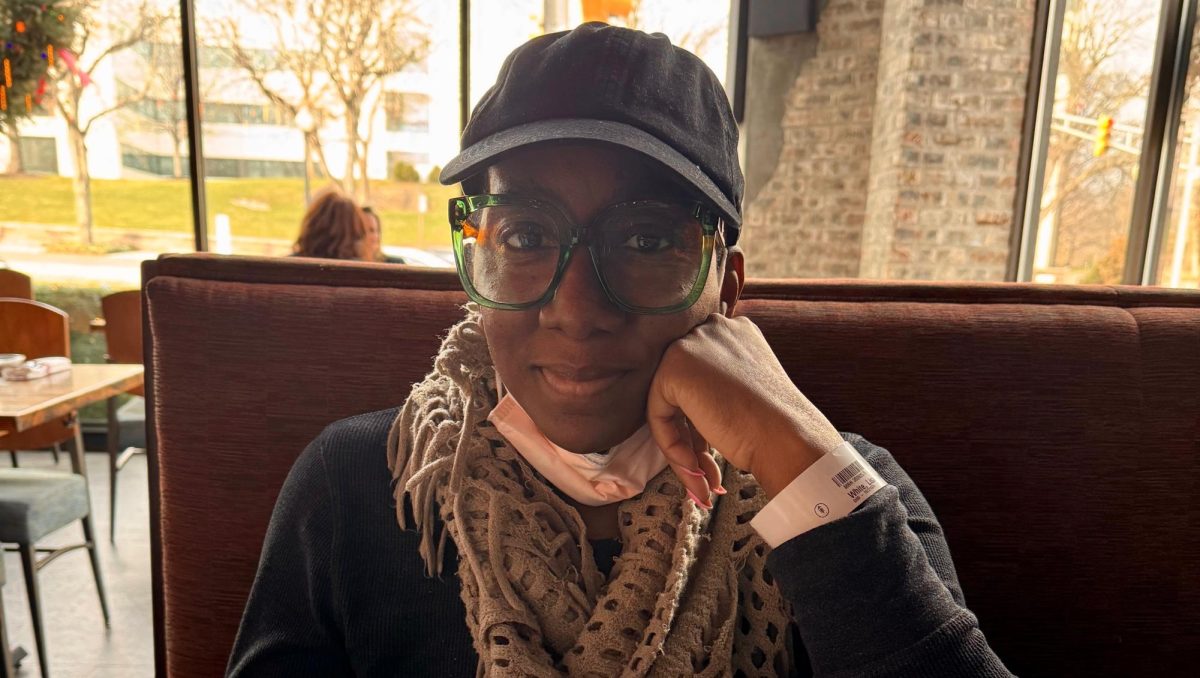




























The first time Eshani Surya wrote about her ulcerative colitis was for a writing class assignment at NYU. She began the short story not long after receiving her diagnosis, and went on to edit it over the course of the next eight years — creating the backbone of what would become her first published novel.
Released in November, “Ravishing” depicts two Indian American siblings who become wrapped up in a beauty product that promises to enhance the facial features of its users. The fiction novel also offers glimpses into Surya’s own struggles with self-image and UC, an inflammatory bowel disease that typically causes sores in the colon.
The author spoke with WSN about living with UC and using her novel as a platform to bring conversations about chronic illness to a broader audience.
This interview has been edited for length and clarity.
WSN: Can you describe what it’s like living with your chronic illness?
Surya: There are times when it is really difficult — when my symptoms are flaring, I have to rearrange my schedule and the expectations I have around my life. At the same time, living with this illness has made me think about my own body so differently. I have an awareness of my body and a tenderness toward it that I’m not sure I would have without having an illness. I also have a really different understanding of community — thinking about who I bring into my life, but also what I’m able to give to other people: a lot of grace and understanding, and a desire to share a lot of vulnerability with others. There was a point in which writing about ulcerative colitis was a catharsis. Over time, it became a little bit less that, and a little bit more trying to understand the contours of the illness and the different facets of living with it.
Surya first studied international relations and political science at NYU, though quickly realized that her interest in the subjects fell short. Switching to a major in English and American literature after her first year, she filled her schedule with writing courses, graduating with a creative writing minor in 2015.
When Surya took a first-year seminar with the then-head of the creative writing department, she had the chance to speak with poets whose works she had read in class. She was inspired to enroll in more poetry and creative nonfiction classes, and eventually moved beyond her initial focus on fiction.
WSN: You grew up in Connecticut before moving to New York to attend college. How did you decide that NYU was right for you?
Surya: I had college admissions counselors come to my high school, and later discovered that NYU was the only brochure that I kept in my locker the whole time during my college application process. There was some part of me that always knew I wanted to go to NYU, but I was conflicted about being in a bigger school or a smaller school. Eventually, when I came to do my final visit at NYU, I was taken aback by the amount of interest there was in the arts, and the city felt like a wonderful home for a burgeoning writer. I found myself on the verge of tears when I went to the accepted students event. There was a lot of exuberance and joy in the room, and that was what I wanted my college experience to look like.
Surya went on to complete a master of fine arts at the University of Arizona, centering her application around the short story first conceived during her undergraduate years. One of Surya’s more unique projects, amid the various poems and short stories she published during graduate school, involved a partnership with UArizona’s geology department. As researchers analyzed oil spills across the country, Surya helped the team turn its map of data points into a narrative.
Around 2017, while she was still in Arizona, Surya wrote a short story about girls using beauty products in destructive ways. Later, the COVID-19 pandemic led to her to shift the idea toward concerns about disability and chronic illness, as well as her personal difficulties with self-perception. As she looked more into the mirror at home and her reflection on Zoom, Surya wrote about feeling surprised by her own appearance — passages that would later land in the final draft of “Ravishing.”
During her search to find an editor for the book, Surya got in contact with Roxane Gay, author of The New York Times best-selling essay collection “Bad Feminist.” Gay went on to work with Surya on the novel, which was published last year.
WSN: How does ‘Ravishing’ illustrate your journey with UC?
Surya: This novel speaks a lot to my experience living with an invisible illness, and the ways in which definitions of beauty and ugliness shifted for me since my diagnosis. Ulcerative colitis is an illness in which there can be a lot of shame. It is inflammation of the gut, so it comes with diarrhea and bleeding, which is a difficult thing to talk about when you’re 21 years old. Despite the fact that you couldn’t see on my face that I was going through this, I had a sense of that shame. Around five years later, I ended up losing all my hair — my illness became very visible. People often assumed it was because I was going through chemotherapy, but I actually had a bad reaction to one of the medications. I began to think about how people were staring at me when I was walking down the street, and this is where the book ended up going. It asks people to rethink their assumptions that illness must always look ugly, because there’s a lot of beautiful parts of that too.
Described as an “absorbing debut” by book-review magazine Booklist, the project marked Surya’s first published book, though she has been writing novels since high school. Characters in “Ravishing” frequently draw from Surya’s own life —the brother who works in the tech industry is inspired by her time in mobile game design.
Surya has also previously taken on multiple roles in publishing and is currently a program coordinator for the biotechnology program at the University of Pennsylvania, where she provides students with academic advising. She is now working on a second novel about the effects of health care systems on communal care.
WSN: What keeps you drawn to the field of writing?
Surya: I was diagnosed with obsessive-compulsive disorder a few years ago, and one of its hallmarks is that you’re always asking ‘What if?’ Sometimes that leads to really extreme bouts of anxiety, and writing is a way for me to channel some of that energy into interesting and exciting what-ifs, and to explore stories that aren’t going to make me panic inside my own mind. I also think that humans tell stories all the time — if we think about the ways in which we interact with each other, it’s often telling stories about our lives. It’s entertainment, sharing values, creating vulnerability and intimacy. Being able to do that on the page and creating those relationships with readers is really important to me. It makes me feel grounded and like I’m part of something larger than myself.
Contact Selin Kemiktarak at [email protected].