

















As graduates prepare to receive their diplomas, the end of their NYU experience feels more like a controlled exit than a celebration. As higher education faces escalating attacks from the federal administration — norms of academic freedoms erode, students are politically targeted for deportation and schools with diversity initiatives face threats of funding losses — NYU’s priorities lie not in responding to controversy, but in sanitizing speech and minimizing dissent at its largest and most public event.
Across the country, universities are reshaping graduation ceremonies to avoid controversy. Columbia University canceled its universitywide commencement altogether in 2024, fearing pro-Palestine demonstrations would break out. Following speaker Nerdeen Kiswani’s pro-Palestine remarks, City University of New York School of Law eliminated student speakers at graduation — prompting an ongoing lawsuit alleging First Amendment rights violations.
Over the past two years, NYU has similarly overhauled its graduation policy. The university banned live speeches after Gallatin student speaker Logan Rozos gave pro-Palestinian remarks last year, and it canceled affinity graduations due to the “political climate,” seemingly to avoid backlash from Trump’s anti-diversity administration. The developments come just one year after the Graduate School of Arts and Sciences restricted attire and other forms of political expression after graduates wore keffiyehs, carrying signs and chanting in protest of the genocide in Gaza. And for this class which has protested the genocide in Gaza so ardently, they named Stern professor Jonathan Haidt commencement speaker — an anti-woke author who has consistently patronized student activists — a last parting gift of disrespect.
The shift to video speeches clashes poorly with the NYU IRL initiative, which encourages authenticity and spontaneity through in-person connection — the markers of any good speech. That tension is particularly notable given that Haidt, who has helped shape and promote the IRL initiative, expressed plans to “strengthen community here at NYU despite the anti-communitarian ravages of technology.” To move to preemptively censored videos while claiming to foster organic in-person engagement is deeply ironic.
Graduation is a civic stage. Students have always used it to speak to the social and political issues that matter to them and the student body they represent, and universities know that. Pro-Palestinian speech, however, has been met with disciplinary responses and a kind of performative shock at the presence of political rhetoric, despite the fact that similar forms of expression have been accepted, and even celebrated, in the past. The reaction to pro-Palestine speech at graduation showcases the university’s selective discomfort with those who hold those views.
Then-NYU spokesperson John Beckman’s remarks following Rozos’s condemnation of Israel’s genocidal actions — which was met with applause and support — manufactured outrage where none credibly exists, and created a narrative of ruining a collective experience that is untethered from reality. Beckman claimed Rozos “misused his role” to express “personal and one-sided political views,” and said “the audience was subjected to these remarks.” But anyone who has followed this class’s activism knows that calling for a free Palestine only reflects the concerns students have painstakingly tried to convey through sustained organizing and protesting. Though framed as selfish and hijacking a shared moment for personal gain, in reality, these students spoke at real risk to themselves. NYU cannot justify punishment by claiming Rozos “violated the commitment” while it itself is violating its own commitments to free speech for students and faculty.
Defending the prerecorded speeches, NYU spokesperson Wiley Norvell said, “the speakers we invite to ceremonies are there to speak for everyone, not only themselves.” But it is increasingly clear that they select speakers who will deliver palatable, safe remarks — all of which are preemptively censored by administrators — rather than those who may capture the unvarnished lived reality of the student body. Claiming the filmed remarks at school-specific ceremonies “will contribute to making these events inclusive, celebratory and engaging for every person attending” when these new practices were designed as a way to preclude pro-Palestine speakers, is blatantly self-contradictory.
Commencement is the only time the university is fully gathered in one space. It is supposed to be a celebration of students and what makes their class special — not a curated performance, carefully stylized to reflect the university’s preferred image of the class of 2026. By getting affinity graduations more or less restored, students have shown that voicing their disapproval loudly can force the university’s hand. It was only when students started a campaign to fight the cancellation of affinity graduation, which threatened the brewing of another PR nightmare, that NYU reinstated them — albeit using a new name to save face. This is the first year of prerecorded graduation speeches, and every year this custom continues, it will become more normalized and harder to reverse.
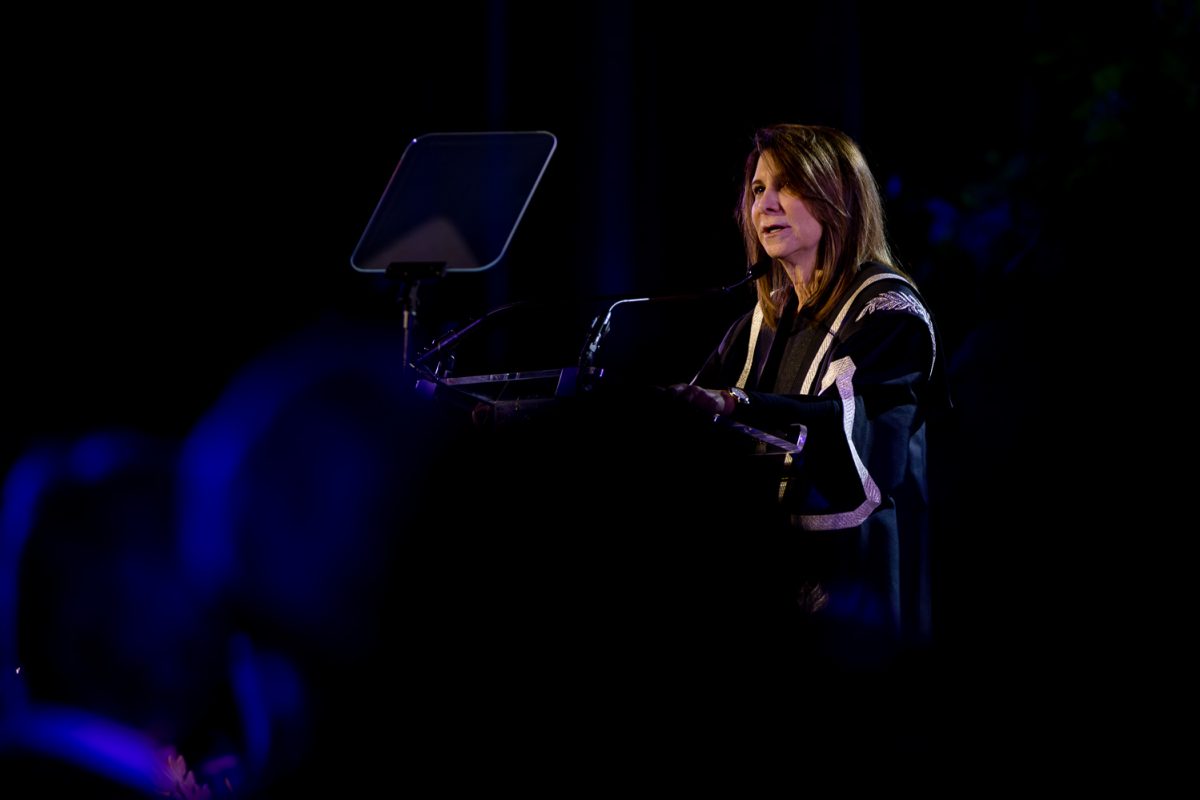
Students must demand the restoration of live student speeches before prerecorded ones become a precedent. Decorate your caps, wear a keffiyeh, national flag or other form of expression that reflects our diversity and political commitments. Graduates in the crowd should also make known their support for Palestine, immigration agents off campus and other issues won’t become invisible just because the university attempts to narrow what can be said on stage. Vocalize your support and dissent loudly in your cheers. Or, as students did the last two years in protest of President Linda Mills’ leadership, simply walk out — during the prerecorded speeches, or those of Mills and Haidt. This is one of the only moments the university is watching, fully attentive to its public image and therefore most responsive to collective student pressure. Our visibility creates a rare point of leverage, so it is important to make that attention count.
Sign the petition to reinstate live speeches here.
WSN’s Opinion section strives to publish ideas worth discussing. The views presented in the Opinion section are solely the views of the writer.
Contact Mehr Kotval at [email protected].