



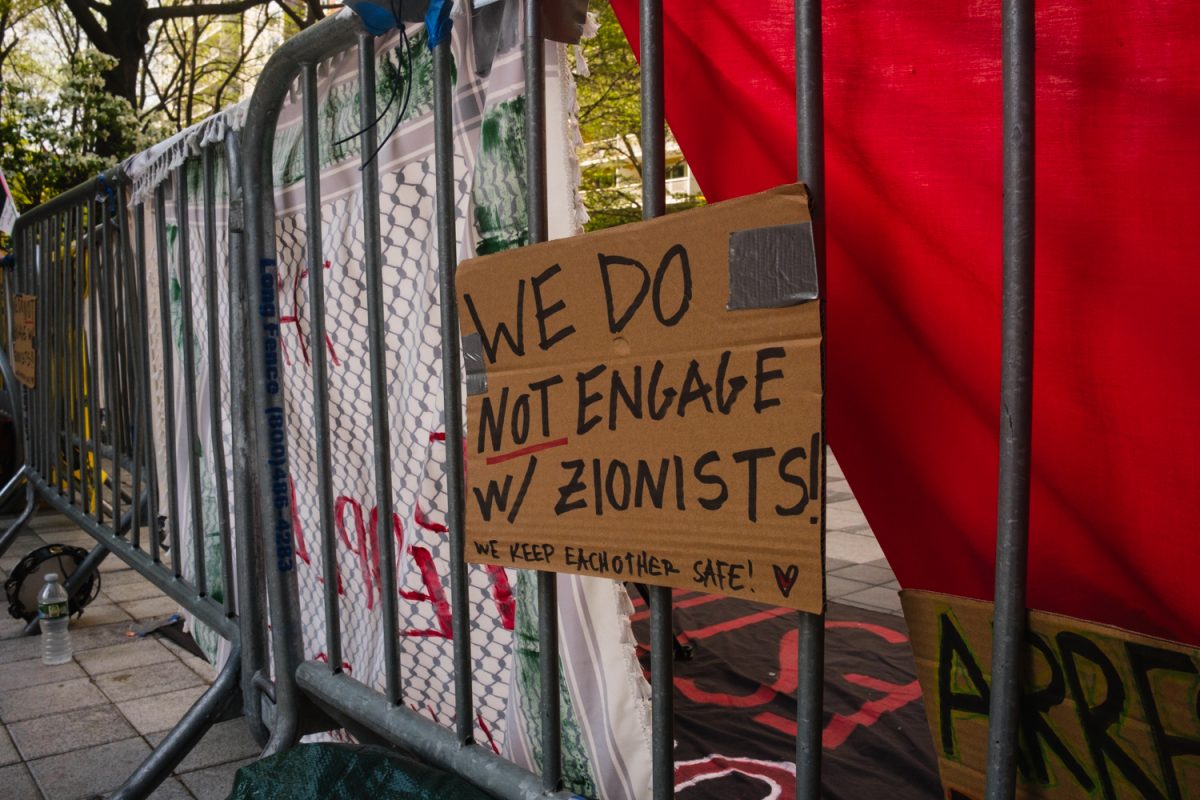
















On March 30, 2024, the windows of the Paulson Center were splattered with fake blood as over 150 pro-Palestinian protesters marched on Mercer Street. They drummed rhythmically on the building, waving signs and flags at passersby in the lobby, where students had staged a multi-day “deoccupation” of the space.
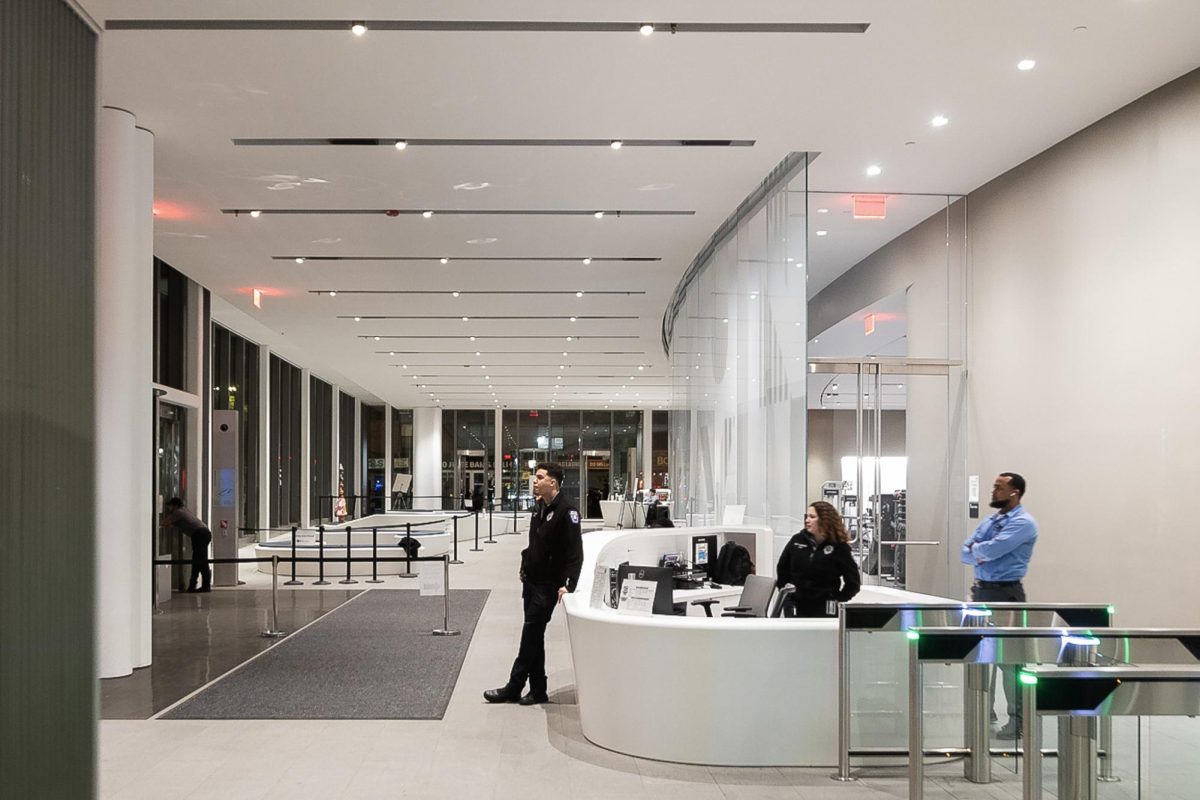
Other sites that hosted similar demonstrations for Palestine in the 2023-24 academic year — such as Gould Plaza and the Kimmel Center for University Life’s Grand Staircase — were closed for renovation shortly afterwards. Now, two years after the Paulson Center protests and subsequent encampments, the atrium’s seating remains cordoned off, despite no evidence of construction in the area.
New students like Gallatin first-year Kiera Horne, who arrived at NYU more than a year after the encampments, encounter the space without context. For Horne, both the Paulson Center’s status as a public space and the reason for its enclosure remain unclear — a confusion she said is compounded by the lack of a concrete explanation.
“There’s a lot of information about blocked spaces that seems really blurry and hard to understand,” Horne said. “There should just be more transparency, because I don’t even know much about the Paulson atrium.”
In a statement to WSN following the March 30 protest, then-university spokesperson John Beckman justified keeping the space closed to the public, citing the event’s allegedly violent nature and the risk of non-NYU community members entering the Paulson Center. While prohibiting public access could violate a 2012 agreement with the city, Beckman said that NYU would reevaluate the policy’s necessity at the end of the 2023-24 school year. As of now, no evident changes have been made.
“NYU likes to portray themselves as a really progressive school where people from all different backgrounds can speak their minds,” said CAS senior Isabella Wrobleski, who was a sophomore in the spring of 2024. “When it actually comes down to it, they don’t really value all these different opinions. All the areas they’ve closed reflect that.”
Another point of contention surrounding the Paulson Center is its status as a “public atrium,” as it is referred to in the wall text near the entrances and in the 2012 founding agreement. NYU has previously issued statements claiming that its only public space is the adjacent Greene Street Walk — not the atrium, as the agreement implies.
“Declarant shall be entitled to close the atrium on a temporary basis for maintenance and repair or for security reasons,” it reads.
Many students, even those who were present during the encampments, aren’t aware of this dispute. The Paulson Center, which opened in early 2023, is still a relatively new space.
“I actually didn’t even know that it was supposed to be open to the public — I didn’t think that was advertised enough,” CAS senior Camila Luna said. “I have never seen anyone but NYU students, faculty or prospects in the lobby of Paulson.”
Despite physical restrictions the university has placed on its gathering spaces, some students say that limiting access has done little to curb protest activity. As Steinhardt senior Mayline Garcia noted, demonstrations have moved elsewhere rather than simply disappearing. Following the Gould Plaza barricade, students picketed on the sidewalk outside. Most recently, NYU’s contract faculty union commenced a two-day strike last month outside the Paulson Center, where hundreds of faculty members circled the building and rallied outside the entrances.
“Whether that area is closed or not, or made available to the public or not, protests will still happen outside or across the street,” Garcia said. “Part of a healthy university ecosystem is protesting and exercising your First Amendment rights.”
Contact Mia Shou at [email protected].