






























Polymarket beat Mayor Zohran Mamdani to the finish line for affordable groceries this past weekend.
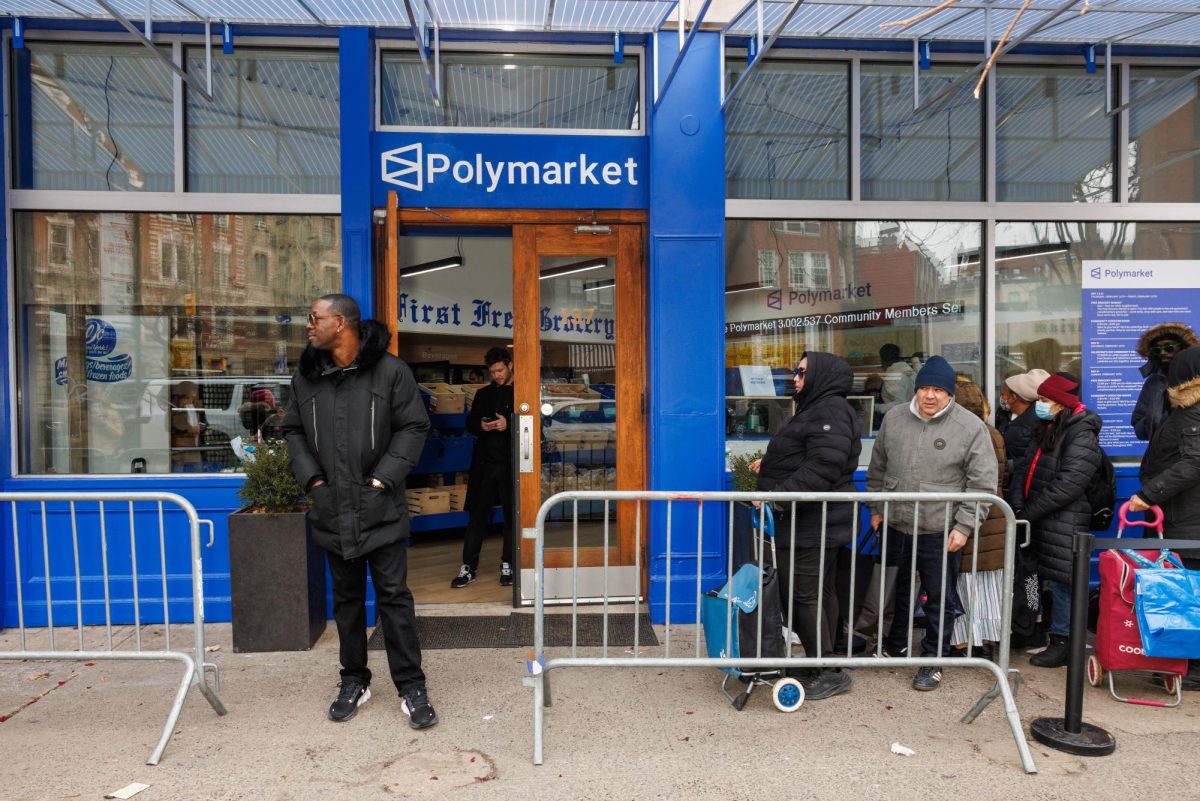
Thousands of New Yorkers flocked to the West Village to shop at The Polymarket — New York City’s first free grocery store, founded and funded by the eponymous prediction market. Lines at the pop-up, which ran from Thursday to Monday, reflected a wide cross section of the city: families, students and older residents from across neighborhoods and backgrounds — waiting in line for hours on Seventh Avenue in front of a temporarily constructed boutique storefront, drawn by the allure of free groceries.
Among those waiting was Robert Hart, who said he came after a difficult year that included heart failure. Hart said that after spending many years incarcerated, rebuilding stability has been challenging, making access to free groceries especially meaningful. After leaving the store with items including eggs, milk, juice and meat, he described the experience as structured and supportive.
“I was so grateful,” Hart told WSN. “I think it was better than a pantry.”
The pop-up follows a similar event earlier this month, when Polymarket competitor Kalshi gave away about $50,000 of groceries at Westside Market. The event similarly saw thousands of customers waiting for their turn to acquire $50 worth of free groceries, sparking questions on the nature of prediction market-backed food initiatives.
“It’s not a free grocery store. It’s a promotion for Polymarket,” Toni Hazel, another attendee of the event, told WSN. “People are coming in with carts to take home food — you get a tote bag, and you can put two carrots in.”
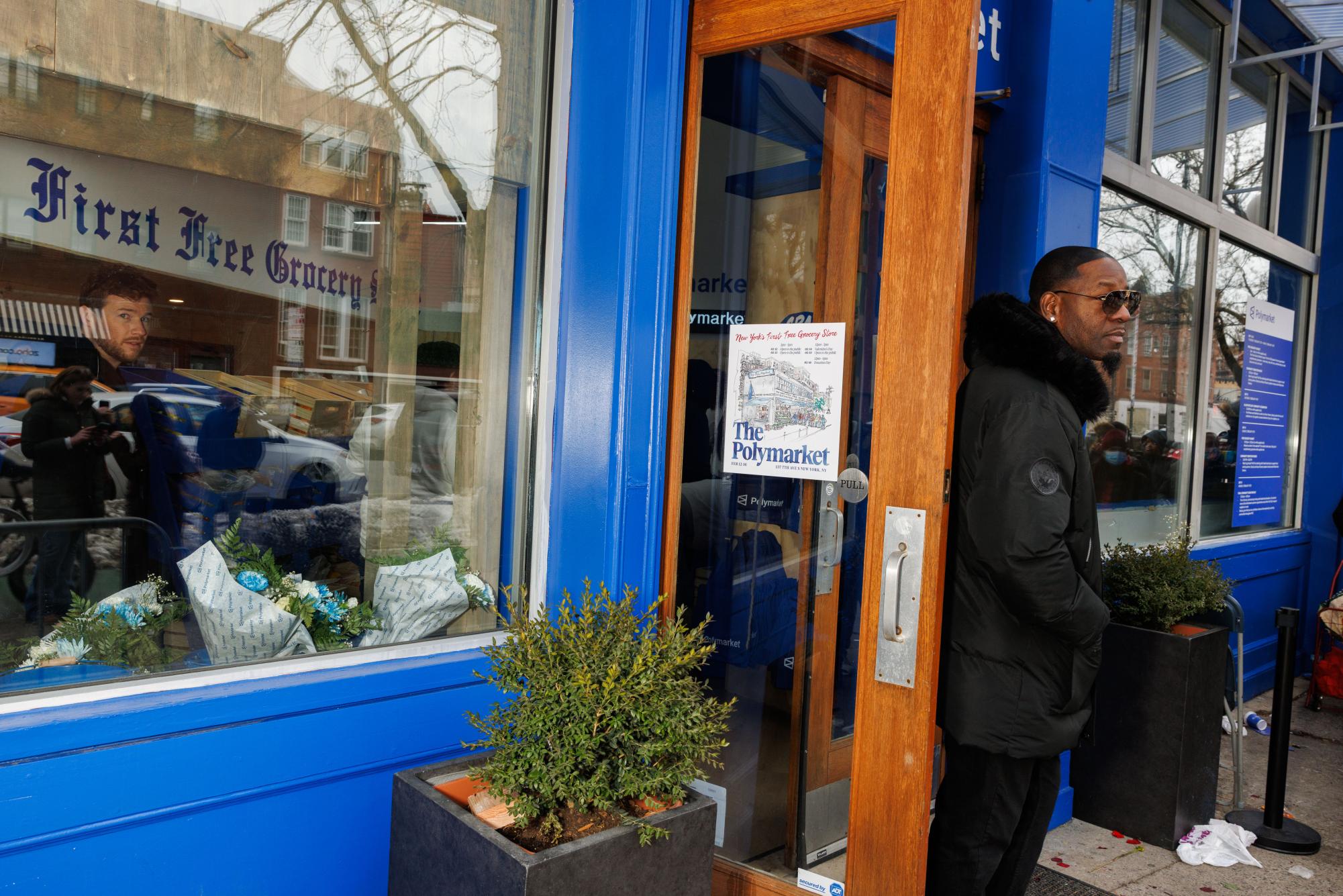
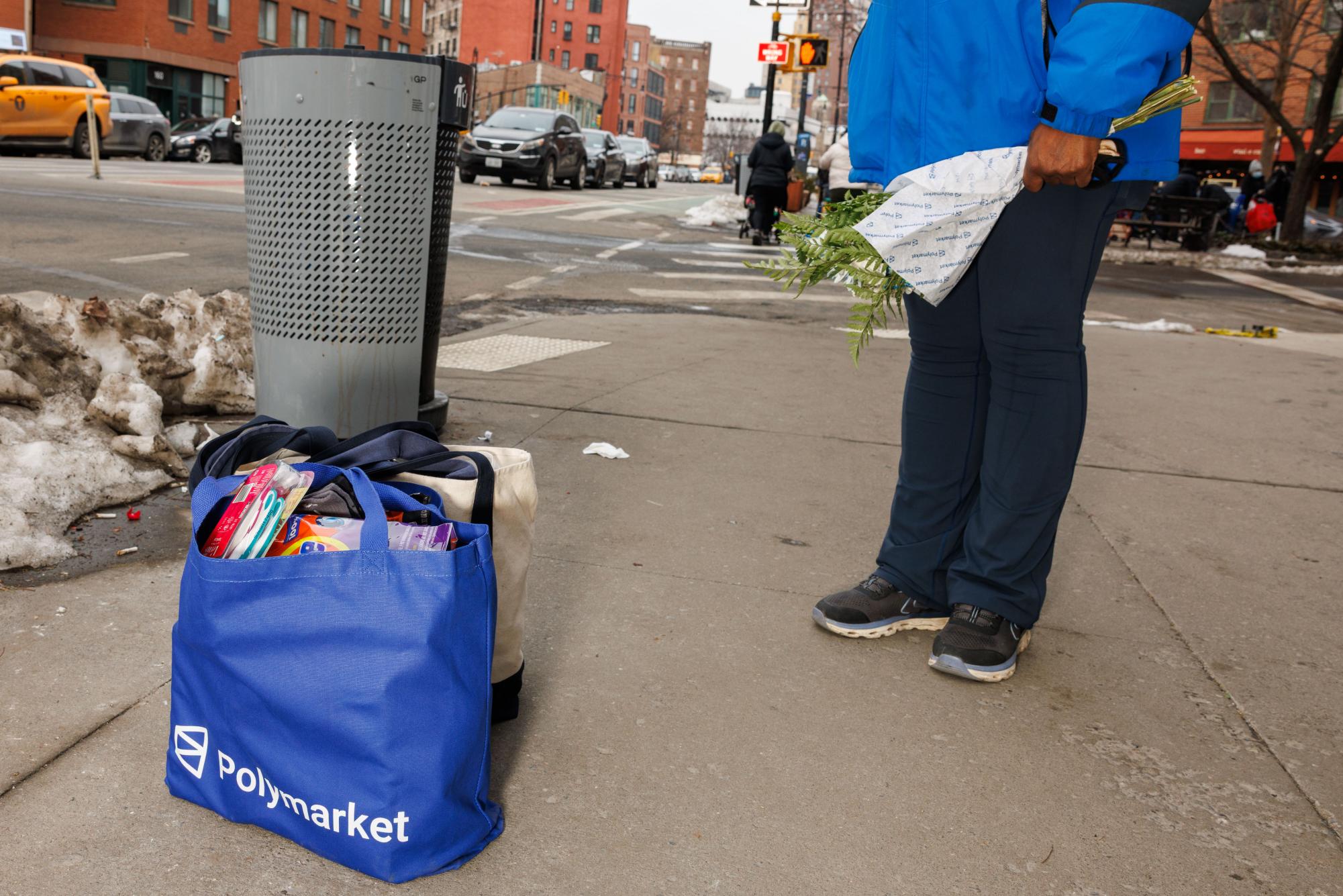
Painted in Polymarket’s signature royal blue and branded with the prediction market’s logo, the grocery store featured a ticketed system to manage crowds, with security guards directing long lines to keep sidewalks clear. Upon entry, shoppers were given branded tote bags and paired with staff members who guided them through the store and allowed them to choose items based on their needs. While the supermarket offered a wide array of products from fresh fruits to toiletries, certain high-demand products such as meats, eggs and cheeses were limited to ensure supplies could reach more people.
Both Polymarket and Kalshi, where users trade on the likelihood of future events, have garnered criticism surrounding the ethics of prediction markets. Many argue that betting on real-world outcomes raises moral concerns. Recent allegations of Polymarket users having insider info, including within the Israeli military and about the Super Bowl halftime show, have created an air of skepticism around the prediction markets amid their recent grocery store initiatives.
Furthermore, the markets’ ties to President Donald Trump — with his son Donald Trump Jr. serving as a strategic advisor for Kalshi and an investor for Polymarket. Additionally, the apartment of the Polymarket’s CEO was allegedly raided by the FBI after the market correctly predicted that Trump would win the 2024 presidential election.
Despite the ambiguous political background, Josh Tucker, who works on Polymarket’s marketing team, described The Polymarket as a way to give back to New York City. Aside from Polymarket CEO and NYU dropout Shayne Coplan and CMO Matthew Modabber both having been raised in New York, the prediction market also collaborated with numerous social workers who have had tangible experience in helping people address food insecurity in the city. Tucker added that Coplan often says there are four things he loves: the Knicks, the Rangers, New York City and Polymarket.
Inside, the market bore the words “New York’s First Free Grocery Store” in Gothic font — which, while true to some, may read as a reference to Mamdani’s plans to open city-run supermarkets. After Polymarket announced that it would be opening a grocery store, Mamdani posted a cheeky headline on X: “Heartbreaking: The Worst Person You Know Just Made A Great Point.”
Michael Stone, who headed to the West Village from Rockaway, Queens after hearing about the pop-up only a day earlier, said that learning more about the company left him with mixed feelings.
“I don’t mind the part you’re hedging on people winning,” Stone said in an interview with WSN. “But I have a problem with you hedging on the bad.”
Another factor in his frustration is that when Stone had gone to the market for the first time on Saturday, The Polymarket was only handing out flowers in celebration of Valentine’s Day. On Sunday, Stone remained outside as wait times surged to several hours, with staff offering hot chocolate and hand warmers to those waiting in the cold. Anna Calabrese, a social worker working at the site, later provided Stone with a grocery gift card as compensation for the long wait. Part of her role involved connecting visitors with longer term resources, such as local food banks.
“People aren’t out here because this is a PR stunt,” Calabrese told WSN. “People are in need.”
-
(Jason Alpert-Wisnia for WSN)
-
(Jason Alpert-Wisnia for WSN)

Robin Young contributed reporting.
Contact Jason Alpert-Wisnia at [email protected].