




























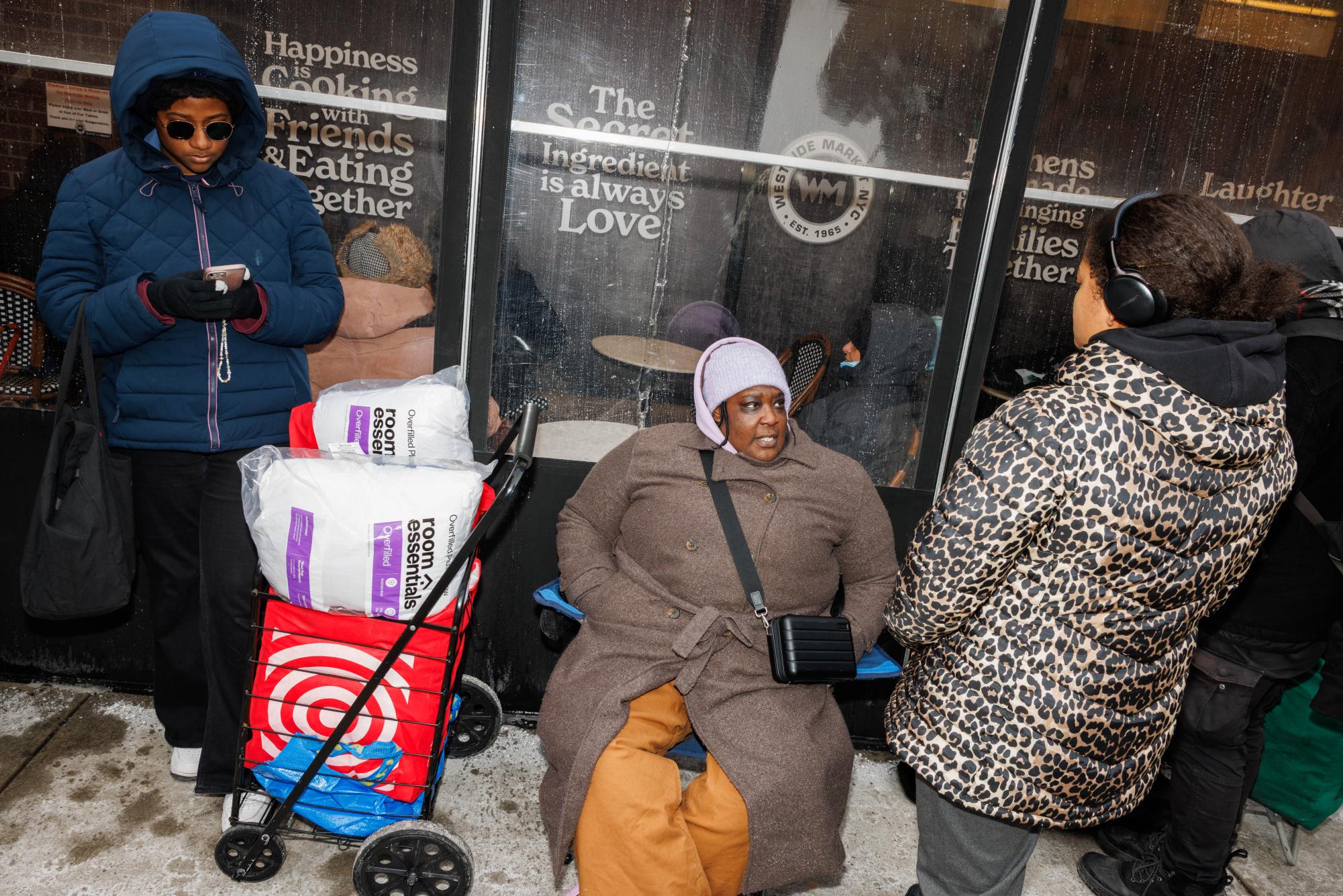
At 7 a.m. on Tuesday, Lenval Laird was the first in line in front of Westside Market across the street from Third Avenue North. Bundled up for the icy weather, he stood patiently for the next five hours. Over the course of the morning, students, locals and residents from other boroughs formed a line that wrapped around the block — and left with about $50,000 worth of groceries.
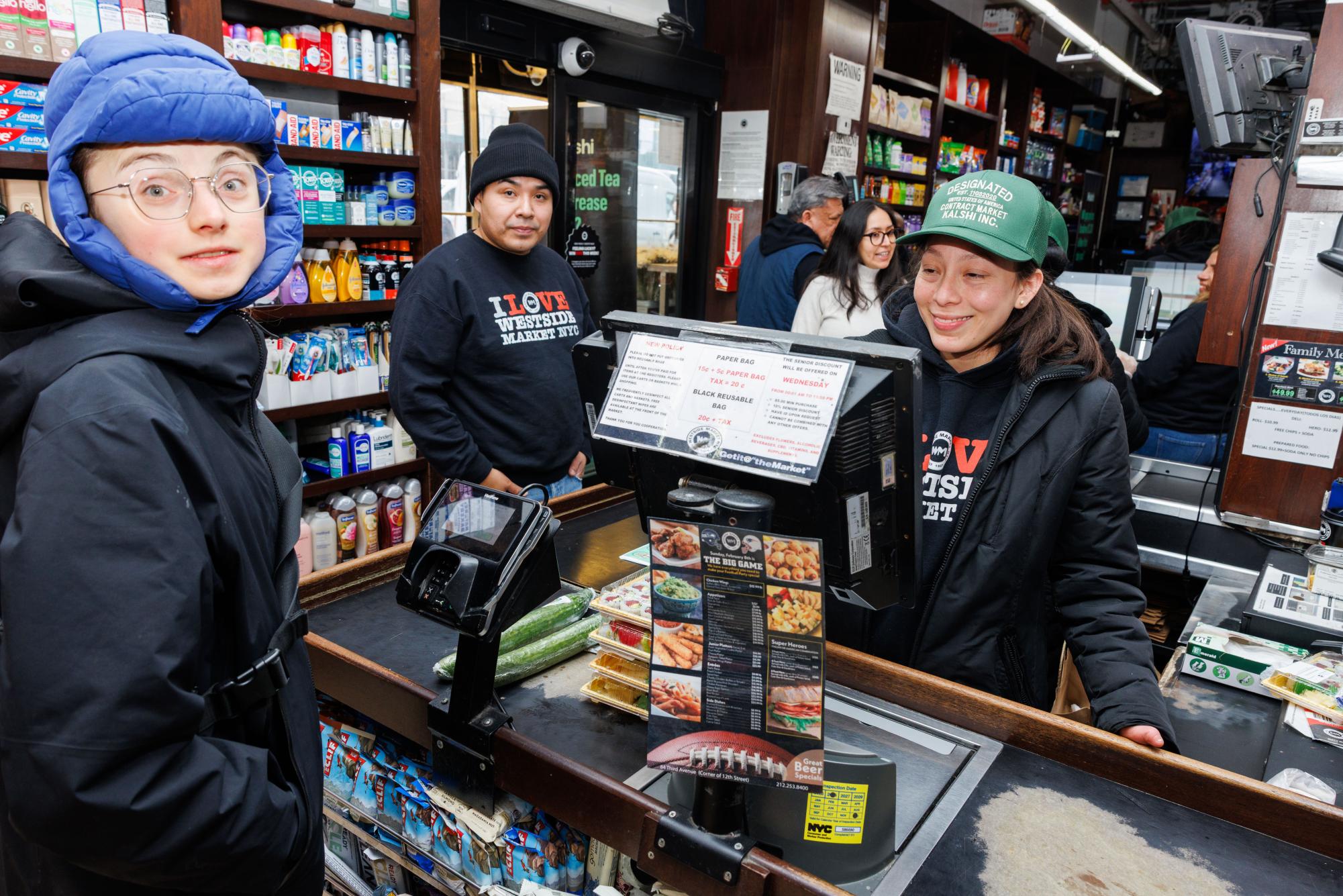
The crowd was the product of an announcement by Kalshi, an online platform that lets users place bets on outcomes of future events. On Monday, the prediction market said in an Instagram post that it would be giving out $50 worth of free groceries to every customer at the East Village Westside Market between 12 and 3 p.m. Although information was scarce — aside from the money coming with no strings attached — the event amassed over 1,700 RSVPs within the next 24 hours.
“I was sitting in there watching the line just build and build,” Laird said. “I knew it was gonna be a long line. So I said to myself, ‘Let me make sure I prepare and get ready.”
The giveaway, which served the first 1,000 customers in line, was designed to address financial pressures felt by many New Yorkers. Westside Market CEO George Zoitas — who had already been running a monthly raffle-based loyalty program that gives winners $400 worth of free groceries — welcomed the Kalshi collaboration as another opportunity to make New York City more affordable for its residents.
Just a few spots behind Laird, Milla Jackson had traveled from Brooklyn to claim her place in line at 9:30 a.m., even bringing a chair to wait out the next few hours. Jackson, among many others, was particularly grateful for the chance to acquire free groceries.
“This is an amazing event because the price of everything is so high in New York City, so any little thing helps,” Jackson said. “And as you can see, the turnout is real. There’s so many people in line, because we need it, and we happen to have it.”
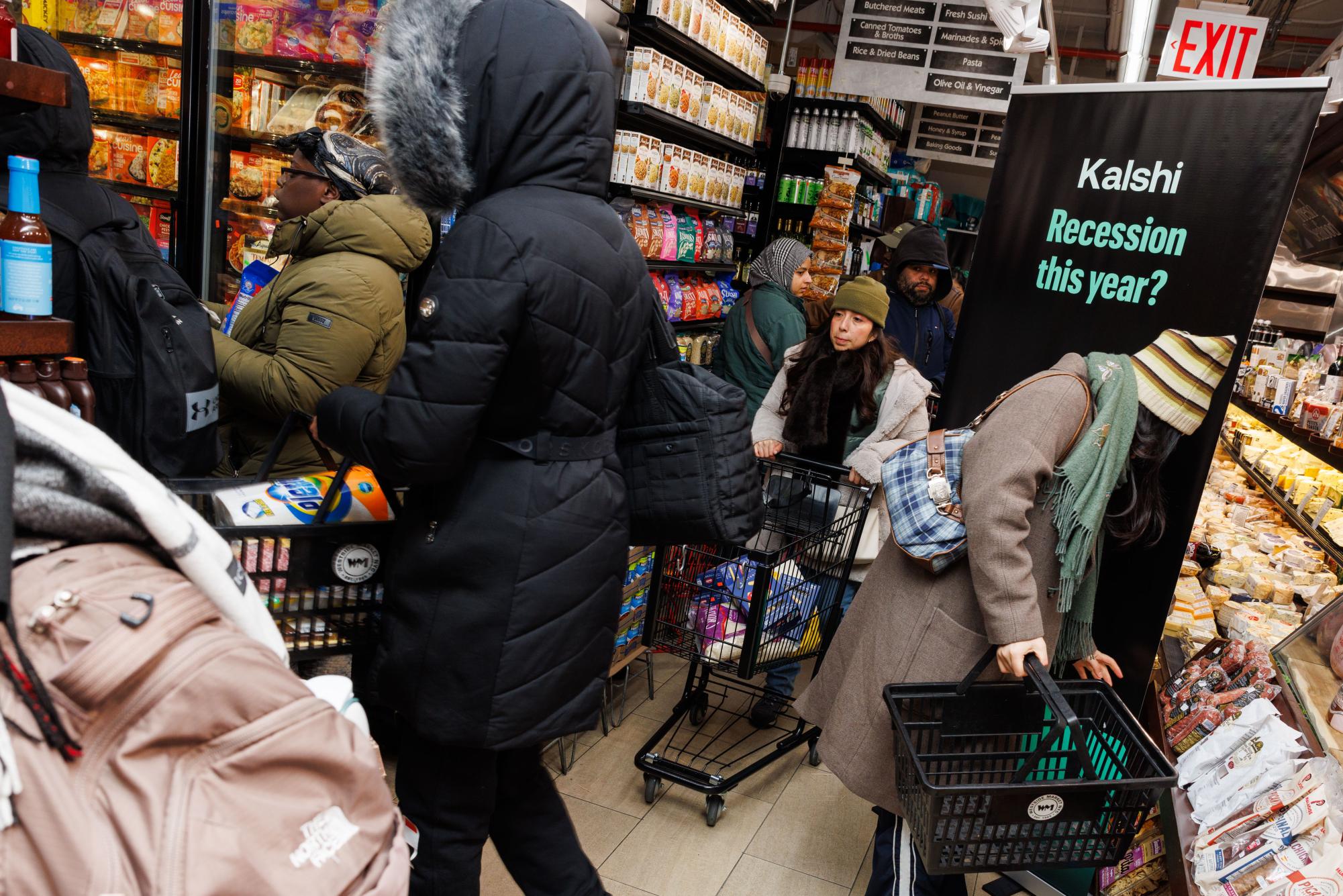
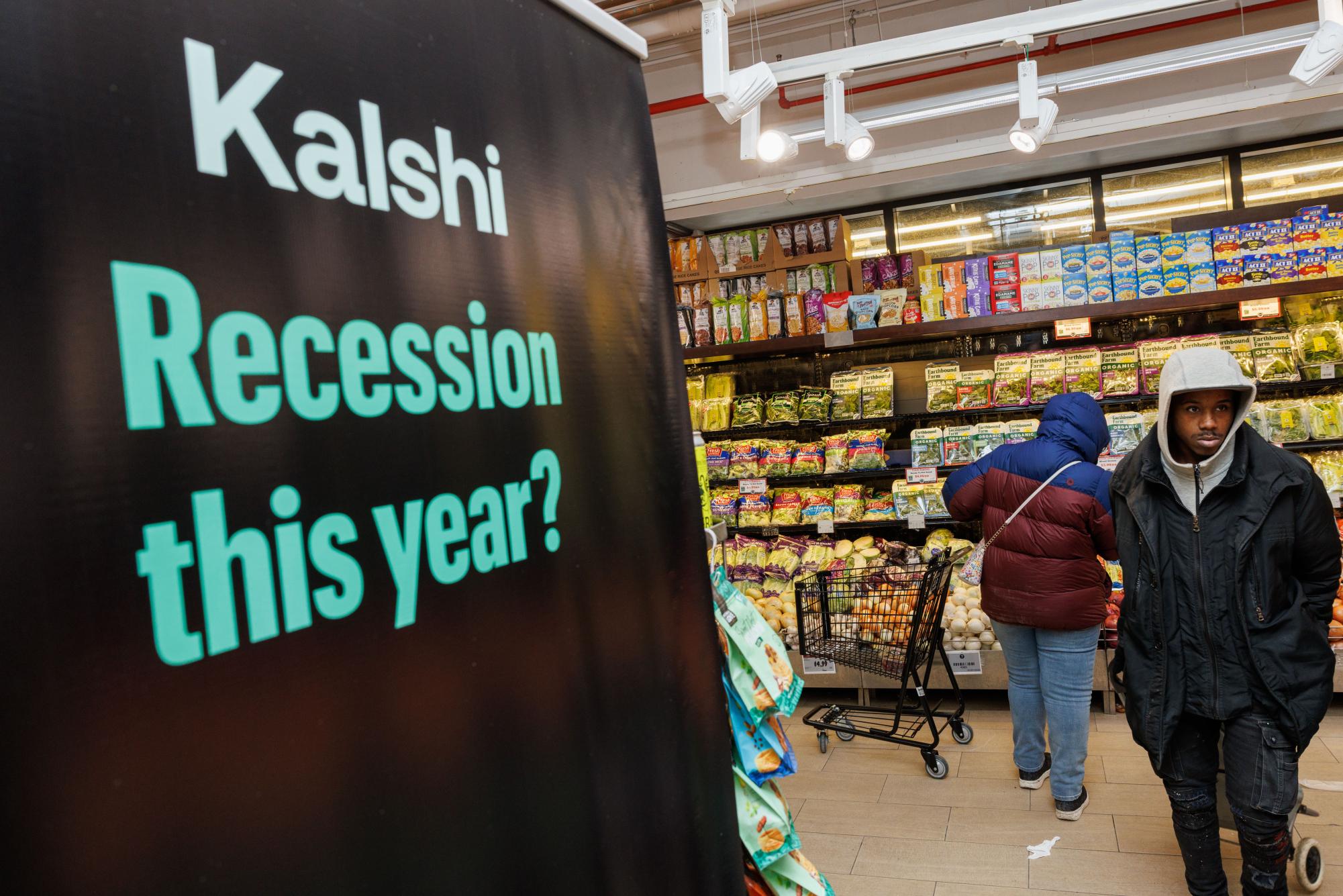
With hundreds of people waiting in the cold and the line growing larger by the minute, security strictly regulated entry to prevent overcrowding. Store employees wore beige or green Kalshi ballcaps and handed out “Kalshi Loves Free Markets” stickers to customers. Although some were unfamiliar with Kalshi and the realm of prediction markets, New Yorkers recognized that $50 worth of groceries goes a long way as the city’s cost of living continues to rise.
“It’s a really good initiative because most of my money is gone for the rent,” NYU Ph.D. student Sundar Tanari said. “That’s almost 60% of what I earn on a monthly basis, and the rest are actually for groceries, and whatever I’m left with is usually for my entertainment.”
Others were aware of the platform’s ethical concerns. Kalshi is currently facing 19 federal lawsuits regarding the legality of prediction markets in the face of state anti-gambling laws. In addition to acknowledging its legal gray area, some customers also described Kalshi as “dystopian” — users can bet on anything from the United States’ annexation of Greenland to what MrBeast will say in his next YouTube video.
“You can see people betting on the craziest shit, like on the Epstein files,” Michael Chen, a student at The Cooper Union who attended the event, said. “When you start quantifying things in terms of ‘Can I make money off it?’ you’re not really thinking about the human impact of things. It’s very dehumanizing.”
Kalshi’s event is followed by a similar marketing stunt from competitor Polymarket, which is planning to open New York City’s first free grocery store — called “The Polymarket” — on Thursday, Feb. 12 at noon until Sunday, Feb. 15 at an unspecified location downtown.
Though the giveaway was scheduled to end at 3 p.m., Zoitas was determined to honor the promise of free groceries for all, extending the event past its initial cutoff. As the head of a nearly 50-year-old family-run business, he wanted to ensure that no one in line left empty-handed.
“The conglomerates and the Amazons of the world have made it hard for family-owned businesses to compete,” Zoitas said. “Without the family-owned businesses that New York is known for, what’s New York? Where’s the charisma? We’re losing that.”
-
(Jason Alpert-Wisnia for WSN)
-
(Jason Alpert-Wisnia for WSN)
-
(Jason Alpert-Wisnia for WSN)

Contact Jason Alpert-Wisnia and Ivanka Sun at [email protected].