





















‘Deep concentration is a superpower,’ so what happens when we lose it?
Under the Arch
‘Deep concentration is a superpower,’ so what happens when we lose it?
The world reading less has the potential to send us hurtling toward dystopia.
Leena Ahmed, News Editor | March 2, 2026
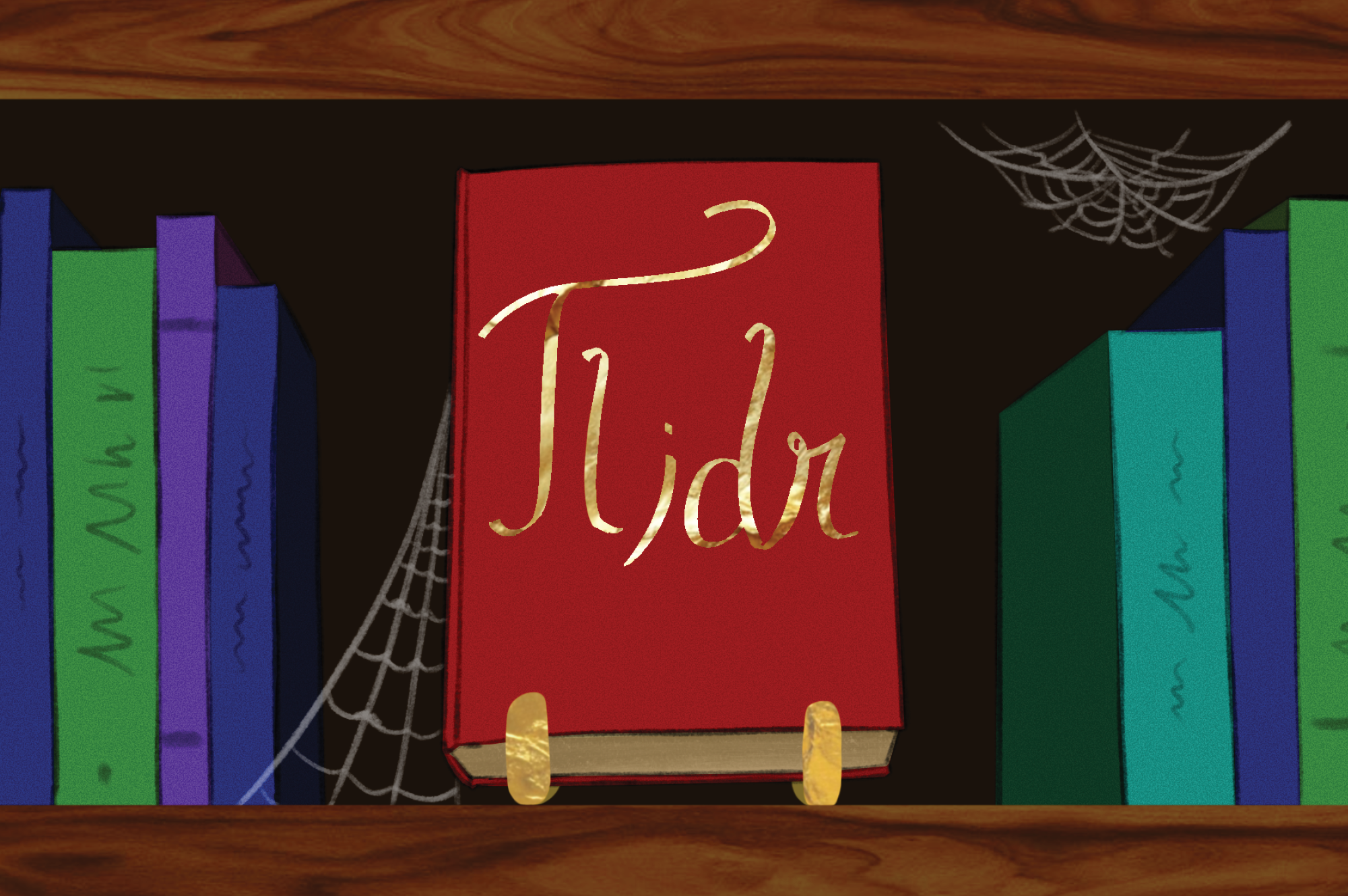
A book often read in high school about a dystopian America consumed by screens is no longer fiction. The 1953 novel “Fahrenheit 451” tells the tale of a government that banned books to suppress its citizen’s opposing views and critical thinking as a whole. The only distinction is that today, governments don’t need to ban books across the board — citizens are abandoning the practice like never before.
Ray Bradbury’s novel is potentially one of our first reminders of the consequences of illiteracy. Ironically, it’s considered to be at a ninth-grade reading level, which significantly exceeds the reading ability of 54% of Americans who read at or below a sixth-grade level. While we cannot predict the future, it’s evident that Bradbury’s dystopian book will soon become a reality if we don’t realize the consequences of abandoning books.
As literacy rates continue to drop, we lose critical thinking skills and risk upending our intellectual and emotional intelligence. People will lose their drive to be curious, struggle to form opinions that don’t merely mimic others and intellectual conversations on literature or current events will become a rarity. In an age of artificial intelligence, we increasingly become victims of misinformation. Even if one inaccurately believes they are an exception to the rule, they are substituting confidence with comprehension.
Susan Neuman, a Steinhardt professor of childhood and literacy education, emphasized that reading is necessary in everyday responsibilities such as following directions in manuals, checking emails and getting your driver’s license. She predicted that in a few decades, the shift will affect how people exercise their democratic right to vote, select politicians and partake in various civic duties.
“Reading is about learning more about your world and participating in that world,” Neuman told WSN. “In the future, I could see people becoming more insular and not participating in basic processes across our democracy — and that would be really, really tragic.”
The general consensus on why reading is abandoned centers around how media consumption has changed with the advent of new technologies. A 2024 statistic revealed that the average U.S. household has 21 devices connected to the internet — with that many options to choose from, it can be easy to categorize reading as a less enjoyable choice. However, it is society’s collective responsibility to recognize and prioritize the consequences of declining literacy over the instant pleasure derived from technology.
Stern professor of business & society Alison Taylor said that despite having AI readily available, it’s important to be well-versed in the subject that you input into a large language model.
“There is a problem with treating all sources as equal and not being able to distinguish credible information from less credible information, not knowing major intellectual frameworks and having enormous gaps in your general knowledge,” Taylor said. “Deep concentration is a superpower — and that’s not just a young-person issue. The ability to concentrate, focus, digest and think deeply becomes a differentiator.”
While the ability to read and write is a powerful tool that prepares people for the world, it would be remiss not to mention that low-income and marginalized communities face barriers to accessing literacy materials. Black and brown students bear the brunt of this systemic issue, an interplay that society must acknowledge and tackle. Neuman said her work involves making books readily available in what she calls “book deserts.”
“We put books in laundromats, which is where lots of people have to go on the weekends, and every day places, so it saturates a community and ensures that people see books and materials in their neighborhood,” Neuman said. “Volunteers are reading to children early on — whether it’s the playground or the laundromat or the hospital — and children are developing reading that way.”
While it may be easy to skim headlines, scroll on TikTok and watch YouTube videos at twice the speed, it’s vital that we don’t lose sight of the importance of the written word. Next time you are in Bobst or your local library, take a second and explore the plethora of books on every subject available for you to read. Explore audiobooks and download Substack, an app for writers, creators and bloggers to express themselves. Make efforts to incorporate reading as a habit, because not being well-read should be terrifying.
Contact Leena Ahmed at [email protected].

Leena Ahmed is a senior studying international relations with a minor in French. When she’s not on her most used app on Screen Time, Gmail, she’s probably...

Allina Xiao is a junior studying computer science at CAS. When she's not creating art for her Instagram @xxallinaxart, she can be found enjoying her fifth...