




















Dean of Libraries on 20 years at NYU
Under the Arch
Dean of Libraries on 20 years at NYU Libraries
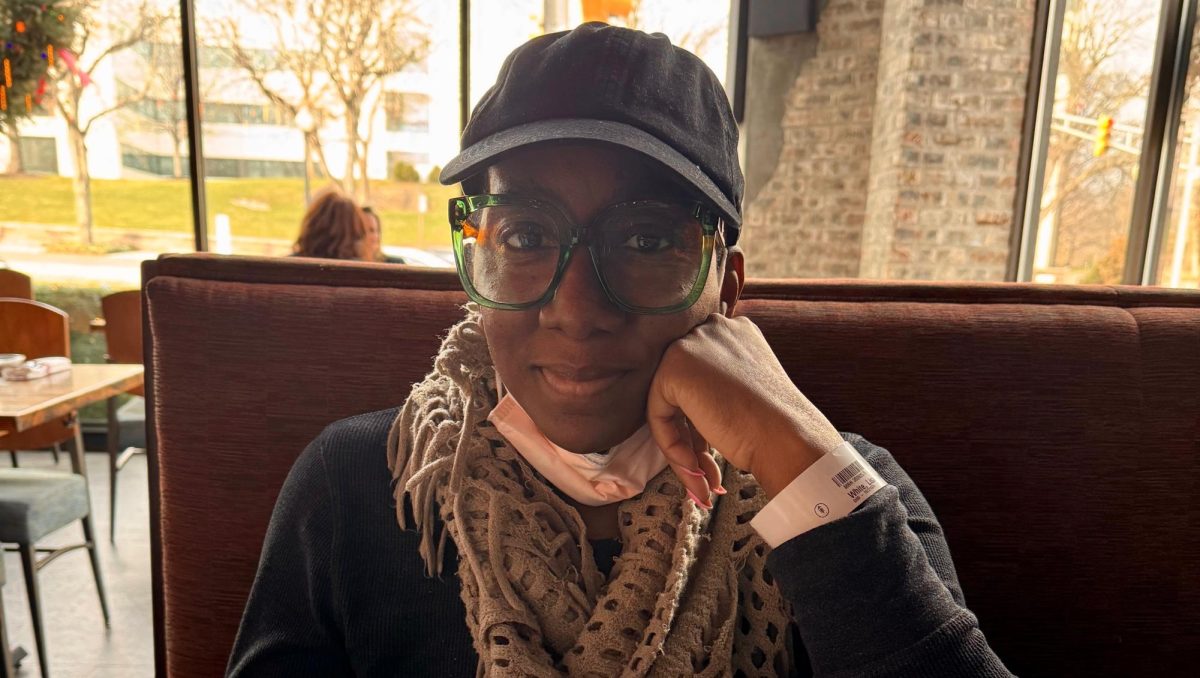
Kristina Rose spoke with WSN about leading NYU’s global library system in an era of artificial intelligence and digital transformation.
Krish Dev, Digital Director | March 2, 2026
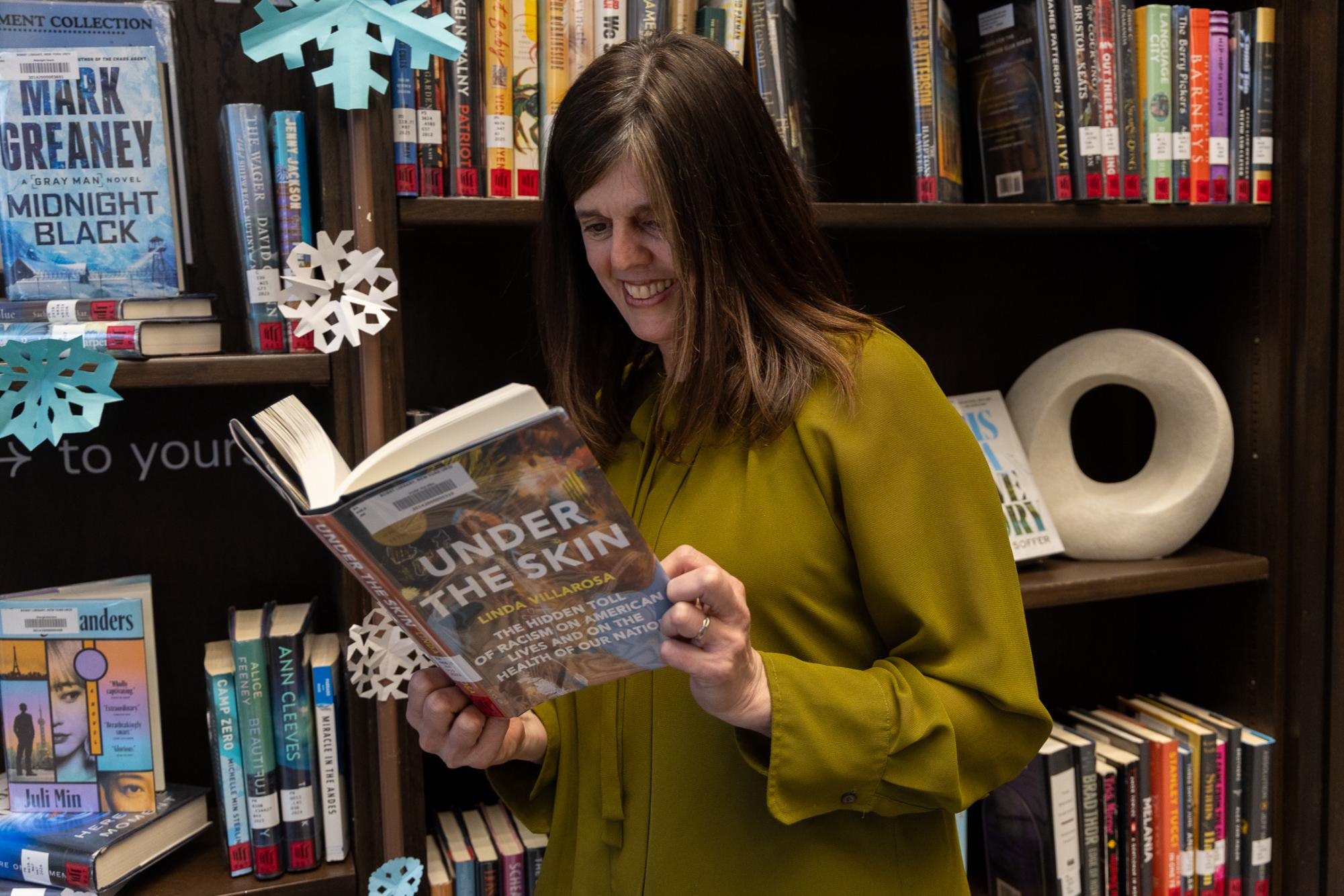
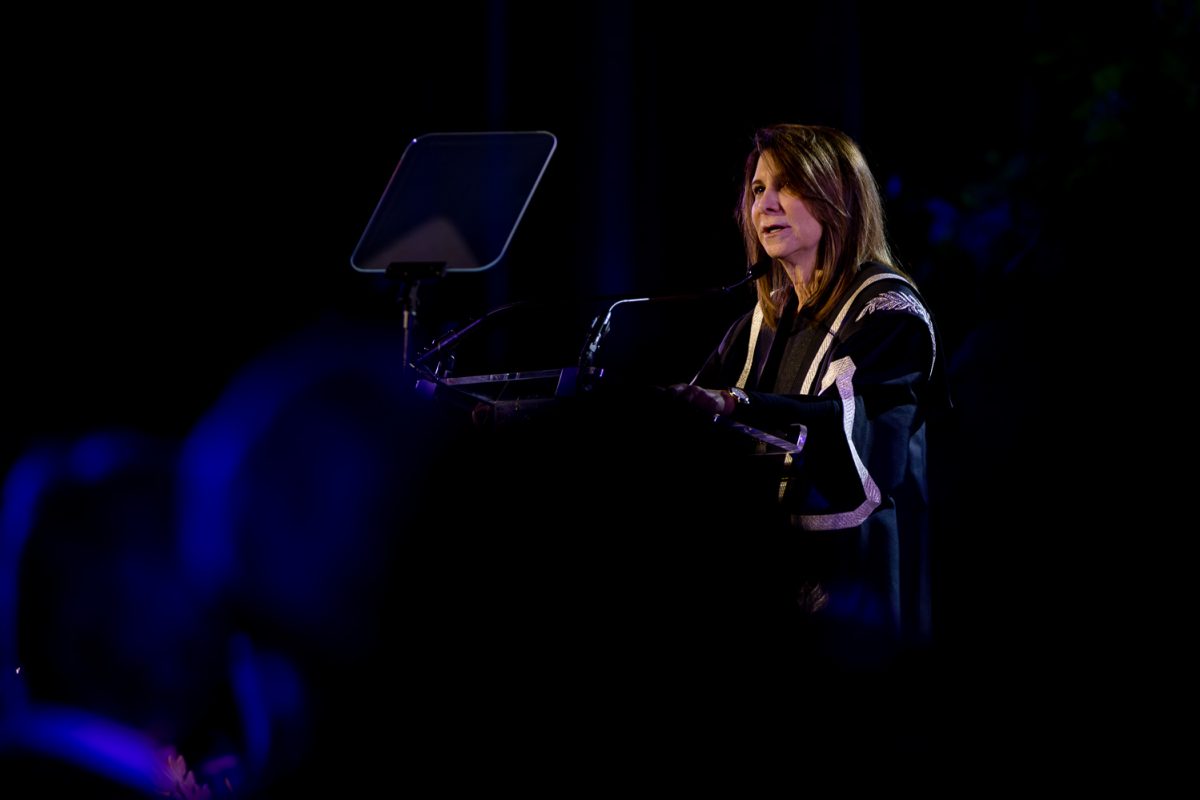
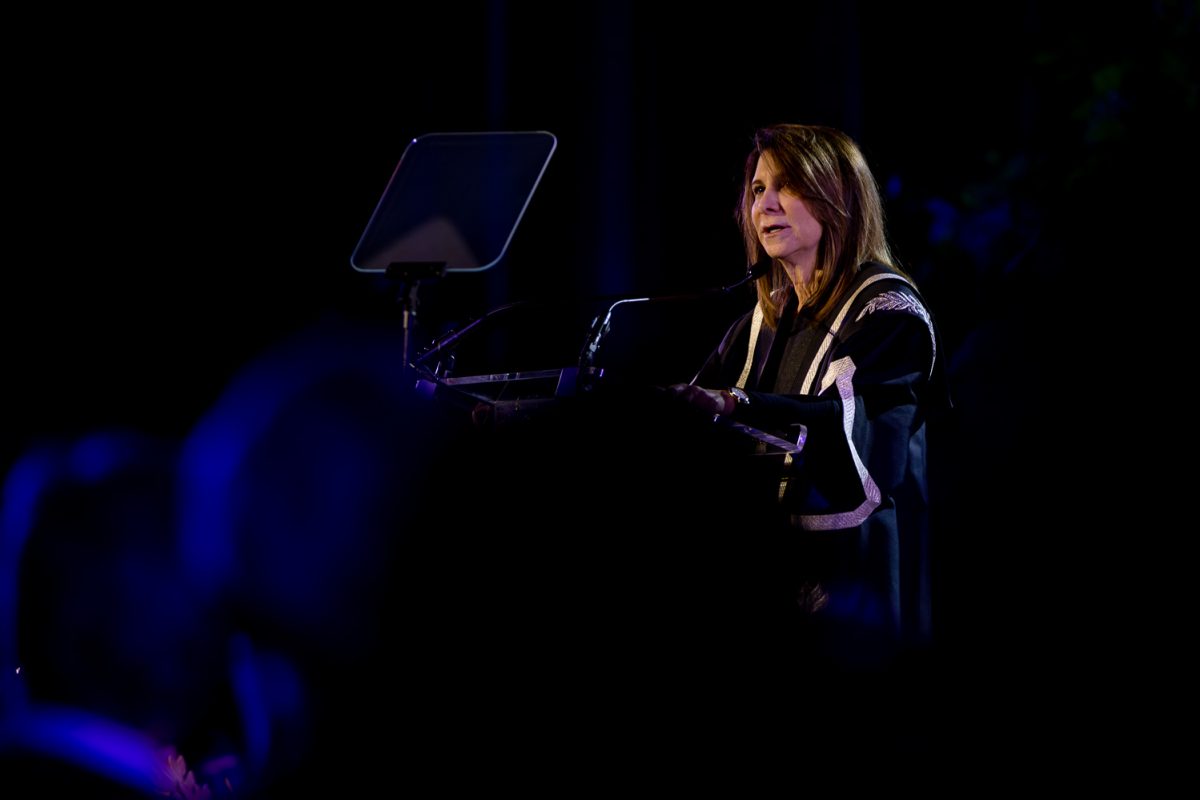
In 2004, Kristina Rose found herself in a cold back room surrounded by giant microform cabinets covered in pencil marks left by movers. Armed with a Magic Eraser, she spent her first day at Bobst Library wiping them clean as lower level two opened to students for the first time.
Over 20 years later, during which NYU opened two degree-granting campuses abroad, Rose oversees a library system serving a global network across six continents. Formally appointed as dean of libraries last May, she has held roles from access services librarian to associate dean for collections and content strategy — with a three-year pause to be a stay-at-home mom.
In an interview with WSN, Rose discussed her journey to the deanship, the library system’s approach to AI and a human-powered resource she wishes more students used.
This interview has been edited for length and clarity.
WSN: Tell me about your history with NYU Libraries and your journey to becoming dean.
Rose: I’ve worked here since 2004, and at that time, I was in charge of reserves and Interlibrary Loan, which is a service where we borrow books and materials from other libraries for our researchers here. I did that for a few years, and then I had my second child, and I was like, ‘I need some time.’ But after my boss’s husband got transferred to the Netherlands, they called me back and said, ‘Can you please work?’ I came back to my boss’s job, and it kind of went from there.
Most of my career has been spent working on that connection of figuring out how we connect people with our resources, so that’s really important to me. Sometimes, if you hit a barrier, you might not want to come back. You might go to Google or you might just think ChatGPT is a great way to get all your information — it’s not. I’m really invested in thinking about how we can make things much easier for people to use. How can we make our libraries more comfortable for people to be in?
WSN: How have students’ relationships with physical books evolved over your time here?
Rose: Physical books are what people think of as a library, and they kind of make the library in a way. Over my career, there’s been significantly less usage of print materials. But when we talked with students, especially during the first-floor remodeling, they said, ‘When I walk in this building, I want to know it’s a library and I want to see books.’ We’re working on an eighth-floor project where we’re increasing quiet seating and enmeshing that within bookstacks because those are physical symbols that this is a quiet, scholarly place. We still have a considerable number of people who want to go and look at shelves, so we’re really thinking about how the collection we keep here on site is the most responsive to what our faculty and students need.
WSN: Some NYU professors require physical books rather than online materials. The university has also implemented a ‘device-free environments and events’ initiative. How do you balance offering traditional library resources with expanding digital offerings?
Rose: There’s a place for all of it because we’re a multiformat place. We’re sort of in a digital generation since many students were raised with phones. That’s an amazing thing, but the library has a role in student wellness and creating places where everybody can do their best work as scholars and learners. We support the NYU IRL initiative and have spaces in the library where people can just rest and relax for a little bit. Part of the logic behind the first-floor renovation was making it more welcoming and comfortable, especially for our neurodiverse students — a lot of sound dampening, a lot of soft furniture.
People often ask me, ‘Is there a space in the library where we don’t have Wi-Fi?’ While we don’t have that kind of space, we are thinking about spaces where students can work without distraction. We’re also getting really good showings for students who show up to sit in one of our rooms and meditate on the Earth, and that’s another way of disconnecting through taking a pause. However, there are also books that are not coming out in print, because that’s the reality of where we’re at in the information economy — it has to be a balance.
WSN: How is NYU Libraries adapting to the proliferation of artificial intelligence, especially in regard to research and reading?
Rose: Everybody’s experienced this enormous change in the last couple of years. I was talking to one of our librarians, and she was like, ‘I don’t know that I can write a research paper on this stuff right now because it changes so quickly.’ One thing we are doing a lot is thinking about the evergreen foundational skills you need to succeed academically, like searching for materials or evaluating whether a source is credible. AI can help with some of this — especially if we think about the ways that it might be able to help us discover more materials — but we have to be really aware of what these tools are and what they’re trained on. They don’t have everything, and sometimes they hallucinate and give you a citation that’s not at all right.
Our position is to be curious and critical. AI can sometimes help with reading. When I have a complex text and I put it in Google NotebookLM, it’ll make a mind map and flashcards, which could really help, especially for people who learn differently. We have amazing research guides on all sorts of subjects, including several on AI at this point, and those are things that we’re constantly going back and adding to. There are places where AI is definitely something that can help us, but at the same time, it’s also something we have to be critical about — buyer beware.
WSN: What is something you wish students knew about the library system?
Rose: We have librarians whose whole job is to help students succeed academically. You can ask a librarian a question, and they’re not going to tell anybody the question you asked. We really want people to use the experts who are here. We run our Ask a Librarian service near 24/7, and the reason we can do that is because when we’re asleep here in New York, we’ve got librarians that work in Abu Dhabi and Shanghai. Fifty librarians run that service — it’s not done by AI. If somebody sends us a text message at 2 a.m., it’s going to be a real person who answers that.
WSN: What is the most meaningful book you have read?
Rose: The book that changed my life is Wendell Berry’s ‘The Unsettling of America,’ which I read a long time ago. It is about the incredible change of family farms being gobbled up by industrial-scale farms, and what that meant for people and communities. After I read it, I decided I wanted to work on a farm, and then I decided I wanted to go to chef school — books can change your life, if you let them.
Contact Krish Dev at [email protected].

Krish Dev is a third-year senior studying computer science and linguistics. This is his fourth semester on WSN’s management team, following his time...