





























Meet the students living off, off campus
Under the Arch
Meet the students living off, off campus
From Jersey City to Ridgewood, Queens, off-campus living extends far beyond lower Manhattan.
Lauren Ng, Managing Editor | April 20, 2026
Photos by Lauren Ng
At a university indistinguishable from its surroundings, student life is nothing short of an exercise in urban engagement. Living off campus — especially in neighborhoods far from the highly affluent, largely white bubble that is Greenwich Village — means not only relying on public transportation, but grappling with the unique cultural and environmental dynamics that span the metropolitan area.
Together, these four students, each from unique corners of the university, spend a total of roughly four hours commuting across nearly 40 miles every day, spanning three boroughs and two states. Here’s a look at how they balance life as commuters, why they chose their respective neighborhoods and what they’ve learned from living off, off campus.
These interviews have been edited for length and clarity.
“It is refreshing because in New York, there’s a lot more diversity.”
Keyth Fox-Kirkland, Steinhardt senior studying Media, Culture and Communication
Bedford-Stuyvesant, Brooklyn

WSN: You transferred to NYU last school year. What has it been like living off campus for your entire career here, and what drew you to this neighborhood?
Fox-Kirkland: I was previously in the Air Force for about four years, and I’m currently using my GI Bill to go to NYU. Before Bed-Stuy, I lived in the Lower East Side. The thought process for the move was finding a place that would be more sustainable for my long-term goals, as I plan on staying in the city for quite some time.
The biggest challenge might be that the trains are often delayed, and sometimes that will make me late to class. I do also feel like friends and classmates of mine are a little less likely to take the train out to Bed-Stuy to come hang out than they were when I was in the Lower East Side.
WSN: How does your time in the military shape your experience as a student?
Fox-Kirkland: I notice it, but it’s not a point of friction. If anything, I would equate the difference of experience to that of anyone else who has a nonlinear path. I just have a different perspective on certain things, and it allows me to enter into some discussions with my classmates with a certain amount of depth.
Funny enough, a military base is very similar in terms of planning and interaction as a city. It’s designed to be walkable, for all of your necessities to be easily accessible and for you to be able to operate as a collective with those who you live near. I didn’t want to live in the suburbs because I’ve never been used to not being able to just walk to the grocery store, a restaurant or to hang out with my friends. It is refreshing because in New York, there’s a lot more diversity. The military is very homogenized in ideology, mindset and interests.

WSN: How would you compare life in Bed-Stuy to the Lower East Side?
Fox-Kirkland: There’s more of a mix where I currently live, and more people born in Brooklyn. I don’t think I ever met a single person from there when I was living in the Lower East Side. The neighborhoods around Washington Square Park ends up feeling like a college town, which is good and bad for some reasons.
“If budget wasn’t a question, I would not choose to live about an hour from campus.”
Anabel Giacobbi, Gallatin senior concentrating in science, technology and society
Ridgewood, Queens

WSN: You grew up in Brooklyn, where your family still lives. Why did you decide to live off campus, and in a neighborhood relatively far from NYU?
Giacobbi: Moving out was mostly a decision I made based on how I wanted my social life to be — it’s not super easy living with your parents in college. In terms of why I chose to live in Ridgewood, affordability was my main priority. If budget wasn’t a question, I would not choose to live about an hour from campus, where my whole academic and social life is. I had toured a few small places, and each time I submitted an application, I got priced out of those apartments.
WSN: What obstacles come with living about five miles from NYU, and how does that affect your commitments and experience as a student?
Giacobbi: I work at the Labowitz Theatre on campus, and I also have an internship at a theater company in Midtown West. I try to work close to 20 hours a week — that’s how I support myself. But all of my extracurriculars — I’m on the board of a club, in a sorority and on a sports team — are around campus. I find it hard to stay as involved while living so far away, because people don’t expect you to be so far. I think the expectation and kind of the norm at NYU is that you just live in the East Village. It’s a choice I make — I don’t expect my clubs or other commitments to work around me, but I would say that’s the biggest obstacle.
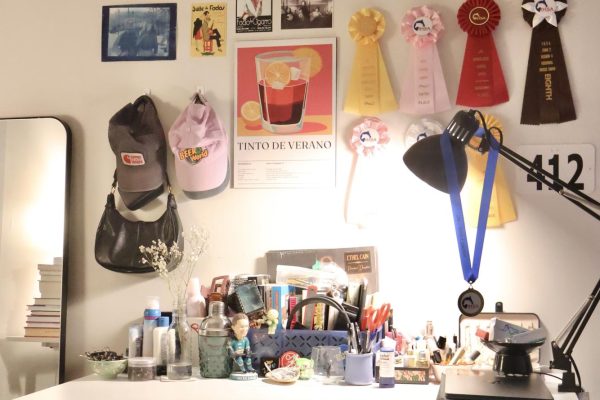
WSN: As a lifelong New Yorker who has spent time across the boroughs, you’ve seen a lot of the city. What is it like now living in Ridgewood, and how has that informed your college experience?
Giacobbi: This neighborhood reminds me a lot of where I grew up in Brooklyn — it’s a very quiet family neighborhood. But from an NYU student’s perspective, I think I’ve spent more time feeling like I was someone who’s a worker living in New York and also happens to take classes. I still feel very much like a part of a Gallatin community, but I don’t always feel like a student because of how much I work and how much time I spend going to and from school.
As someone who had spent more time in the outer boroughs than in Manhattan, I would hope that NYU students explore beyond the NYU area, and always be conscious of how they speak about parts of the city — about public transportation, about the people who have lived here generationally. I would challenge students coming here to expand their horizons a little. I promise you, the food’s better outside of the East Village.
“Every time I go back home, I experience New York in one bike ride.”
Julian Newball-Oladapo, SPS first-year studying business
Hell’s Kitchen, Manhattan
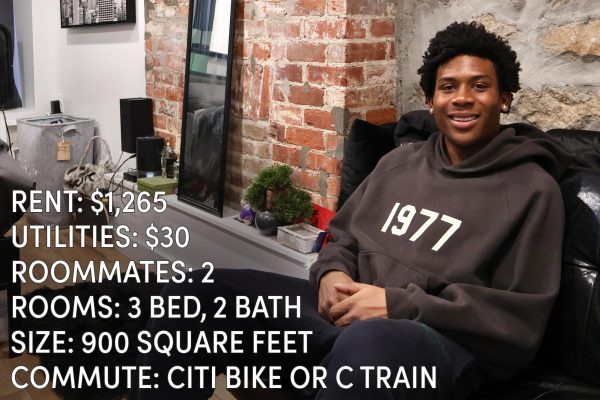
WSN: Why did you decide to find an apartment off campus for your first year at NYU?
Newball-Oladapo: When I was looking into dorming options, I realized it was so last minute. It was already July when my friend told me that someone had posted an apartment on Snapchat, and I just called them and said I was desperate for an apartment — I didn’t even know what it looked like. I signed a lease and just hoped I didn’t get scammed.
WSN: What’s been the biggest obstacle you’ve faced with off-campus living?
Newball-Oladapo: The guarantor system. It’s a little tricky in New York, just getting the apartment. To qualify, you have to be able to pay 40 times the rent, which is outrageous. For people who are young and aren’t as financially blessed, if you need a guarantor and can’t use your parents, it puts you in a position where you have to stay in a dorm or in some far ass place.
WSN: Do you still feel integrated into NYU despite that the vast majority of first-years live on campus?
Newball-Oladapo: I think I’m fully integrated. Every day I hoop at Paulson, and I just got a job on campus doing call service. I’m also in Founders Hall every day since my friends live there.

WSN: What do you like most about your neighborhood?
Newball-Oladapo: My favorite part about living up in Hell’s Kitchen, aside from the name, is the diversity of all of it. I’m in Midtown, one of the most desired areas, which is cool for me. And I feel like the community here is more lively, to be honest. It’s a street that’s up at like four in the morning, people are out, drinking with their friends. And ‘Law & Order’ is literally filming right in front of my apartment — I’ve seen the production crew eating on shift. I could have grabbed a taco with the team if I wanted.
“It’s literally what you make of it.”
Khushi Gandhi, School of Global Public Health first-year master’s student
Jersey City, New Jersey
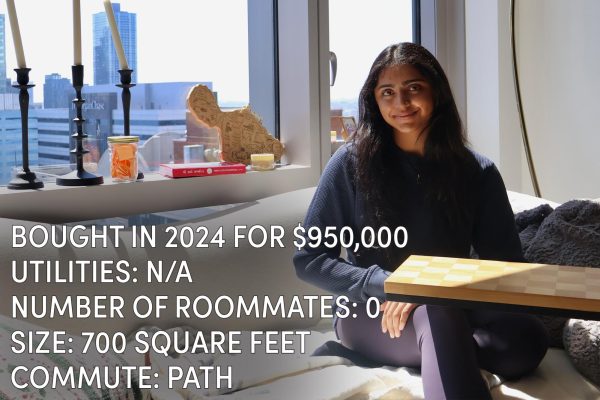
WSN: Though NYU offers limited housing options for graduate students, what drew you to living across the Hudson?
Gandhi: I grew up in Clifton, New Jersey, which is a suburb 30 minutes away from New York by car. I went to school in Boston, and now going to NYU, there’s a lot of transportation from the suburbs of Jersey to the city, but it takes like an hour to an hour and a half. It was just not feasible for what I needed. We got this place before I even decided to go to NYU — it was just a real estate property that my family wanted to have as a place near the city. It’s definitely a lot cheaper than if you were to rent in the West Village or something like that.
WSN: Does life as a commuter make it more difficult for you to get involved in various activities at NYU?
Gandhi: It’s literally what you make of it. I’m technically an online student, so even if I were to live in the NYU area, grad communities are small so it’s hard to make friends. I was very aware of research labs and things like that, so I made a couple friends through that. It’s definitely very different than undergrad, where you’re with your friends all the time and within walking distance. And also you have an adult life, so that’s really not the priority.
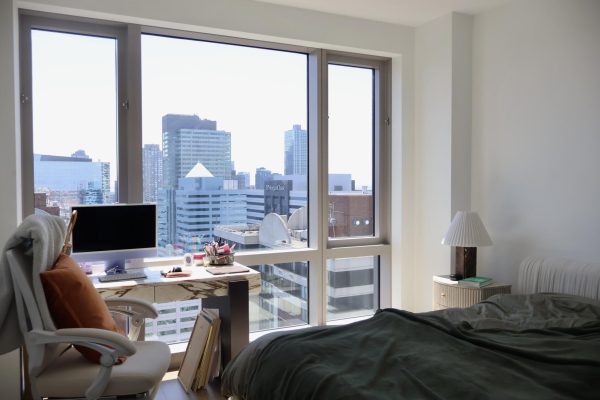
WSN: As an online student, how often do you find yourself on campus?
Gandhi: I use the library a lot, just because of studying. But also, even though I’m online, I’m doing my certificate in public health data science, and a lot of those classes are actually in person, so I’ll be starting to go into class during the fall.
I’m okay with the commute and living off campus. I’m meeting people in the city, so it’s not too much of a hassle. I feel like it’s the perfect balance for me.
Contact Lauren Ng at [email protected].

Lauren Ng is a junior studying a fun combination of food studies, journalism, data science and public policy. Her hobbies include eating, browsing restaurant...