




































Rolling the dice on off-campus living
Under the Arch
Rolling the dice on off-campus housing
Prepare to leave dorm life behind with this guide to your New York City apartment search.
WSN Management Team | April 20, 2026
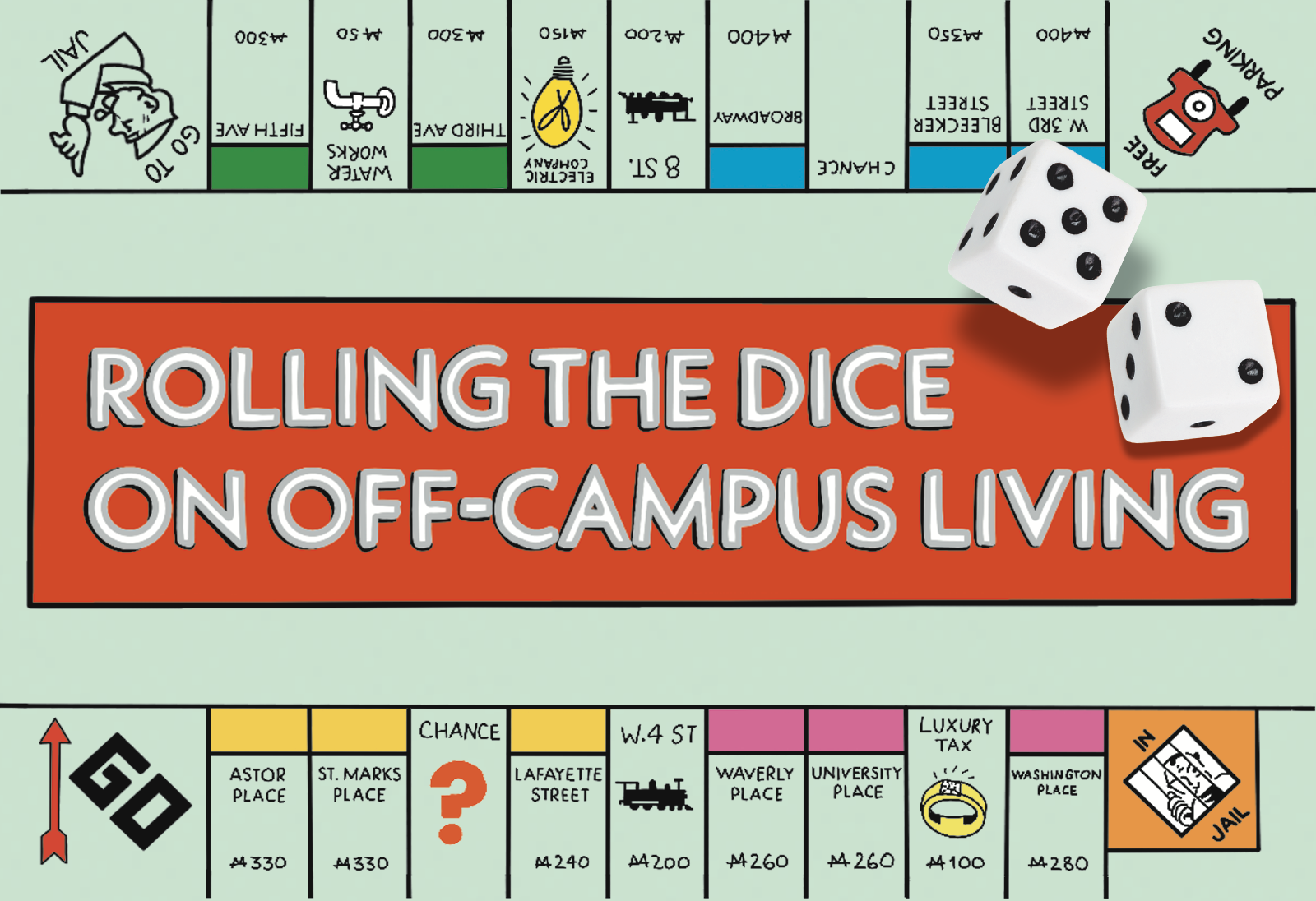
As May rolls around and leases start to expire, students scramble to find off-campus living spaces for the summer, and often into the academic year — marking an exciting step in the transition to adulthood. But when a competitive market poses slim vacancy rates, historically high rents and listings that expire within the hour, looking for an apartment can feel like a ruthless game of Monopoly: some skill, but mostly luck.
WSN’s editors compiled advice to help you play your cards right as you roll the dice on securing your off-campus home.
Talk strategy
It might feel like size is the name of the game, but there’s a lot more to consider than just square footage and aesthetics — only you can decide whether items on your wishlist are non-negotiables or merely bells and whistles. First and foremost: How much can you pay in rent per month? Do you need an elevator? How many roommates are you willing to have? How much time can you spend commuting? Thanks to the several subway stations near NYU, neighborhoods across the boroughs and in New Jersey are on the table.
Personal preference aside, the one thing all newcomers should ensure up front is safety. Do your due diligence by researching the buildings you have eyes on and their landlords: Who Owns What is a treasure chest of information on New York City apartment buildings’ ages, eviction histories, rent-stabilized units, health violations and more. Also consider what else is in the neighborhood, along with the quality of the building’s mailbox and security systems.
You’re still at square one, but don’t be afraid to play the long game — for example, if you plan to go abroad, lock down a friend to pass the baton to ASAP.
Scope the board
Once you know what you’re looking for, the real gauntlet begins. The New York City apartment market is relentless — but fortunately, you don’t have to face it empty-handed. StreetEasy, Trulia and Zillow are your most powerful starting squares, letting you filter by parameters like price, neighborhood, size and proximity to transit. The Stern off-campus housing resource page includes plenty of other websites geared toward everything from international students to sites to help with furnishing.
Looking for a roommate can change the game by making your budget go further. Online spaces like Facebook’s NYU Roommates, Reddit’s r/NYCroommates, Instagram stories and even Craigslist are all live playing fields — but always vet who you’re talking to and meet in public before committing to anything. If you prefer to have an NYU roommate, the university has a service that lets you create a profile and match with other students.
Still, the most successful leads often come from simply telling everyone you know that you’re looking. You never know which acquaintance might be your next roomie, or what senior is vacating just the right place in time for you to score.
Side note on Player 1: The Guarantor
If you’re ready to rent, but your wallet isn’t, you might need a guarantor. Guarantors, who can be anyone willing to cover payments, allow you to bypass financial requirements like having an annual income 40 times the monthly rent and a high credit score. They can be virtually anyone so long as they meet the heightened requirements. The role can also be outsourced to third-party companies known as institutional guarantors, though a year of coverage often comes with a fee of 65-85% of a month’s rent.
Know the house rules
Touring apartments is a daunting step, but can be straightforward if you’re prepared. Listings around campus go fast, especially this time of year, so have your documents — like proof of identity, financial statements and your guarantor’s employment verification — ready to go.
To schedule an apartment tour, contact the real estate agent. More often than not, they’ll meet you at the building, and might have other showings lined up around the same time. In other cases you may be asked to visit their office beforehand, so be sure to check whether the agency is legitimate.
While you’re touring, remember your wishlist and ask the agent lots of questions. Take a video of everything so you can look back on it for reference, especially if you’re seeing multiple places in one day.
If you’re seriously interested in an apartment, ask the agent for the application and fill it out as soon as possible. It should be relatively easy, especially if you have your personal info ready to go — but remember, you’re racing against other applicants.
Rule Change: the no broker fee
New York City’s tenants dodged a multi-thousand-dollar hurdle when the Fairness in Apartment Rental Expenses Act took effect last summer. The law mandates that landlords cover broker fees instead of pushing the cost onto residents — saving tenants roughly 15% of their annual rent during the moving process.
Despite the new law, you should still watch out for scammers. The Department of Consumer and Worker Protection has received over 1,400 complaints regarding brokers illegally charging fees to tenants. To protect yourself, the DCWP recommends keeping a paper trail of all communication with brokers, so that you can submit proof of payments to city officials if need be. If you do fall prey to a broker fee scam, you can file a complaint with the DCWP online or call 311.
The final move
Congratulations, you’re in the home stretch! But there are still a few things to take care of before you settle into your new home.
First, take photos and videos of every room, wall and appliance in your apartment to note any scuffs or stains. When your lease ends, your apartment will be inspected by your super, and you will be charged for any damages — like scratched paint, broken appliances or excessive grime — unless you have a record that they existed before your move-in day.
While you’re moving in your belongings, either by yourself or with a moving company like Piece of Cake or Lugg, set up your online portal for paying rent. At this point you should read over your lease to double-check the monthly due date, the grace period for rent and the policy regarding late fees. The easiest way to ensure your rent is always on time is to set up autopay with a debit or credit card. If you have roommates, portals will typically allow you to choose a specific amount — like half or a third of the rent — to be charged instead of the full amount.
For utilities and Wi-Fi, most apartments in the city use Con Edison and Spectrum, respectively. Setting up utilities is as straightforward as creating an account and adding a payment method, while setting up internet service requires more steps. After creating an account, your internet service provider will either deliver or ask you to pick up a Wi-Fi router and modem to set up in your apartment. Your unit should have an Ethernet port in one of the walls where these will be plugged in.
Contact WSN’s Management Team at [email protected].

Suditi Sircar is currently a junior majoring in both photography & imaging and journalism. She’s from Bangalore, India and loves living in New York...