
















Opinion: Don’t let NYU rewrite its past on Palestine
Under the Arch
Opinion: Don’t let NYU rewrite its past on Palestine
We must not only resist the university’s tactics that silence pro-Palestinian dissent, but its efforts to control our memory of it.
Mehr Kotval, Editor-at-Large | April 30, 2026
Two years ago this April, after seven months of unanswered demands, over 100 pro-Palestinian students occupied Gould Plaza — joining a rapidly growing nationwide movement that called on universities to cut ties with Israel and divest from weapons manufacturing companies.
For a brief few hours, students erected tents, sang songs, held a Passover seder, and led chants and teach-ins, laying bare NYU’s complicity in the genocide in Gaza. That display of collective power and political exchange outside of institutional control proved so intolerable for administrators that they called in the New York Police Department to zip-tie and pepper spray protestors — arresting dozens of its own students, faculty and alumni for allegedly blocking traffic and engaging in “disorderly conduct.”
Just four days later, undeterred students set up another pro-Palestinian encampment outside the Paulson Center with hundreds rallying in support, lasting a week before they were met with arrests and suspensions.
That type of mass mobilization on campus is hard to imagine today.


Students have been central targets of the broader, authoritarian crackdown on protest: Immigration agents kidnap and detain student activists, universities are extorted through threats to their federal funding and pro-Palestinian groups are labeled supporters of “terrorism.” Palestine Legal — an organization that protects those who speak out for Palestinian freedom in the United States — reported a 300% increase in requests for legal support since the 2023 conflict, the vast majority of which came from students and faculty. But solely blaming the Trump administration for crickets on college campuses ignores the deeper role universities played in engineering that silence.
Long before Donald Trump’s 2024 reelection, NYU had already raised the risk of political speech on campus. Over the span of three years, university leadership has deployed its own shock-and-awe approach to pro-Palestinian dissent that echoes that of Trump’s — issuing a rapid cascade of policy changes, spatial policing and disciplinary measures designed to overwhelm and disorient. These swift, concentrated displays of power leave students and faculty struggling to keep pace, let alone mobilize in response.
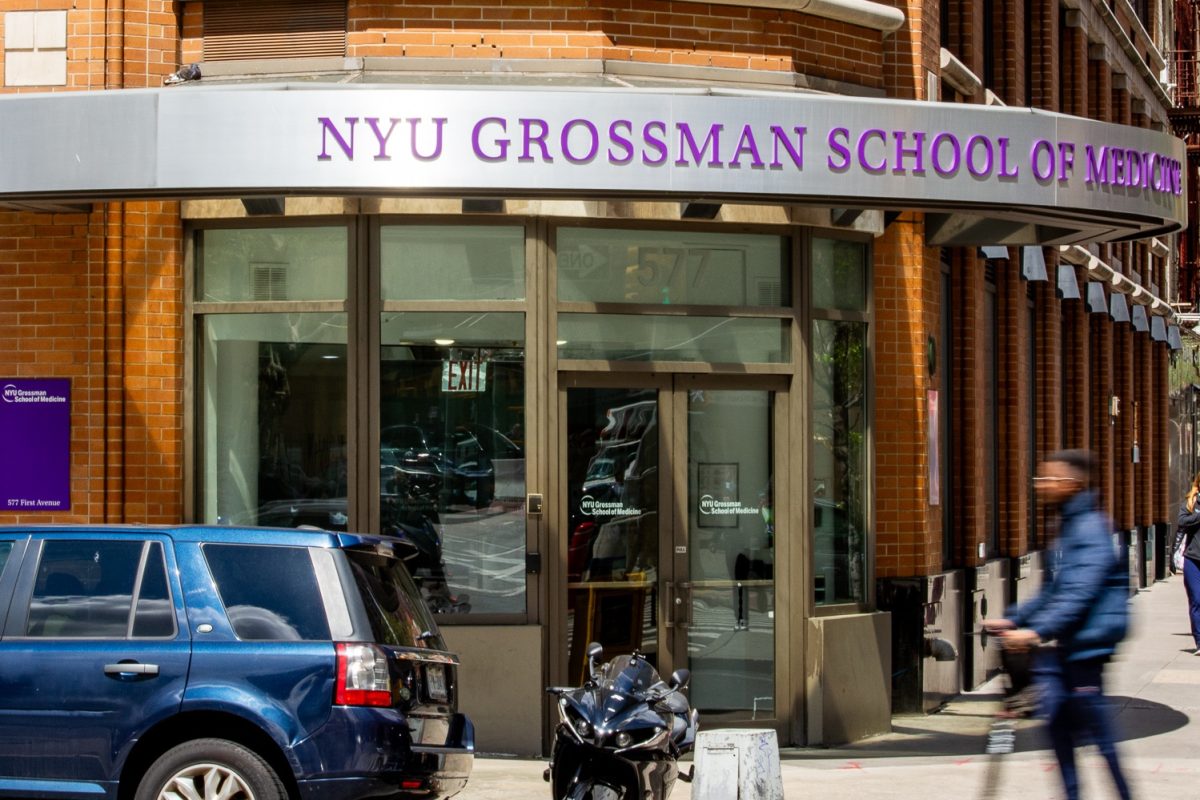
As political engagement grows more dangerous across the country, NYU cannot claim itself simply a victim of the broader political shift it undoubtedly helped produce. By managing dissent through force and narrowing the boundary of acceptable speech on campus, NYU — given its prominence and global reach — helped model a framework that other institutions, educational and otherwise, have followed. That legacy can never be explained away or forgiven.
In making itself completely uninhabitable for political life, the university has consistently dressed its repressive tactics in language of safety or improvement.
Pro-Palestinian speech has faced increased restriction: disciplinary threats are justified as protections against harassment, while student activists framed as antisemitic and dangerous — erasing the presence of Jewish protestors and the largely peaceful nature of demonstrations. Ahead of fall 2024, NYU revised its non-discrimination policy to classify “Zionist” as potentially “coded or veiled language” for Jewish identity — effectively redefining political critique as discrimination and broadening the scope of Title VI protections in a way that enables selective punishment of student activists. Students have been suspended for sit-ins and removing pro-Israel posters, with dozens barred from campus unless they agree to cease protesting — actions NYU framed as necessary safeguards.
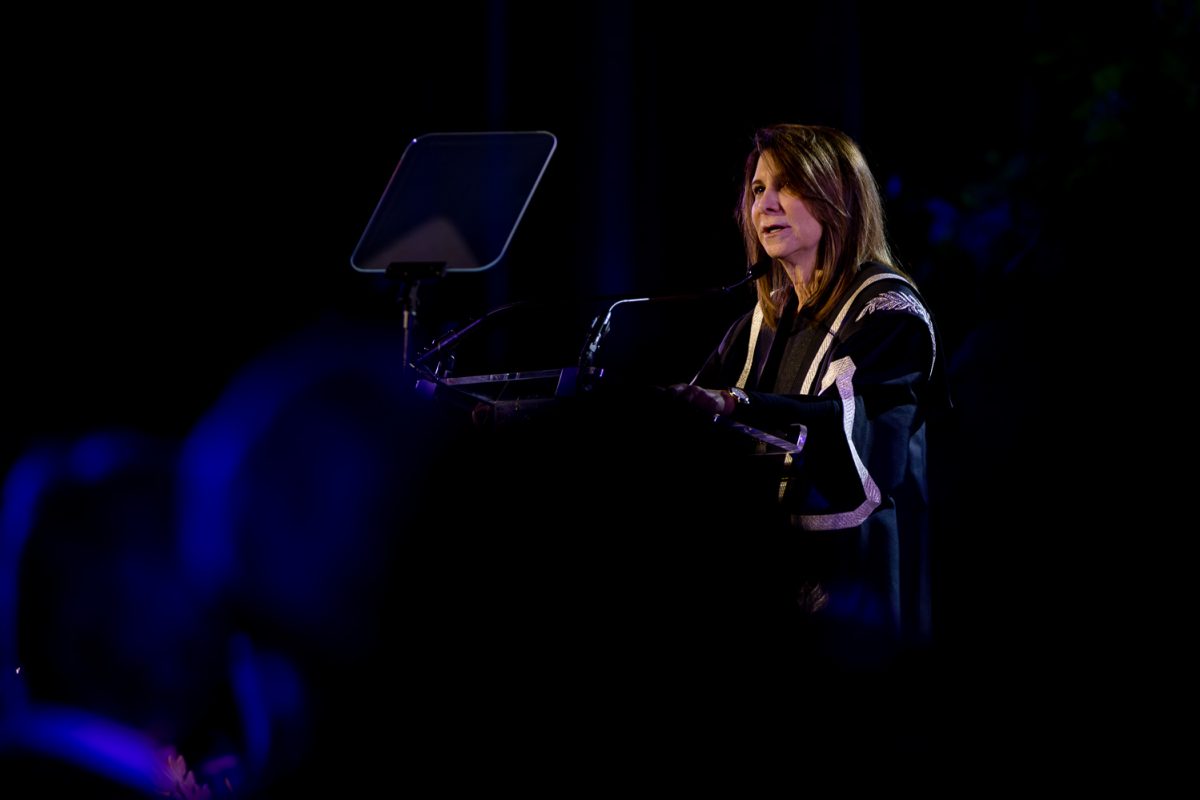
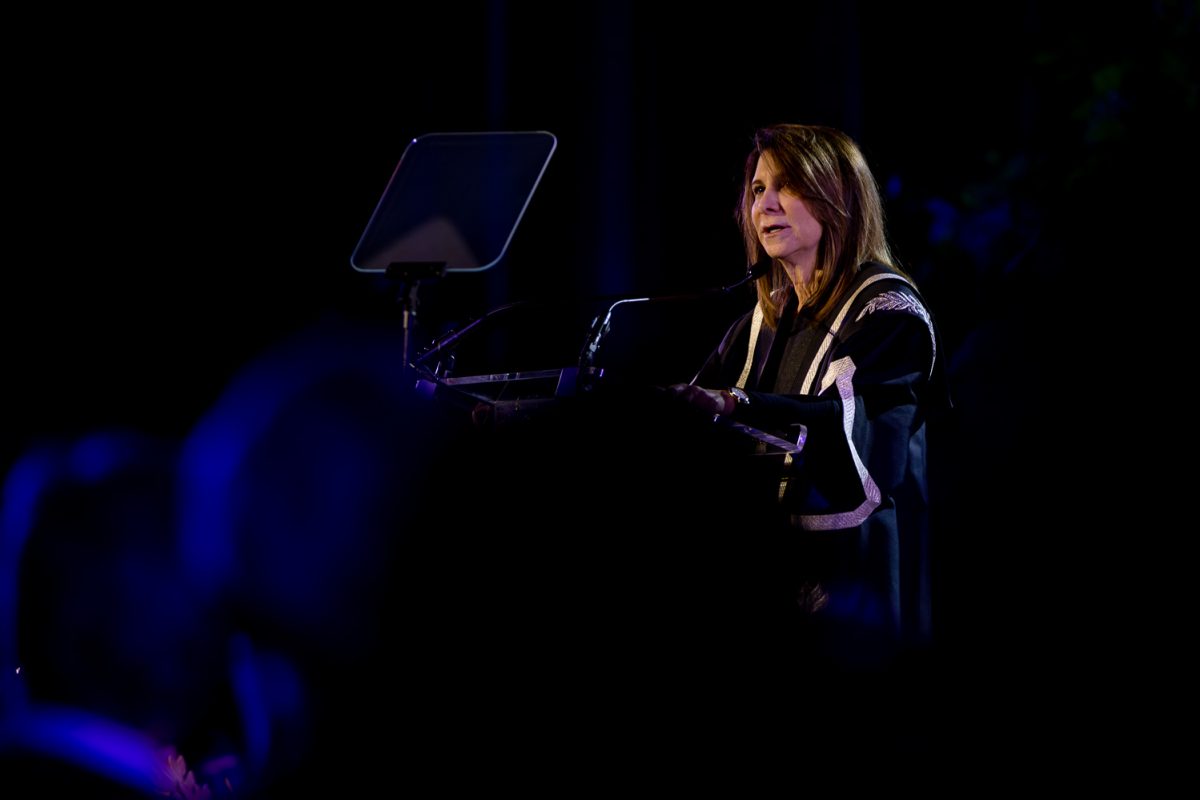
This year, NYU banned live speeches, ostensibly to make ceremonies “more varied and engaging,” while canceling affinity graduations due to the “political climate.” The clear reason is fear of a repeat of last year, where Gallatin graduation speaker Logan Rozos condemned the “the atrocities currently happening in Palestine,” for which his diploma was withheld. NYU similarly restricted attire and other forms of political expression at some ceremonies — citing “safety and security” concerns, when in actuality it was responding to students wearing keffiyehs, carrying signs and chanting in protest of the war in Gaza — which put nothing in danger other than NYU’s image. Unable to openly single out pro-Palestinian speech, the university opted to eliminate personal expression across the board.
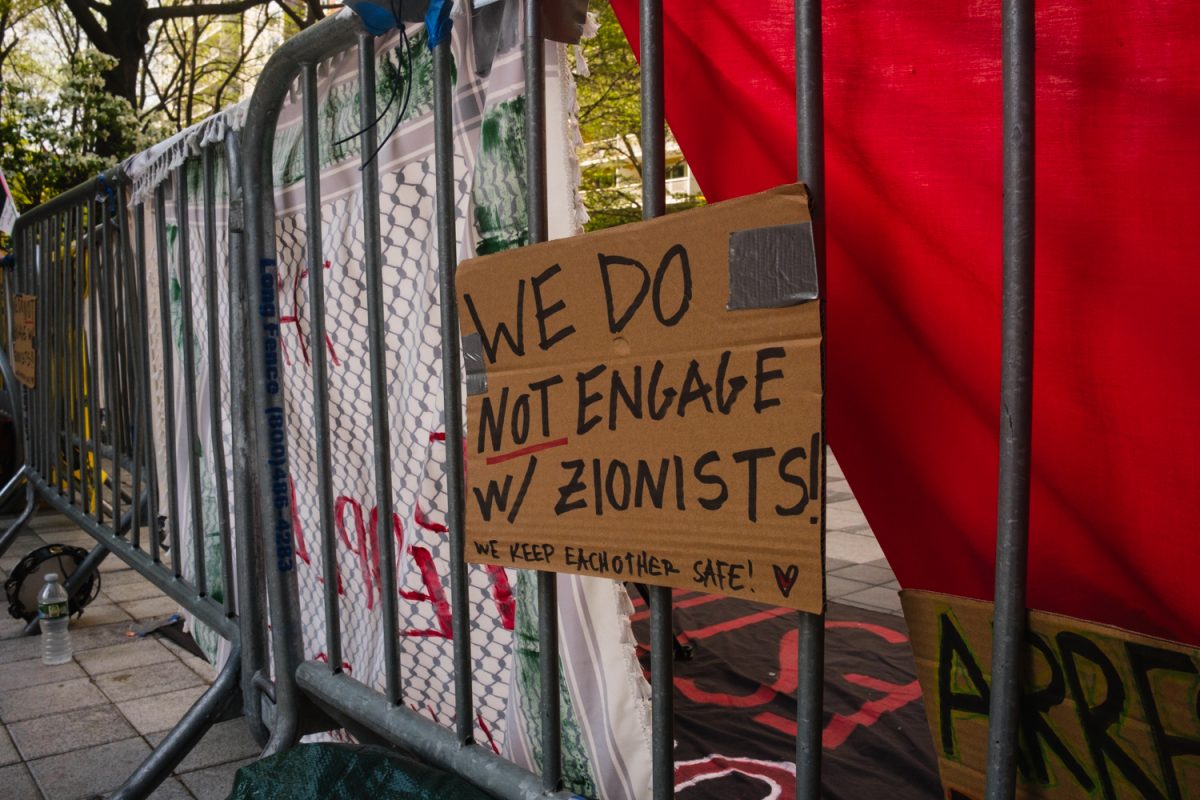
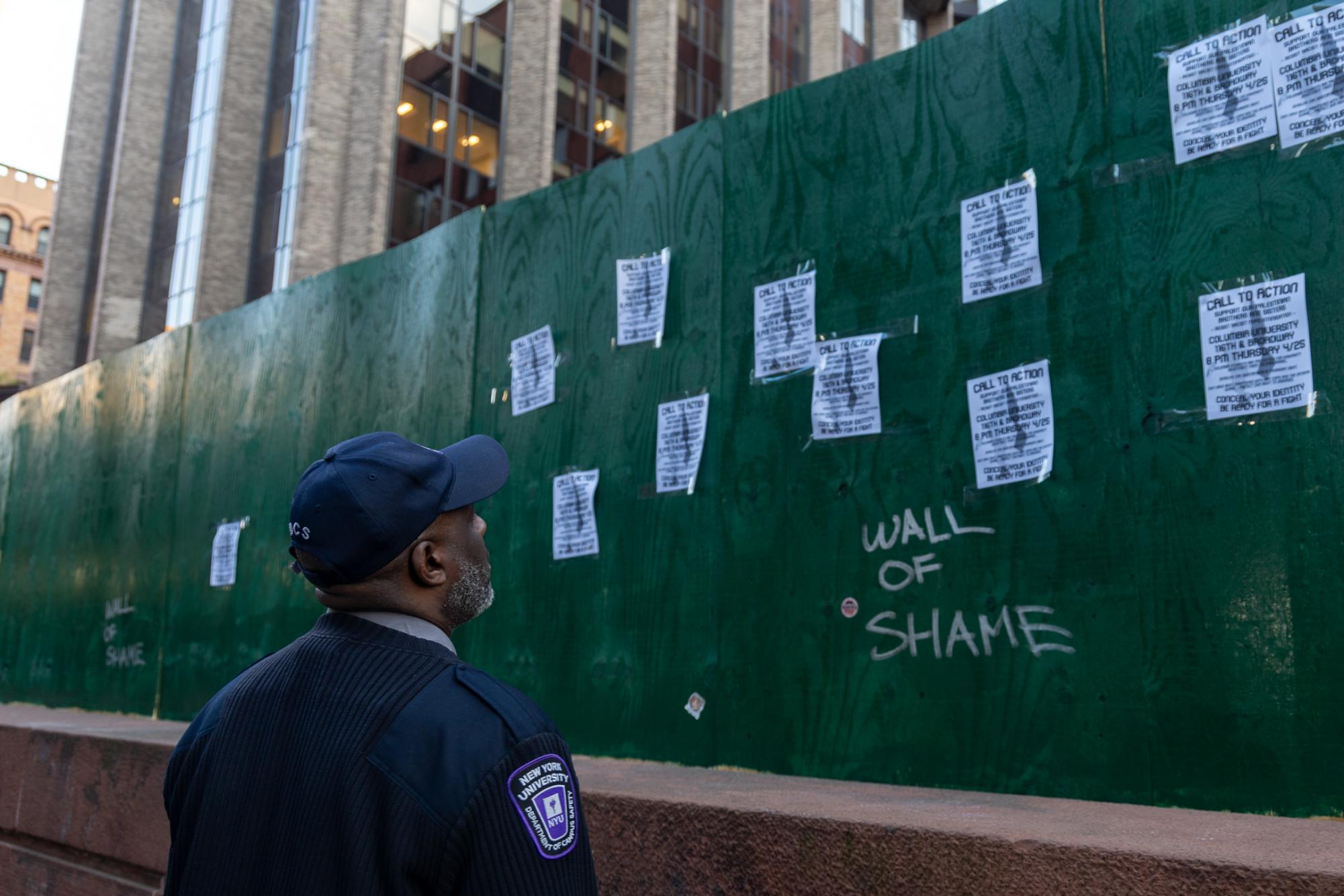
NYU’s systematic erosion of campus spaces historically used for protest has been done through enclosures: installing “temporary” fences or makeshift walls that over time, become permanent fixtures, before reopening spaces in a fragmented form. The university frames these redesigns as neutral improvements: It claims Gould Plaza’s renovation will transform “an underutilized area into a more welcoming environment” — obscuring its true purpose of narrowing a space that was, in fact, already utilized, but for undesirable expressions of dissent. The green wooden boards initially barricading the plaza were replaced by purple, NYU-branded walls reading “Our future is taking shape,” a slogan comically at odds with the reality of erasing the site’s past. The months-long shutdown of the Kimmel Center staircase claimed to be temporary — but it later re-opened, reduced by half in size due to it being made a student study space. The university has also ramped up Campus Safety and NYPD presence to “maintain a secure educational environment,” which function more as means of intimidating and surveilling the student body, producing heightened anxiety and self-regulation.


Meanwhile, NYU promotes highly curated, controlled “open dialogue” and healing initiatives that ostensibly provide space for discussion of the Israeli-Palestinian conflict while excluding more critical voices, hosted by the same administration whose aggressive tactics chilled student speech on the issue.
This bid for narrative control may seem obvious to those at the university now. But as the class of 2026 graduates and those present during the Gaza Solidarity Encampments grow fewer, a new wave of students will step into NYU, not realizing it has been fundamentally gutted and scrubbed of political life.
What remains will present itself as business as usual. Reworked campus spaces will go largely unquestioned, and the absence of visible dissent will not be seen as the outcome of suppression, but as the university’s natural culture. Herein lies a greater danger than repression itself: a slow and total institutional amnesia.
For us to forget the university’s transgressions and accept its retelling of events would be the final victory of the administration.
NYU’s chapter of Faculty and Staff for Justice in Palestine is holding a yearlong tribunal, where experts on academic freedom will join public hearings and investigate the university’s disciplinary actions — including punitive non-renewals of adjunct and postdoc contracts, speech restrictions at graduations, persona non grata declarations and the “weaponization” of Title VI — which have largely “taken place behind closed doors” with very little accountability. This is a crucial step in rejecting NYU’s grasps for narrative control.
The tribunal will gather testimony from those arrested, suspended or censored after Oct. 7, 2023, as well as investigate those who administered sanctions, in an effort to “capture” the time period’s events while people’s memories are “relatively fresh.” It will then issue a cumulative report and archive to preserve collective institutional memory — efforts NYU has preemptively discredited as divisive and in “no service to the cause of free expression on campus,” while affirming that “NYU upholds academic freedom as a bedrock principle and a core value.”
We must insist on remembering NYU not as it wishes us to, but as it has acted — through violence and cowardice in the face of political pressure, sacrificing every principle of basic academic freedom for the fool’s errand of appeasing a fascist government.
We also must remember why universities responded to protests with such force. When students and faculty organize together to disrupt corrupt institutions tied to systems of violence, they generate a pressure that cannot be ignored. When entrenched powers loom so large, it’s easy to feel that protest is insignificant — but nothing is met with arrests, suspensions and institutional overhaul unless it actually threatens something.
Students at Occidental College in Los Angeles started one of the first solidarity encampments since 2024 on April 24: reminding us to refuse inertia in the face of mounting repression. This is not just a struggle for Palestinian liberation, but over attempts to control our collective memory. Now more than ever is the time for students to escalate, not retreat.
Contact Mehr Kotval at [email protected].

Mehr Kotval is a senior studying comparative politics at Gallatin. She can usually be found with too many unread notifications, too...

Krish Dev is a third-year senior studying computer science and linguistics. This is his fourth semester on WSN’s management team, following his time...
Matt Petres is a first-year studying Economics. He is from Chicago, Illinois and likes to bike and kayak. You can contact him on Instagram @matt.petres