



























At Qahwah House, Yemeni coffee is king
Under the Arch
At Qahwah House, Yemeni coffee is king
The chain is championing a rich cultural background and reshaping New York City’s cafe scene.
Leena Ahmed, Deputy News Editor | November 10, 2025
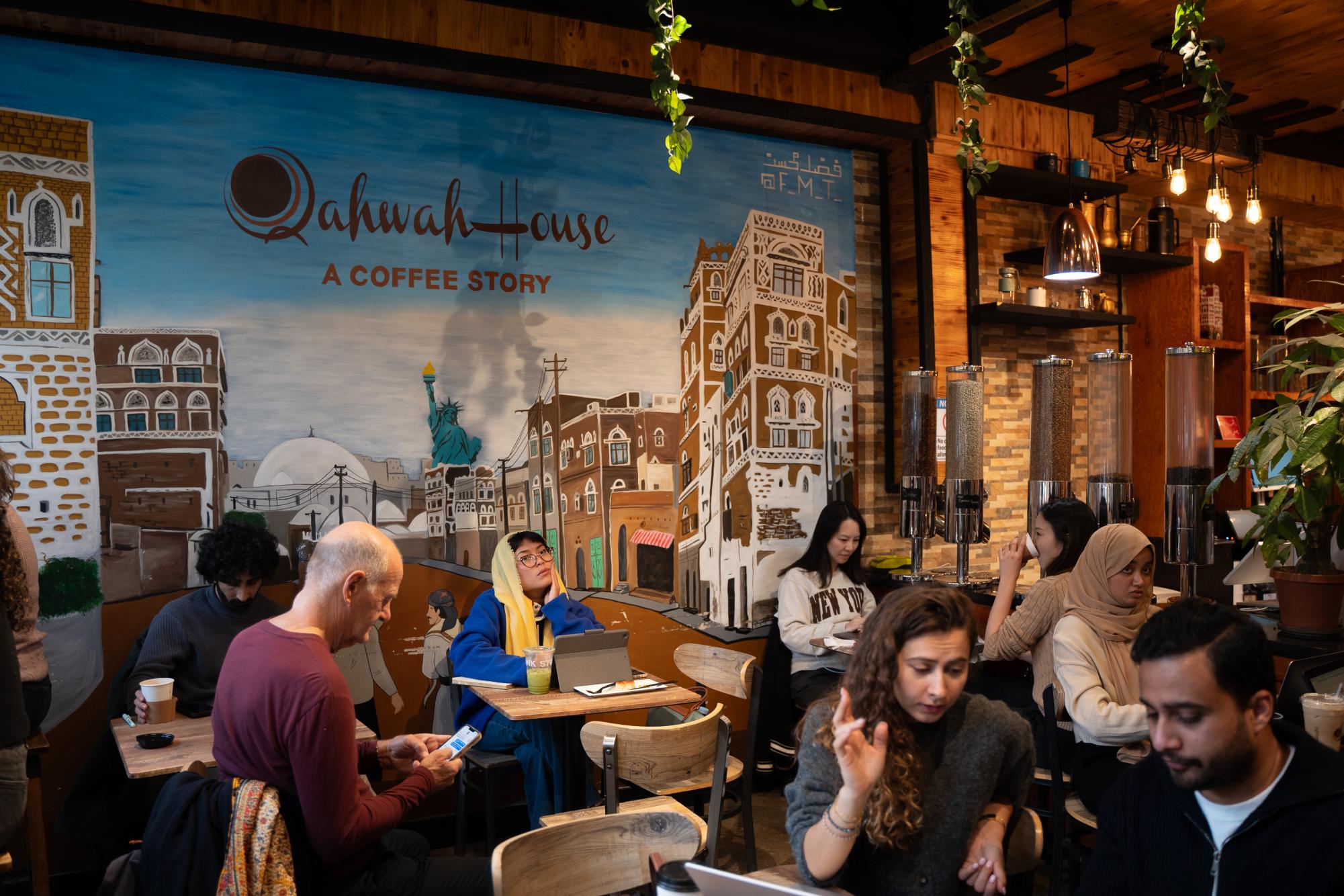
Tucked between Joe’s Pizza and Venchi on Carmine Street, Qahwah House is bringing centuries-old traditions to New York with authentic Yemeni coffee.
The West Village shop, a hotspot for community gatherings and late-night delights, is just one of 26 locations that are bringing traditional Yemeni coffee to customers across the nation. Upon entry, cafe goers are met with cozy wooden shelving and hanging plants, lively Arabic music and the aromas of spicy and sweet cardamom and baked honeycomb bread. You’ll notice tables full of people chatting, playing card games, studying or maybe on a first date, in front of a 3D mural mapping coffee transportation in the 1800s and a wall sign that reads “Welcome, Our House is Your House.”
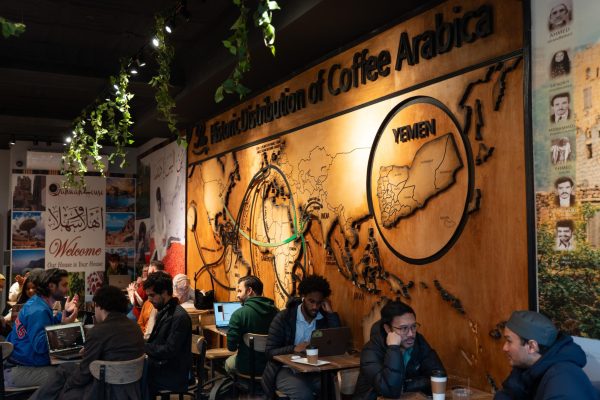
Known for its rich architectural heritage and culture of hospitality, Yemen holds the earliest written history of coffee cultivation, tracing back to the 12th century. Its coffee beans are grown, handpicked and sun-dried on farms, then carefully sealed and transported — primarily to Saudi Arabia, the United States and Japan — preserving its earthy, chocolatey flavor.
Qahwah House resembles a traditional Yemeni home more than a typical New York City coffee shop: Its emphasis on tradition is reflected not just in its atmosphere, but also in the preparation of its drinks — from the thoughtful practice of boiling coffee in stainless steel pots to the presentation of the beverage in ceramic cups and glass teapots, which is common in many Arab households.
Customers can order staples like Sana’ani coffee, which originates from Yemen’s capital, Sana’a, and consists of a medium roast mixed with cardamom. The addition of evaporated milk makes for a smooth, silky drink known as Mofawar, my personal favorite, best described as Yemen’s take on a latte.
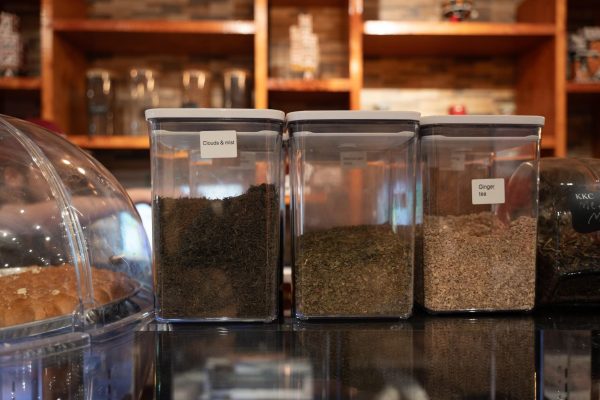
Qahwah House also offers Qishr — one of Yemen’s oldest drinks — made entirely with coffee husks, the outer layer of the coffee cherry, instead of the bean itself. It’s a decaf drink that falls somewhere between a coffee with notes of ginger and cinnamon and a cherry, hibiscus-like tea. If you enjoy these aromatic flavors but still need your caffeine fix, order a Jubani, which combines a medium-light roast with coffee husks and, of course, cardamom, ginger and cinnamon. Lastly, you can order a Rada’ey — namesake of the Rada’a region — if you prefer a lighter roast. Though most types of Yemeni coffee are served black, guests can still add sugar, cream or milk to their beverages.
The first Qahwah House was founded in Michigan by Ibrahim Alhasbani in 2017, whose family has been growing coffee in the mountains of Sana’a for eight generations. Saad Obad, the manager of the Carmine Street location, told WSN that his family visited Alhasbani’s Michigan cafe and convinced him to franchise the company. The proud Yemeni family opened the country’s second Qahwah House in Williamsburg in 2020, and now operates eight across New York City and New Jersey, led by Obad’s cousin, Adul-Rahman Amer.
The Qahwah House on Carmine Street has become a hub for residents and tourists of all demographics — foot traffic easily reaches the thousands, especially on weekends and holidays, Obad said. To uphold the company’s high standards across stores, every Qahwah House uses the same exact measurements, recipe and instructions for all menu items, from the coffee and teas to Yemeni pastries like khaliat al nahl, a cheesy bread drizzled with honey. As such, Obad’s family prioritized steady growth over quick expansion.
“Keeping the same quality is hard, but you also have to be very on it,” Obad said. “That’s why you don’t see a Qahwah House on every corner, because you have to keep that same quality.”
Since the chain arrived in New York City more than five years ago, over a dozen Yemeni coffee shops — such as Moka & Co and Qamaria Yemeni Coffee Co. — have added their own touches to the city’s changing coffee scene, challenging New Yorkers’ perceptions of what the beverage can be. The next time your go-to latte is feeling a bit stale, remember that a taste of the world’s oldest coffee culture is just a subway ride away.
Contact Leena Ahmed at [email protected].

Leena Ahmed is a senior studying international relations with a minor in French. When she’s not on her most used app on Screen Time, Gmail, she’s probably...

Alex Woodworth is a sophomore studying public policy and economics. When not taking photos, you can find him at a Yankees game, searching for the best...