


































The science behind Asian flush
Under the Arch
The science behind Asian flush
A look into what causes that signature glow.
Grayson Stotz, Magazine Editor | November 10, 2025
A beating heart, a throbbing head and a burning face walk out of a bar — these are symptoms that loom over a standard night of drinking for anyone suffering from the ultimate buzzkill that is “Asian flush.”
Named after the characteristic red hue and warmth caused by dilated blood vessels in the face and body, Asian flush is a condition that afflicts roughly 560 million people worldwide, including nearly 45% of all East Asians. Whether it’s your face or a friend’s that lights up at the bar, understanding the underlying processes can help navigate the condition and its setbacks.
Function and dysfunction
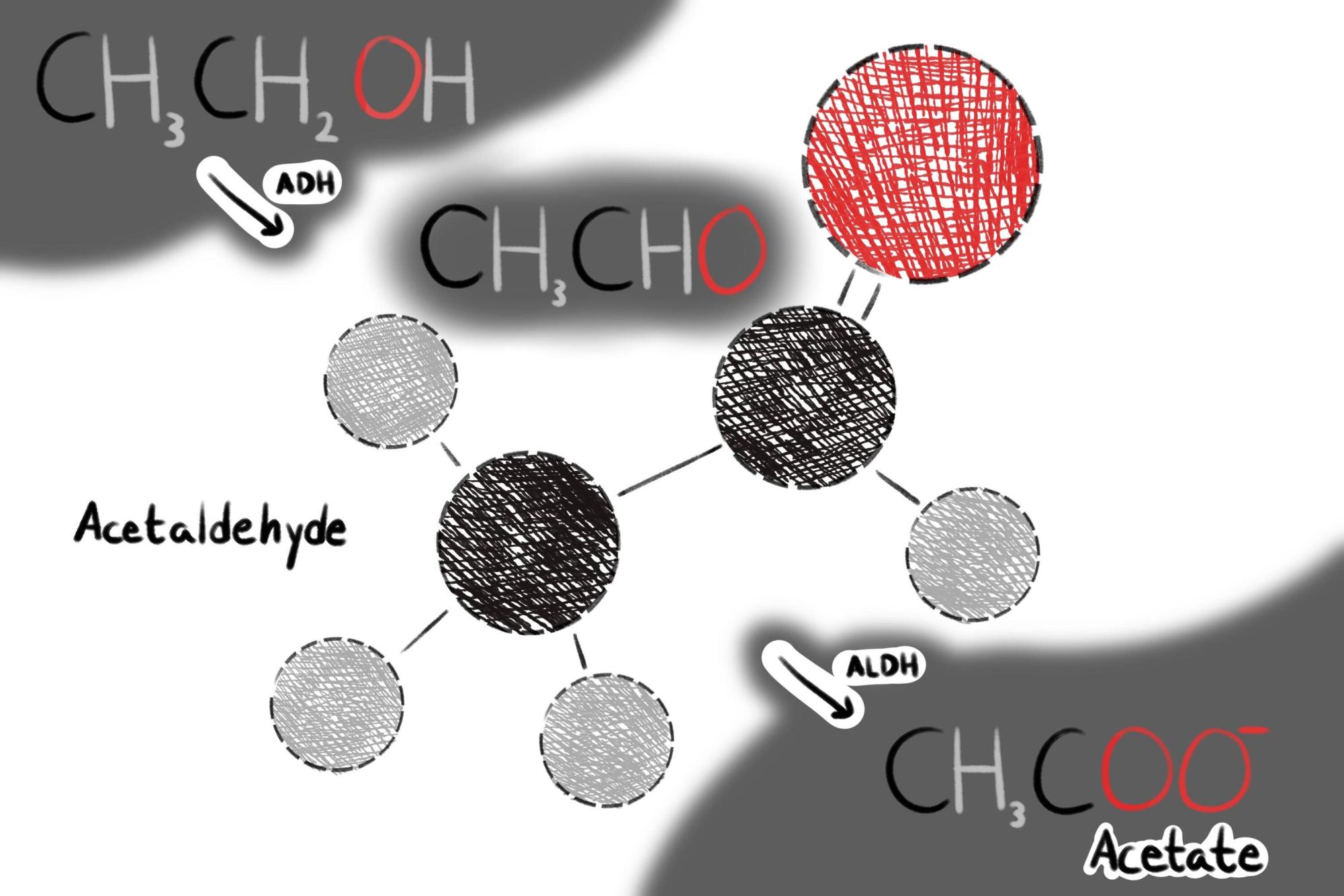
In order to understand how things go wrong, we must first establish what it looks like when things go right. Generally speaking, metabolizing alcohol occurs in two main steps: the breakdown of ethanol into acetaldehyde, and then the breakdown of acetaldehyde into acetate.
This first step is mediated by an enzyme called alcohol dehydrogenase. Dehydrogenase refers to an enzyme responsible for stripping a given molecule of a hydrogen atom. When you consume alcohol, ethanol loses its hydrogen which turns it into acetaldehyde.
The second step is mediated by a different enzyme, aldehyde dehydrogenase. Functioning in the exact same way, this reaction converts toxic acetaldehyde into acetate, a far safer compound that the body can then break down with ease.
For people with lower concentrations of the alcohol dehydrogenase enzyme, it’s harder to keep up with the input of alcohol, thus resulting in a lower tolerance. The inverse of this is also true with higher concentrations of the enzyme, and therefore higher breakdown of alcohol, resulting in a high tolerance. Tolerance is dictated both by genetic as well as environmental factors, however contrary to common misconception, there is limited research to correlate it with the intensity of Asian flush.
Asian flush, on the other hand, is exclusively genetic, and is caused by a mutation of the aldehyde dehydrogenase gene, which results in a lower concentration of the enzyme in the liver. This causes a buildup of acetaldehyde which triggers a response in the body to release histamine — the neurotransmitter responsible for allergenic responses. This brings about the characteristic redness of the face and limbs that gives Asian glow its name.
Not all Asians flush the same
Since the severity of redness in Asian flush is dependent on the relative amount of unprocessed acetaldehyde in the liver, adjustments to the levels or efficiency of either enzyme can impact the volume of histamine released and therefore the severity of the reaction.
Both the severity of the mutation as well as the number of mutated copies dictate the intensity of the flush. People with two copies of the mutated ALDH2 gene can only sequence dysfunctional enzymes, resulting in around a 90% decrease in enzymatic activity. Heterozygotes, like myself, have one mutated gene and one healthy gene, and therefore experience a wider range of decreased activity from 60-80%.
The distribution of Asian flush tracks with its hereditary nature, boasting a manifestation rate of around 30-50% across East Asian ethnicities, whereas in South Asian populations, the mutation is expressed in fewer than 10% of the population.
No easy fix (yet)
Asian flush is not an allergy to alcohol but rather an intolerance. That said, many of its effects are mediated by histamine, the same neurotransmitter present in your typical allergic reaction — which means that treatments can be targeted toward suppressing its effects.
There is currently no FDA-approved medication to alleviate the effects of Asian flush, however that’s not to say it hasn’t been studied, albeit in a limited capacity. H2 antihistamines — ones that target receptors in the stomach like Pepcid, Tagamet and Axid — are generally identified for their ability to alleviate the redness of Asian flush, however have inconsistent results for the condition’s other symptoms such as increases in heart rate and blood pressure. As for H1 antihistamines — Benadryl, Zyrtec, Claritin and other medications that target allergenic receptors — some sources conclude they have no effect while others believe there is a cooperation between the two receptor types.
At the end of the day, the use of antihistamines to treat Asian flush does not address the root cause of the symptoms — if anything, they only worsen the long-term health issues by masking the body’s warning signs, thereby encouraging more drinking.
The downsides of Asian flush extend beyond the immediate redness. Without functional aldehyde dehydrogenase enzymes, carcinogenic acetaldehyde builds up in the liver in dangerous concentrations, leading to a higher risk of digestive and respiratory diseases and cancers.
While combating the risk of cancer is far off, research into reducing the risk of cardiovascular diseases shows promise. A 2023 Stanford Medicine study detailing the relationship between the enzyme mutation and heart disease cited the preventative effects of a common treatment for type 2 diabetes against cardiovascular diseases.
Given that concrete treatments for Asian flush remain under-researched, following the publication of the study, senior author and director of the Stanford Cardiovascular Institute Joseph Wu shared in an interview with Stanford Medicine his best advice to anyone with Asian flush. “If you’re drinking, drink less. If you’re not drinking, don’t start.”
Contact Grayson Stotz at [email protected].

Grayson Stotz is a junior studying journalism and neural science at CAS. When he’s not splitting his time between two majors with no overlap, he’s...