




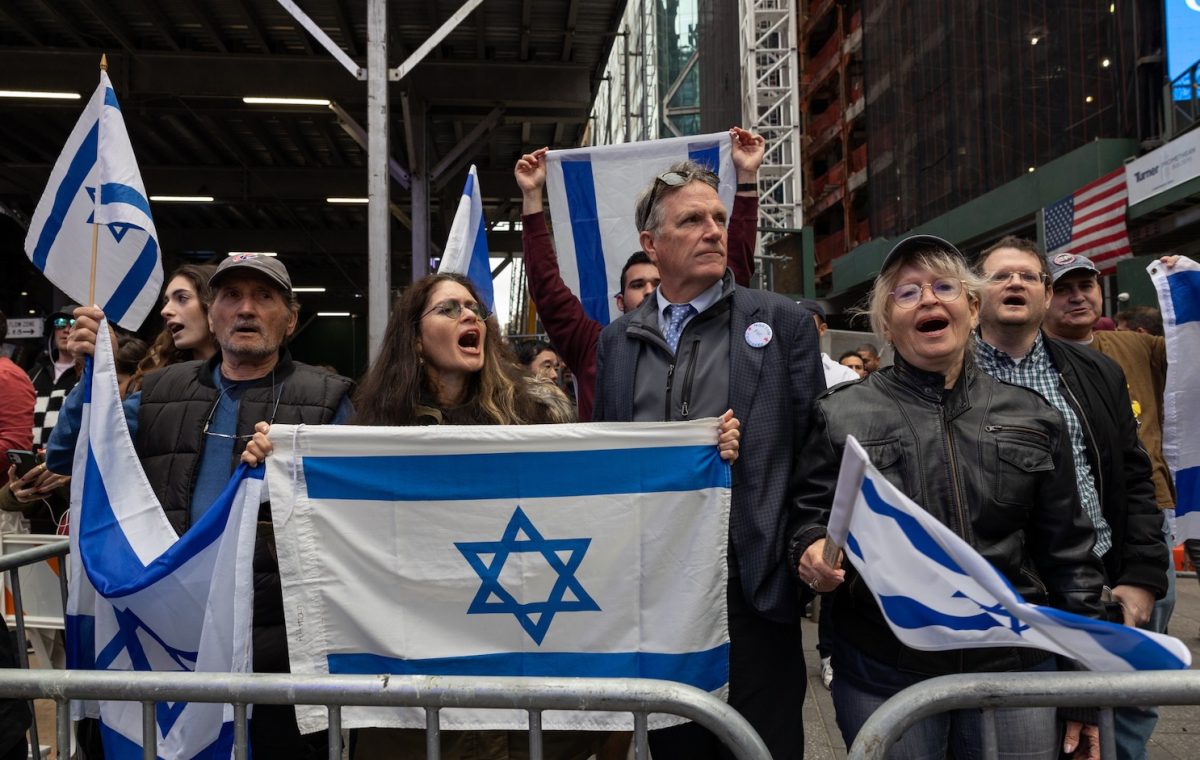





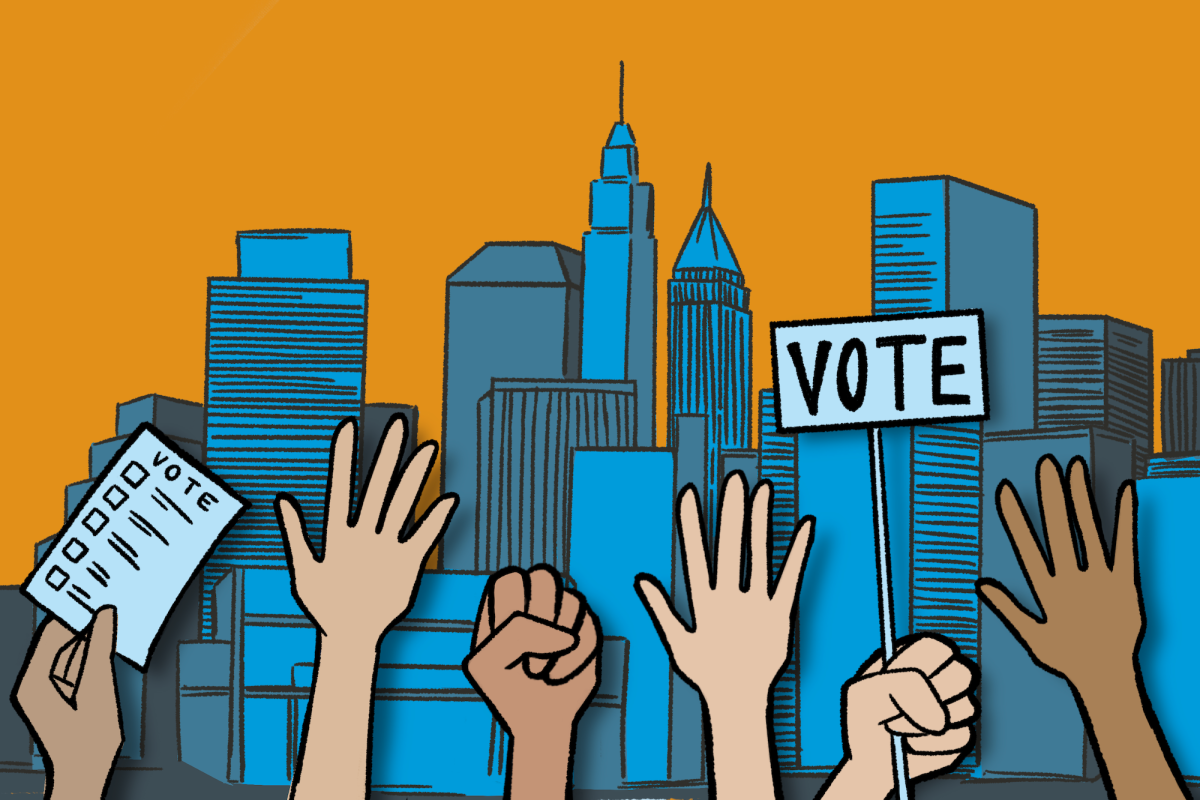










Last Saturday, more than 8 million demonstrators across the country — roughly 1 in 50 Americans — took to the streets to protest President Donald Trump’s administration, marking the third “No Kings” march since the beginning of his second term. The first two also drew staggering numbers, with nearly 5 million participants last June, and 7 million in October. Thousands of people, from those in retirement homes to those on their lunch break, turned up to protest — for many, for the first time in their lives. Yet, despite the widespread disapproval, mass mobilization and constant visibility, the machinery of government continues largely undisturbed, and Trump’s power increases.
This comes as the administration has escalated U.S. involvement in the deeply unpopular war with Iran alongside Israel, a month-long conflict that has rattled the global economy and killed more than 1,500 civilians in Iran and 13 U.S. service members. Rates of deportation are rising, U.S. Immigration and Customs Enforcement agents are stationed at the airports — a precursor for Trump’s desire to have them at the polls — and despite public outcry, we have a government that does not govern for the people, but rather against them.
This is not to say peaceful protest is futile. “No Kings” has created a cultural shift in normalizing protest among those who have never previously considered themselves individual political actors, and tested the waters for becoming further involved. They have created a fast, robust organizing network that has reached levels of visibility no other protest before has, forcing all those who step outside to engage with dissent when going about their day. In a political climate saturated with anxiety and hopelessness, protest offers an outlet of hope. It gives people a sense of agency. That itself is an important thing.
But then it ends. After a few hours where we gather, chant and feel heard, we go home, and the streets are left empty once more. We are back to reading headlines about bombings of elementary schools abroad and immigration crackdowns at home. The protest becomes a contained moment of emotional outburst rather than a sustained disruption that leads to tangible change.
Protestors took to the streets with gigantic papier-mache Trump heads, creative slogans, absurd posters and inflatable props. In a country defined by division, these spaces offer a collective opportunity to express distaste for Trump. But these also create an echo chamber, where those who can afford to approach the issue flippantly with signs about recreating the French Revolution ultimately return back to normalcy the next day without doing anything further.
Policy has not shifted in accordance with public opinion. The Trump administration has not meaningfully conceded power — instead it’s ignored our constitutional checks and balances. In these extraordinary times, if the goal is immediate, structural change, protest falls short on its own.
Peaceful protest remains a beacon of dissent, but its strength relies heavily on its volume and coordination. This is not to discredit or discourage the crucial role of peaceful protest. The Civil Rights Movement, led by Martin Luther King Jr., and India’s independence movement under Mahatma Gandhi both relied on nonviolent resistance. But these movements were sustained campaigns of targeted disruption, through boycotts, strikes, mass arrests and economic pressure. That is the difference.
This administration has also cultivated a climate of fear. Immigration enforcement has expanded aggressively — ICE has been weaponized to an unprecedented degree. There have been reports of U.S. citizens detained, threatened, even facing denaturalization. For many, the risk of sustained resistance feels existential. Jobs, legal status and personal safety are all on the line.
But we must ask ourselves: If the goal is to defend democracy, is showing up for a few hours enough, or does it require something more of us?
Today’s protests, in contrast to MLK or Gandhi, happen on weekends, minimizing economic disruption. They are massive, but fleeting. The cost to participants is relatively low and so too is the cost to the institutions being challenged.
If demonstrations remain vaguely periodic and low-cost, they risk becoming anticipated, absorbed and ultimately neutralized. Preventing this halting of momentum requires escalating the protests frequency, duration and economic impact. If people stay in the streets, disrupt business as usual and build support systems within their communities, they become harder to ignore. The most effective practice of resistance has arguably come from the mutual aid groups and ICE watch networks established across the country. And since so many Americans turned out in unforeseen levels of participation, these protests are an opportunity to increase outreach to those who are taking their first steps as political actors, and make sure they have the information and resources they need to become even stronger agents of change.
“No Kings” organizers themselves have also organized further sustained actions for the upcoming months, which include a nationwide general strike on May 1. It is important for these actions to draw the same crowds as Saturday’s protest for them to be effective and disruptive.
If the goal is expression, protest is enough. If the goal is transformation, then that is only the beginning. In New York City, more than 100,000 people showed up for the “No Kings” rally. We need those same people to consistently show up for other coalitions and mutual aid that help homeless and undocumented communities — like WSP Mutual Aid, We The People, Food Not Bombs, Hands Off NYC, The Peoples Forum, or ICE Watch groups. So when others set down their signs, make sure the network of resistance against authoritarianism remains steadfast and stronger than ever.
WSN’s Opinion desk strives to publish ideas worth discussing. The views presented in the Opinion desk are solely the views of the writer.
Contact Logan O’Connor at [email protected].