












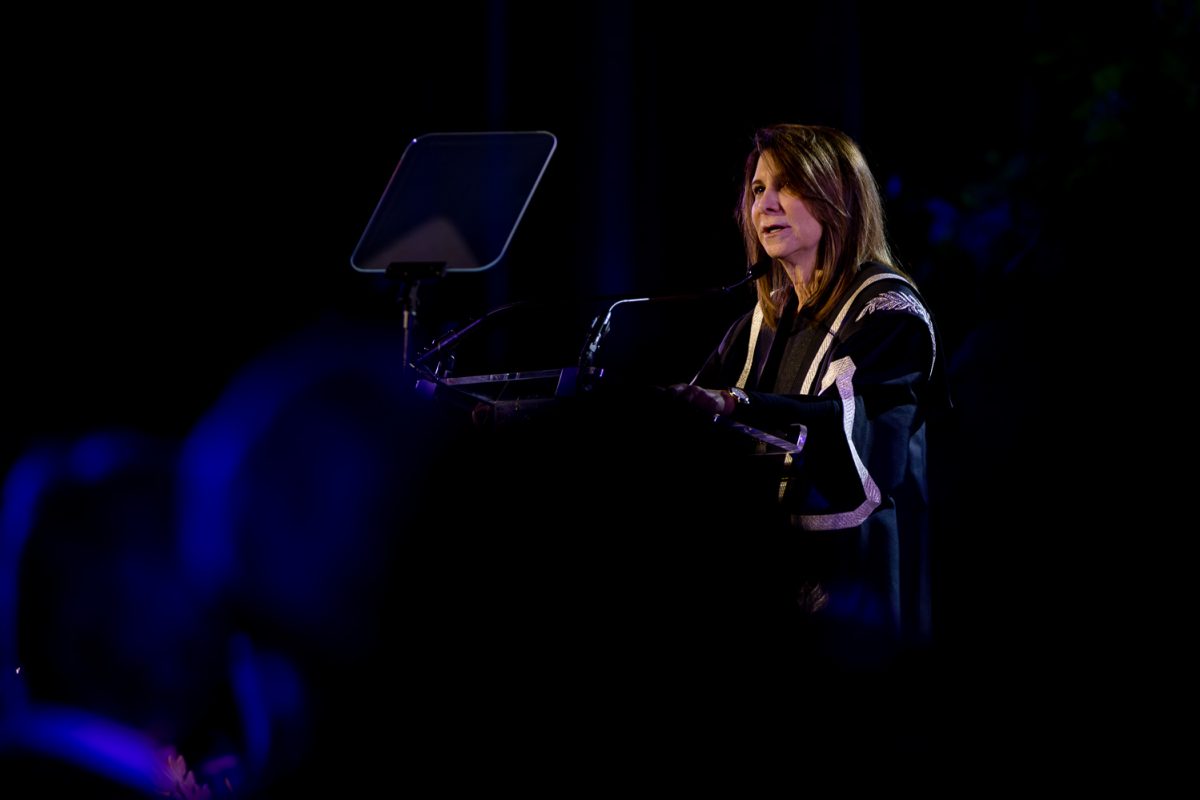













NYU’s chapter of the Young Democratic Socialists of America is a student organization on campus.
Under the backdrop of New York City’s temperamental spring weather, a different kind of warmth has settled across NYU’s campus: A growing admiration for contract faculty who make our education possible permeates the student body.
In dining halls, classrooms and crowded study spaces, students speak out in shared indignation about the conditions many of our instructors endure. Members of student organizations pass out pins declaring “CONTRACT FACULTY DESERVE RESPECT,” and they proudly brandish them on articles of clothing. Remarks about wages, housing and job security punctuate the conversations among students determined to understand the lengths of depravity in the labor conditions shaping their education.
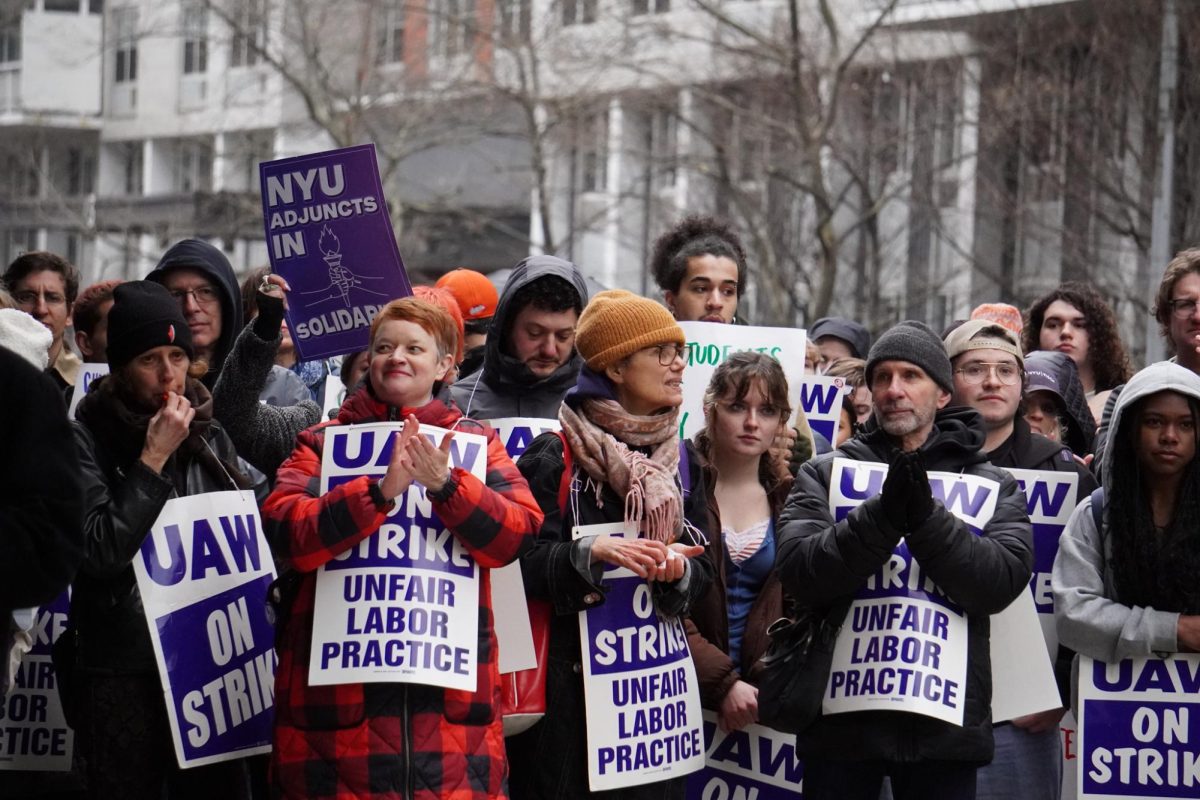
Since members of Contract Faculty United overwhelmingly voted to authorize a strike, this solidarity has only intensified. What once was spoken about in the abstract is now personal. It has become a recognition that the people who teach us deserve the dignity required to do their jobs.
Yet just before spring break, a small group of tenured faculty chose a different lesson to impart via an op-ed. They denounced the Tenured/Tenure Track Faculty Council’s resolution to discourage strikebreaking and are arguing in favor of tenured faculty crossing the picket line. Their justification? The students.
According to them, protecting the sanctity of our education requires undermining our instructors’ fight to create conditions that make teaching possible.
Perhaps the height of the ivory tower, securely buttressed by tenure, has carried them too far from the conversations happening below among students themselves. Across campus there is another sound reverberating all the way from Othmer Hall to Greenwich Hall. It is the collective exasperated sigh of students who understand what a strike means. It is a sigh of a generation watching workers everywhere struggle under the weight of instability and stagnant pay, and seeing that the people who teach us are not exempt from it. It is also a sigh of recognition, an understanding of solidarity among workers and future workers that the authors of that essay seem curiously unable to hear.
Efforts to “mitigate the impact” of a strike misses the purpose of a strike entirely. The disruption that will ensue is not an unfortunate byproduct but a crucial bargaining tool needed during negotiations with an administration that has forced the hands of CFU by not changing course. It is clear to students that contract faculty are not abandoning them, nor are they eager to walk away from their classrooms. Their goal is a contract that allows them to better fulfill their duty to us. After months of stalled negotiations, they have recognized that this is the only language the university seems willing to hear.
The claim that concern for students is “absent” from those supporting the strike is laughable. NYU itself has disregarded student welfare by denying many instructors the ability to sustain themselves in the city where they teach. An instructor struggling to secure stable housing cannot properly focus on preparing lectures. An instructor sacrificing basic necessities to pay the bills cannot fully support their students. An instructor living in constant uncertainty about their job security cannot push the intellectual boundaries that any institution that claims to be committed to education can pride themselves on.
If student education and well-being are truly the overriding priority, then the responsibility for protecting them lies first with the administration that has the power to resolve this dispute.
Finally, we reject the notion that we are merely “stakeholders.” The language used to describe students in this dialogue reveals the mindset that created the problem. Calling students stakeholders reduces us to entities in a corporate ledger rather than members of a learning community. That framing echoes a corporatized vision of the university that allowed our instructors to be cheaply contracted and disposed of like garbage. Students are not abstract stakeholders, and contract faculty are not expendable labor inputs. We are people brought together by our commitment to learn and grow.
In the end, crossing the picket line may keep the lights on in the classroom, but it casts a long shadow over any claim that this university is a breeding ground for principles, not just syllabi.
WSN’s Opinion desk strives to publish ideas worth discussing. The views presented in the Opinion desk are solely the views of the writer.
Contact WSN’s Opinion desk at [email protected].