



























Dr. Patrick Egan is a Professor of Politics and Public Policy.
I decided to address the elephant in the room. “It may help if you don’t think of this author as our current vice president,” I said, looking around the seminar table. “Instead, try approaching the book with curiosity.”
Several students nodded. It’s possible I even saw relief on some faces at being granted permission to lay aside what they feared they were expected to say. And with that, we commenced our discussion of Vice President JD Vance’s 2016 memoir “Hillbilly Elegy.”
It was one of the first meetings of my honors seminar “Resentment and Politics,” which I taught last year at NYU’s Wilf Family Department of Politics. Vance is just one of the big names on the syllabus: Essays from the likes of James Baldwin, Friedrich Nietzsche, and Amia Srinivasan span centuries and ideologies alongside cutting-edge research on resentment from political science and other fields.
These authors write incisively about resentment’s double-edged sword. Resentment can serve as a catalyst for political change. But more often, it traps us in cycles of decentering, debilitating obsession with our enemies’ wrongs. We are now enduring these consequences of resentment in the wake of its rapid ascent in our politics, both left and right, in the United States and around the world.
Wrestling together with big ideas from across the political spectrum with the goal of understanding seemingly intractable problems: If this sounds like an exciting experience, I’ve got some good news for you.
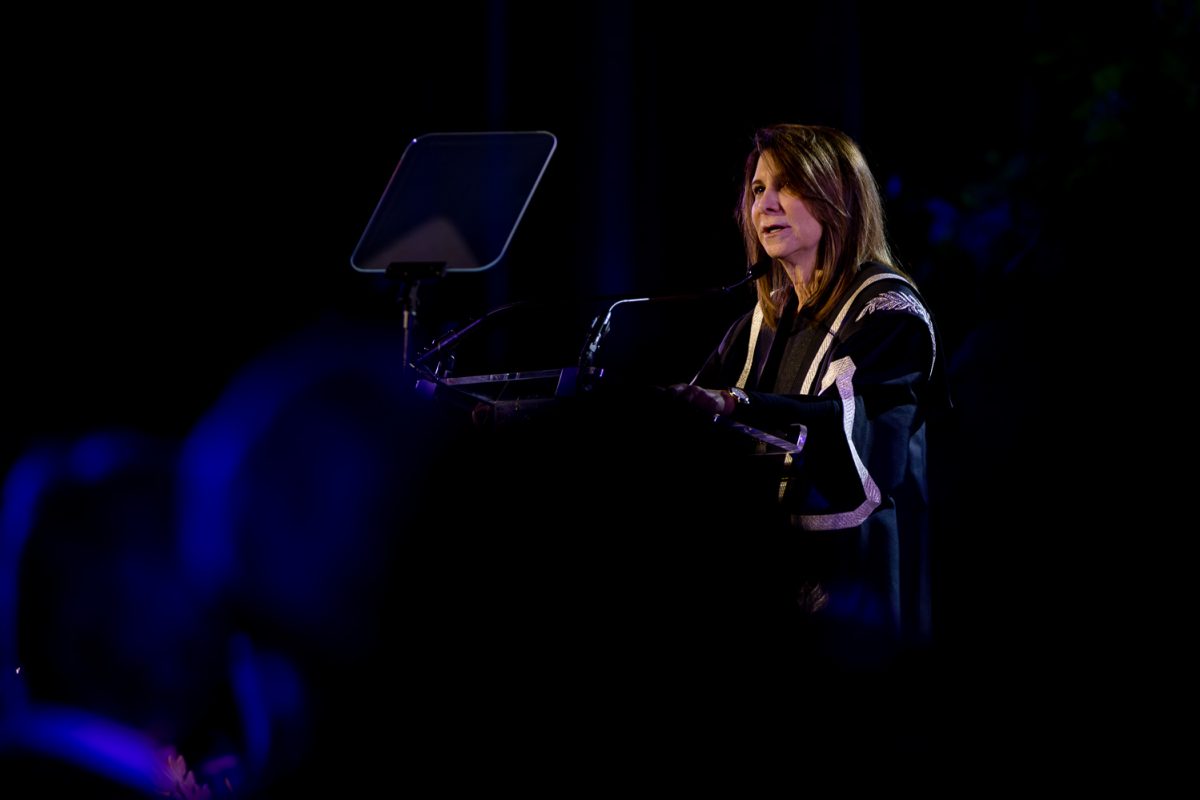
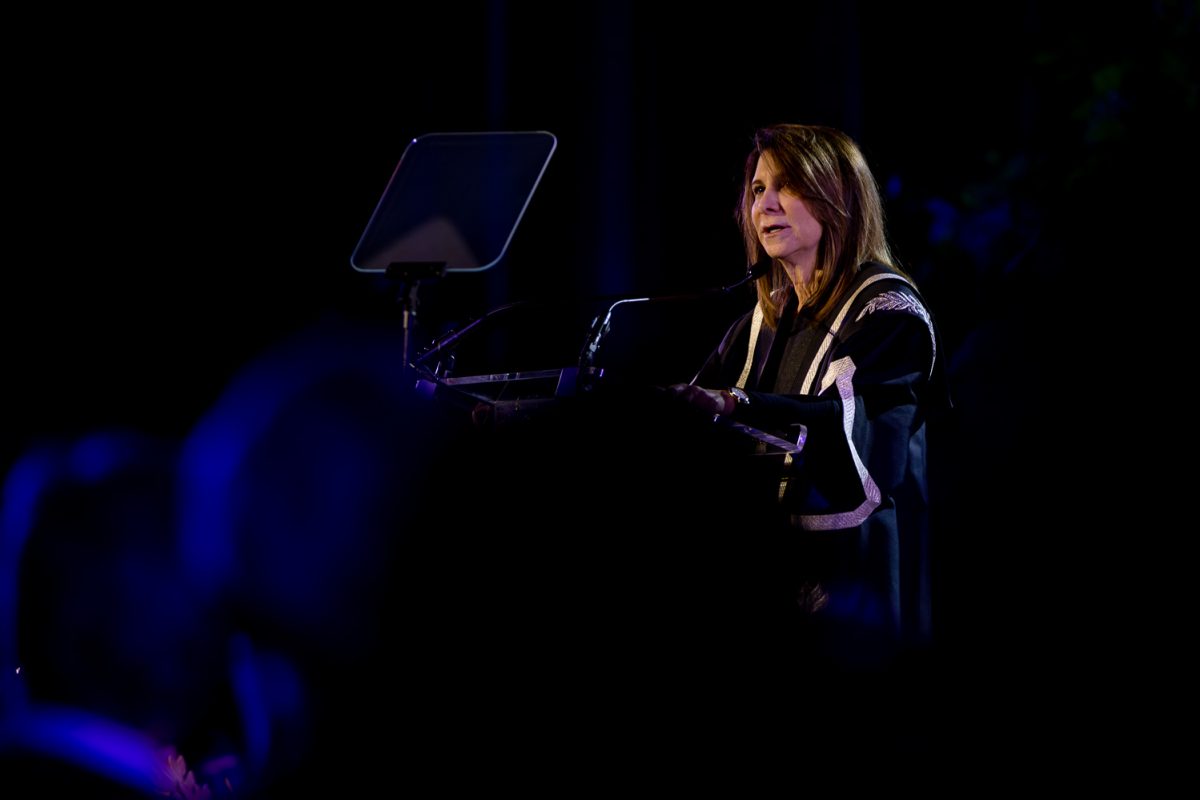
On Tuesday, NYU launched the Berkley Institute for Civil Discourse and Civic Solutions. I’m honored to be serving as the institute’s inaugural director. With the support of a generous donation from the Berkley Family Foundation — established by William Berkley, chair emeritus of NYU’s board of trustees —the institute will make NYU a model for a renewed commitment to the principles of open-minded inquiry, pluralism and dialogue in the service of resolving difficult civic problems:
- We’ll be bringing elected officials, policy experts and other civic leaders — Republicans and Democrats, liberals and conservatives — to NYU to be in conversation with each other about the most pressing civic challenges of our times. Our guests will not be headline-grabbing provocateurs making arguments for argument’s sake. We’ll produce no “gotcha” moments and probably no viral video clips. Instead, we will welcome to campus public-spirited people engaged in good-faith efforts to — imagine that — make the world a better place.
- Each year, we’ll choose a compelling civic problem as our focus, allowing NYU to shape national and global dialogues about the challenge in a sustained way. Our first year’s theme will be the unfolding crisis among young men and boys, who are falling behind previous generations of males regarding health, education, work and civic engagement. We’ll be hearing from elected officials and experts from across political divides who are addressing this crisis with innovative initiatives and policy proposals.
- We will provide financial support to schools and departments that wish to bring scholars with perspectives not well represented among our faculty to serve as visiting instructors in your classrooms. Ideally, you’ll see them co-teaching with NYU professors to demonstrate the value of open inquiry and the exchange of divergent ideas.
Most importantly, the Berkley Institute needs you. All members of the NYU community, and especially students, will be welcome at our events, and each year we’ll choose a select group of students as institute fellows through a competitive application process. To be admitted to our fellows cohort, applicants will need to demonstrate academic excellence, of course. But just as critical will be fellows’ commitment to bridging divides and engaging in public service — broadly defined to include volunteering with nonprofits and community organizations, military service and participation in faith communities, in addition to experience working for elected officials and government agencies.
Institute student fellows will attend our public events, meet with our guests and work together to write policy papers that reflect what they’ve learned and lay out the solutions they recommend. We envision creating experiences for fellows at NYU’s global sites — including Washington, D.C. and Tulsa — to meet civic leaders who are bridging the divide in our nation’s capital and our nation’s heartland. Institute fellows will receive financial stipends that are substantial enough to replace the income they would earn from a typical part-time job. We hope that alumni of the fellows program will serve as ambassadors for the institute’s approach to civil discourse within and beyond NYU. Watch for a call for applications over the next few months.
Back to Vance. One of the final assignments for Resentment and Politics is a take-home exam where students write about what they’ve learned, choosing from the entire semester’s readings. Making an appearance in most students’ essays: “Hillbilly Elegy.” This was not because every student was persuaded by Vance’s claims about resentment and Appalachian culture — although some were. Rather, it was that regardless of their reaction to the book, students discovered themselves relishing the chance to wrestle with ideas about American civic life that they hadn’t encountered so far in college. And they found their own thinking and convictions stronger as a result.
To be honest, this came as no surprise to me. My nearly 20 years of teaching at NYU have led me to be skeptical of the negativity heaped upon succeeding generations of college students, who I find to be genuinely curious about new ideas and policy solutions.
If you’ve read this far, you are probably one of those students: someone who is hungry for discourse that moves beyond polemic and polarization toward solving real problems. That’s exactly what we will do at the Berkley Institute. If you feel called to be a part of this exciting new initiative, join us! You’ll find more information at our website.
WSN’s Opinion section strives to publish ideas worth discussing. The views presented in the Opinion section are solely the views of the writer.
Contact WSN’s Opinion desk at [email protected].