






























I cannot be the only one frustrated with transportation services at NYU. I thought dorming at Gramercy Green would be a positive experience, but living over a mile away from Washington Square Park has made me realize how flawed NYU’s approach is to transporting its students. For students to get to campus in a timely, efficient manner, NYU must ensure that they have access to a consistent and extensive network of transportation.
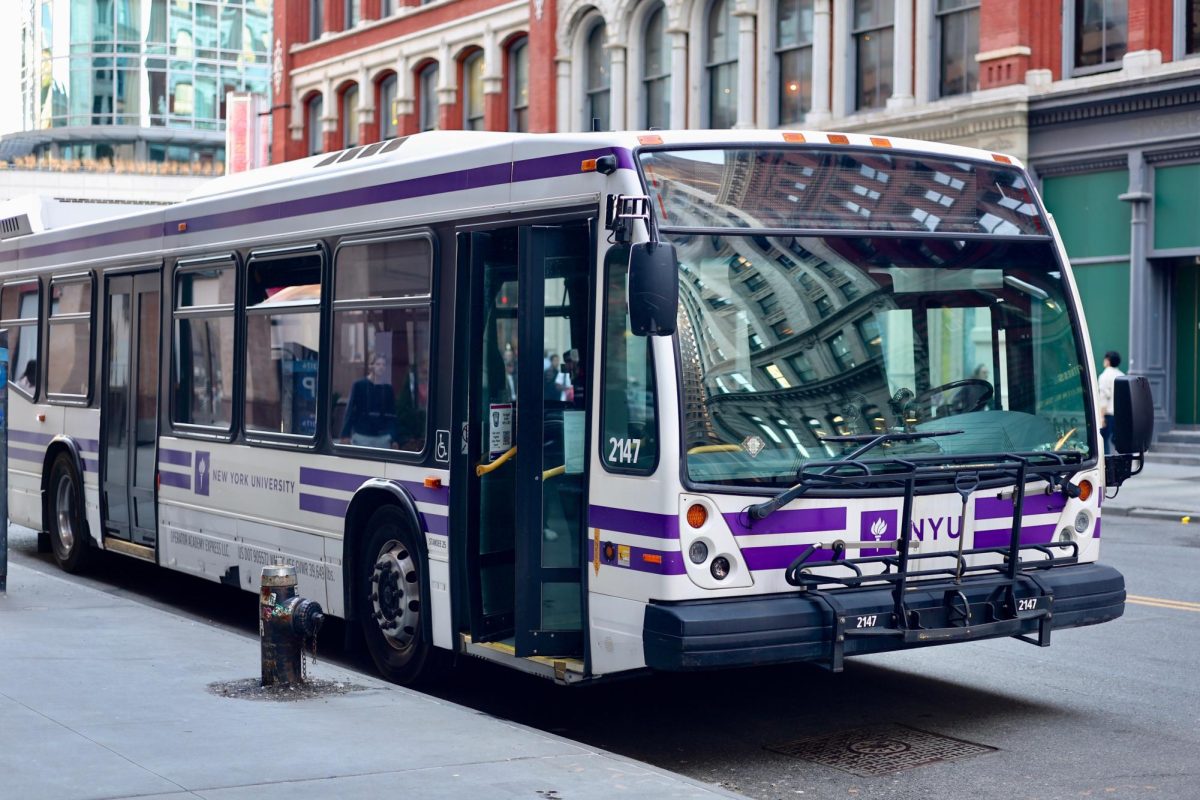
While transportation problems don’t often arise during the week, the weekends are a different story. For each of its seven routes, the NYU shuttle comes around every thirty minutes Mondays through Thursdays. But that consistency falters from Friday through the weekend. Gaps between stop times are larger, Routes B and E are combined into a single Route W, and Routes C and F don’t offer service altogether. It is imperative that NYU addresses this discrepancy by ensuring reliable and widespread transportation services all days of the week, not just during peak weekday hours.
What should be a simple commute quickly turns into a stressful series of events, shuffling through back-up options. While classes only take place during the week and during specific hours of the day, students still frequent on campus locations like Bobst, other residence halls and other buildings for club meetings at all times. Attending NYU isn’t just a Monday to Friday affair — students’ routines involve the whole week.
This inconsistency drives many students to find alternatives. Many of my friends resort to ride share services like Uber or Lyft just to get to campus, which should not have to be the norm, as many students do not have the resources to do so. These rides — which can get incredibly expensive depending on the length of the trip, time of day or the current demand for rides — add up quickly, deterring students from attending class or on-campus events and locations.
Some students take the subway, others ride the city’s bus and the rest are left to decide whether getting to campus is worth the walk. Gramercy Green, for instance, is a thirty-minute walk to most campus buildings. Now, on a warm sunny day, a twenty-to-thirty minute stroll is no issue. In fact, it is often a meditative, enjoyable experience. But when the weather is less forgiving — from either rain or snow — walking becomes far less appealing and, at times, impractical. We all saw how hard it was to navigate sidewalks and brave the minus 10 degrees Fahrenheit days this winter after several record-breaking blizzards this season. It is in those moments that a lack of reliable university transportation options becomes a barrier to students who are just trying to get around the city.
Public transportation, while helpful, also reaches into students’ pockets. Between subway fares and bus costs, the expenses accumulate quickly, especially for students managing tuition, housing and daily needs. The university’s facilities — a multitude of academic, social and professional resources — should be accessible to all students, no matter the day of the week, time or where they reside.
Safe Ride services present a similar challenge. It is a great idea in theory: If you are out late on campus or studying at Bobst Library until three in the morning, Safe Ride allows you a way to get home without having to risk a late-night walk back to your dorm. However, in practice, they are unreliable. Every time I’ve opened the Safe Ride app, the estimated wait for a car to arrive is usually over an hour long. At that point, I’ve simply opted to walk home at potentially unsafe hours rather than wait an unpredictable amount of time.
NYU can address these issues by subsidizing public transportation for its students. During NYU Welcome, the university provides first-years with OMNY cards to get to and from NYU events, such as the Presidential Welcome Reality Show. Additionally, New York City Public Schools offer students their own OMNY cards to take four free public transportation rides per day. If NYU implemented a similar initiative — whether through limited subsidies or discounted MTA passes — year-round and for all students, it would significantly improve students’ access to campus, especially for those who do not live near NYU bus routes.
If expanding subway access is not feasible on a large scale, the more obvious solution is to increase the frequency and availability of NYU shuttle buses. Ensuring consistent bus run times throughout the entire week would eliminate many frustrations current students face.
Updating Safe Ride follows a similar train of thought. NYU should monitor at which hours of the night requests spike, and add more drivers or vehicles during those hours to significantly reduce wait times. Otherwise, NYU could subsidize Uber or Lyft rides for students when wait times surpass an hour to ensure no one is left stranded for long periods in the middle of the night — a concept other universities are already implementing. For example, Montana State University launched free Uber rides within a 15-mile radius of the campus until as late as 3 a.m. to reduce the risk of students drunk driving. If NYU added this resource, it would divert students from walking home alone or taking the subway while intoxicated.
However a solution comes to fruition, this issue must be addressed. NYU’s transportation issues hinge on getting students to attend class, and above all, keeping them safe in a city that is constantly moving. If the university is committed to supporting its students academically and socially, it should prioritize keeping its students moving to and from campus — not tucked away at home.
WSN’s Opinion desk strives to publish ideas worth discussing. The views presented in the Opinion desk are solely the views of the writer.
Contact Elena Meves at [email protected].