
























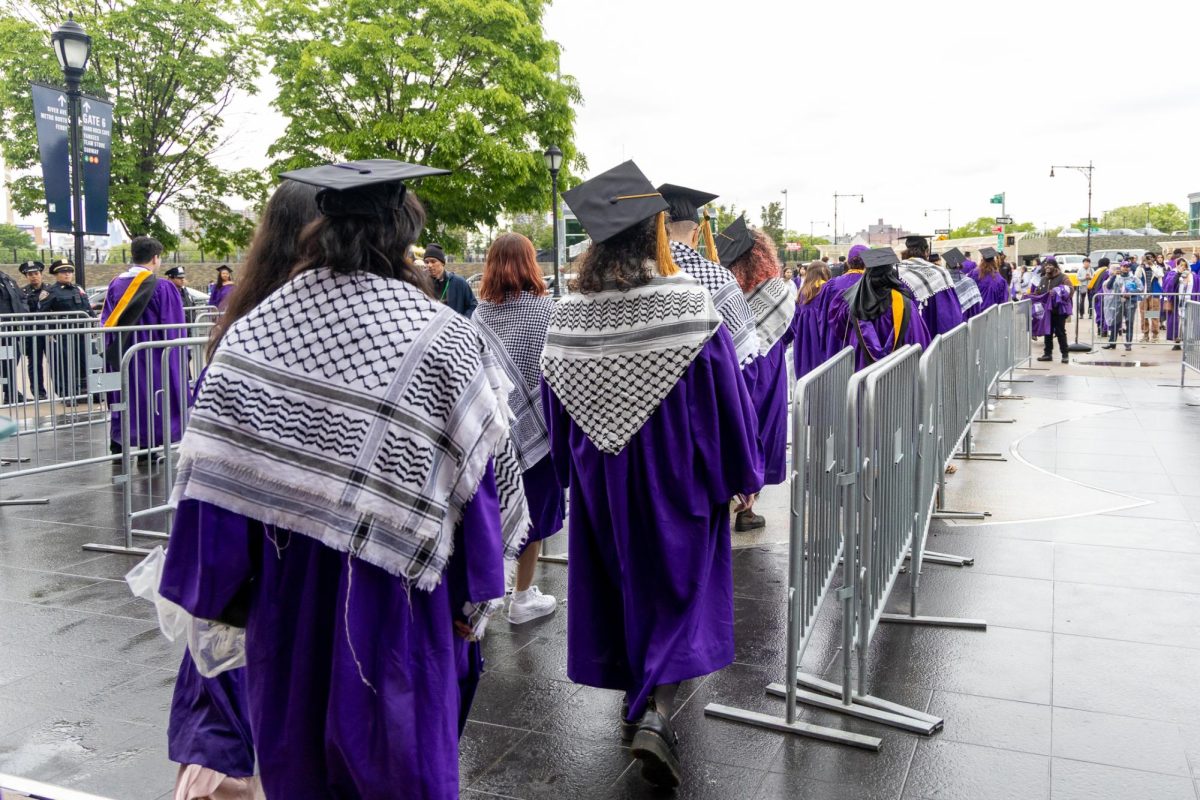
Commencement ceremonies, one of the most symbolic moments of the university experience, are organized by students and for students to be as memorable and special as possible. The Student Government Assembly has traditionally filled this role, however following NYU’s abrupt cancellation of affinity ceremonies last month as well as the replacement of live graduation speakers with prerecorded speeches, students are left questioning the decision-making process that allowed this to happen. The omission of student government from these decisions raises a larger question about whether students’ voices are being incorporated in the planning of major university traditions and initiatives at all. If students aren’t being considered, university administrators cannot claim to stand by the bylaws they so carelessly dispense with.
NYU’s own governance framework specifically outlines a process meant to ensure that major university decisions, including those involving commencement, involve student discussion. According to Chapter VII of the university’s bylaws, the University Senate serves as the primary deliberative body for universitywide policies and structural changes. Among its listed responsibilities, the Senate determines “the time, place and manner of the Commencement Exercises and of other public occasions affecting more than one school of the University.” But, members of the Student Senators Committee claimed administrators bypassed key procedural steps when making these decisions by not allowing commencement-related matters to be finalized by the Senate. When decisions of this scale occur without clear student representation, governance structures outlined in university policy aren’t functioning as intended.
Decisions about whether affinity ceremonies will take place or whether graduates will hear from live speakers shape how bodies like the SGA and student representatives in the University Senate are recognized. When student voices — particularly those that represent their entire class under university bylaws — are absent in traditions that carry symbolic significance, there is a risk that representation becomes simply a formality.
Although NYU introduced new identity-based graduations two weeks after the cancellation of those held by affinity groups, the debate is ultimately not about whether these specific commencement changes were the right call. NYU hasn’t offered much clarity on the new graduation events, only putting forth vague assertions that they’ll be held under “new conditions,” and include familiar unspecified graduation staples. Administrators eventually did meet with members of student government and leaders of some affinity groups, however, the students were still left in the dark about what exactly the new ceremonies would entail.
Commencement ceremonies mark the closing chapter of a student’s time at NYU, and decisions about how that moment is structured carry real meaning for the communities that participate in it. NYU frequently emphasizes the importance of shared dialogue between administrators, faculty and students — in order for shared governance to function effectively, representative bodies like the Senate must be meaningfully involved when major universitywide events are altered. Otherwise, it creates a huge disconnect between the governance structures outlined in university policy and the reality of how these decisions are made.
NYU’s decision to suddenly cancel and then bring back identity-based graduations was hasty and foolish — the larger concern is how callously the university broke its bylaws in not involving student government. The decision has many questioning the university’s commitment to follow the will of the student body. If NYU feels comfortable stepping past the approval process on matters as trivial as this for their own ends, what’s to stop them stepping past student rights and stopgaps on other issues? The fact is, the legitimacy of student government and the thoroughness of its bylaws are crucial factors in maintaining a healthy relationship between students and administration. Once that illusion of equitable cooperation and communication is shattered, it’s anyone’s guess as to how the university can convince its students it is acting in their best interest.
NYU’s bylaws outline a system in which representative bodies like the university’s senate play a role in shaping universitywide events such as commencement. If students are meant to have a voice, it should be clearly reflected in how decisions are made. And if that voice is not being meaningfully included, the university should either strengthen its commitment to shared governance or reconsider the policies that suggest students already have it.
WSN’s Opinion section strives to publish ideas worth discussing. The views presented in the Opinion section are solely the views of the writer.
Contact Leila Abarca at [email protected].
quad • Mar 17, 2026 at 6:38 pm
hey, heres an idea, everyone graduate together? you know, as one people? try that!