

































New York City has a way of turning exhaustion into inspiration. Hardship is seen as character-building. Rent is astronomical. Apartments are microscopic. Together, these conditions are the price of ambition to live here. For those who can’t keep up, it’s regarded that you simply don’t want to live in the city bad enough — or that New York isn’t made for you. Over 8.5 million people live in New York City, and nowhere is this mindset more applicable and enforced than on campus like NYU.
A national study from 2024 found 35% of currently enrolled college students had considered stopping their program in the prior six months. The top reasons were related to well-being: Of this percentage, 54% cited emotional stress and 43% mental health reasons. One in five New Yorkers experience poor mental health each year, with symptoms of anxiety or depression reported most frequently among younger adults aged 18-34. College is marketed as the best years of our lives. So, why are students pressured into feeling so overwhelmed?
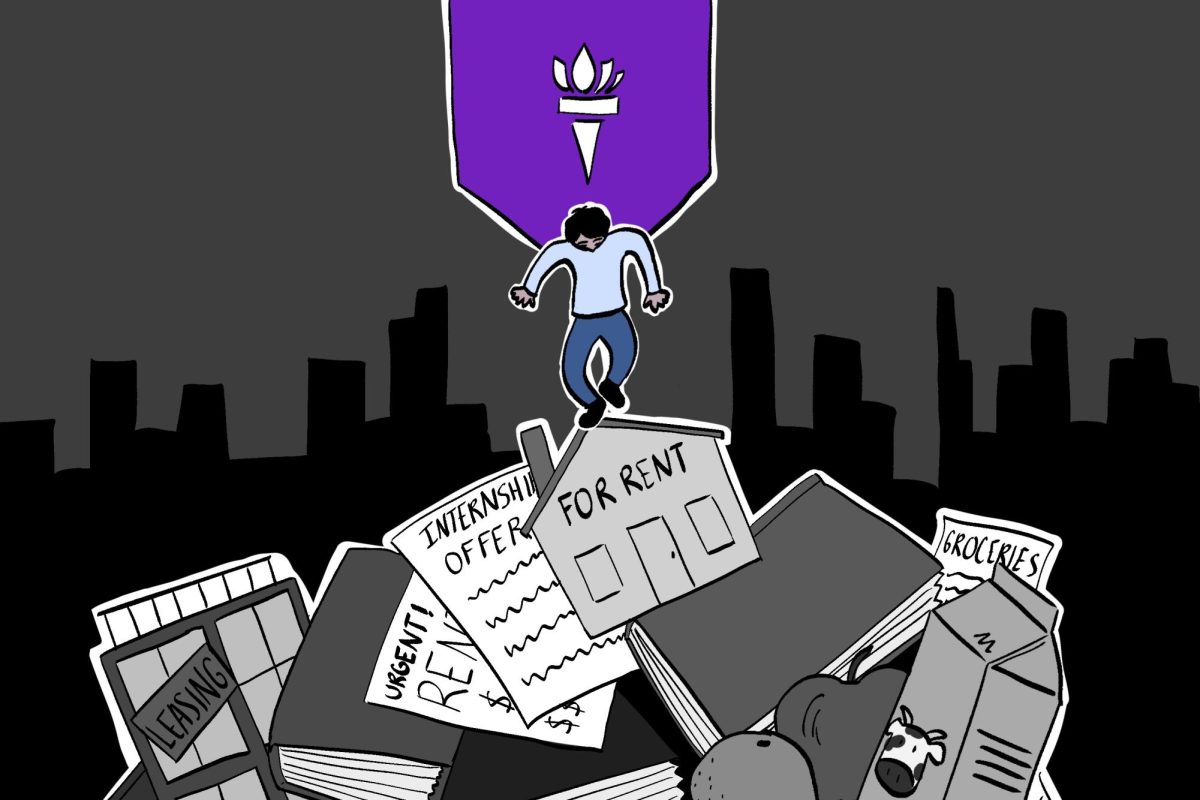
Part of the answer lies in how college compresses high stakes into a short window of time. We are constantly being evaluated — through GPAs, internships, resumes — while being told these few years determine our future. Add financial pressure and productivity culture, and stress becomes structural rather than situational.
Anything that dominates your time eventually becomes integrated into your identity. In a similar way, when academics consume most of your days, evaluation and performance metrics begin to shape how you see yourself in relation to the world.
Burnout has become evidence of drive and self-worth. If you’re tired, you’re trying; if you’re struggling, you’re becoming. Students are quick learners, and this logic becomes habitual when everyone else embodies the same sentiment.
The university itself promotes “day in the life” videos and blogs as a marketing tactic, normalizing an impressive yet unsustainable schedule which bounces between internships and a full course load. I feel guilty for resting and wasting valuable time, so instead I schedule coffee chats between classes and answer emails on the subway. There’s a quiet pressure to always be optimizing, with no moment of productivity wasted. Everyone else seems to be doing the same.
Even when students prioritize a heavy workload, they are sometimes met with more trouble than they can handle. Academic stress is consistently associated with worse performance and reduced motivation. For students who work on top of school, research often flags a tipping point. Once pushing past roughly 20 hours a week, grades tend to drop and coursework becomes harder to complete. Additionally, lack of sleep, although many students wear it pridefully as a marker of their work ethic, can have the inverse effect — harming academic performance and disrupting emotional regulation instead.
When struggle is romanticized, the healthy barriers between endurance and necessary effort starts to erode as we pour more of ourselves into our work. None of this is to say that ambition is bad, or that hard work doesn’t matter. NYU attracts driven people for a reason. There’s something electric about being surrounded by opportunity. Even still, there’s a difference between working towards a passion, and working towards a means to an end. Struggle should never be a prerequisite for belonging. Pain should not be a necessary part of the package.
Maybe the most radical thing students can do in New York City isn’t to hustle harder. Ambition doesn’t have to come at the expense of well-being. Instead, you can gain strength from your health and use that to fuel your success. As foreign as it sounds, prioritizing health is an option at NYU — starting with university resources like the Wellness Exchange and MindfulNYU, which offers free yoga classes Monday through Saturday.
When students prioritize hustle culture, rest feels indulgent. Asking for help feels like failure. By adapting to unsustainable conditions instead of questioning them, students themselves can become cogs in the machine, designed to be replaced immediately upon burnout. If you overlook the joy of the journey in favor of the glory of the destination, you’re destined to arrive empty-handed and emotionally bankrupt.
WSN’s Opinion desk strives to publish ideas worth discussing. The views presented in the Opinion desk are solely the views of the writer.
Contact Elena Meves at [email protected].