



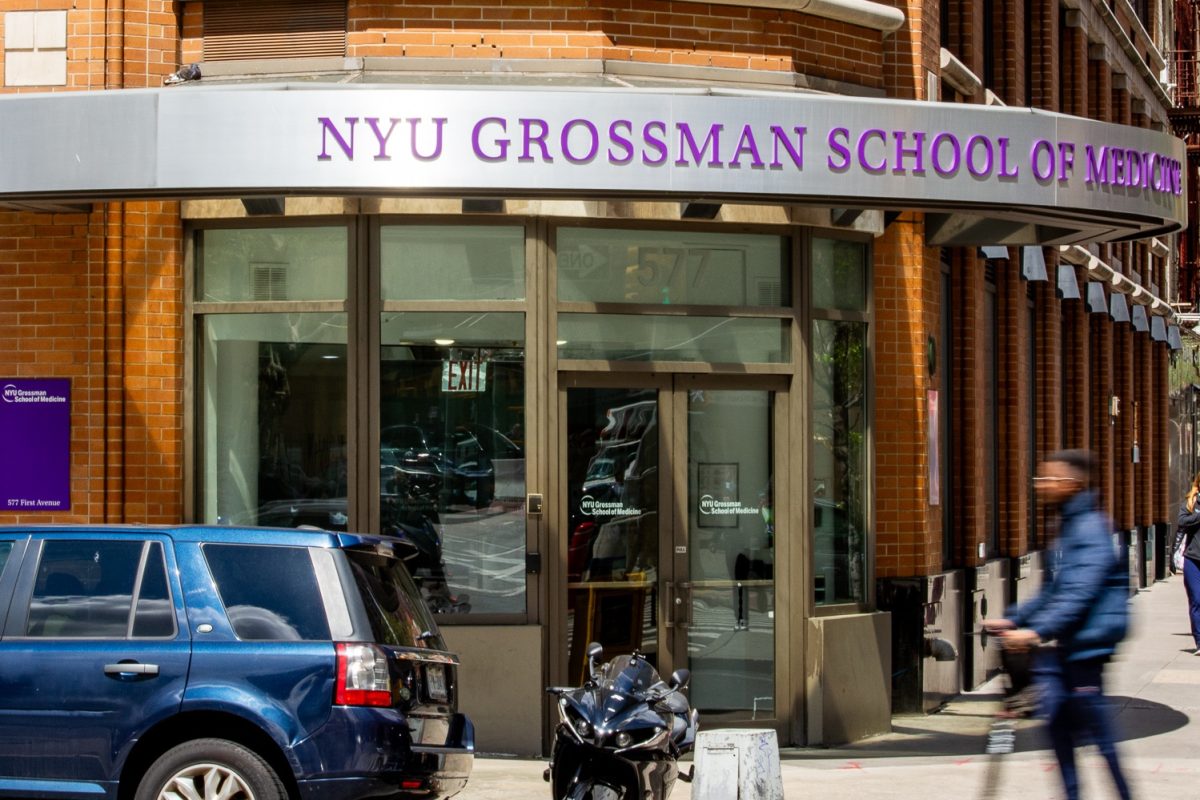

















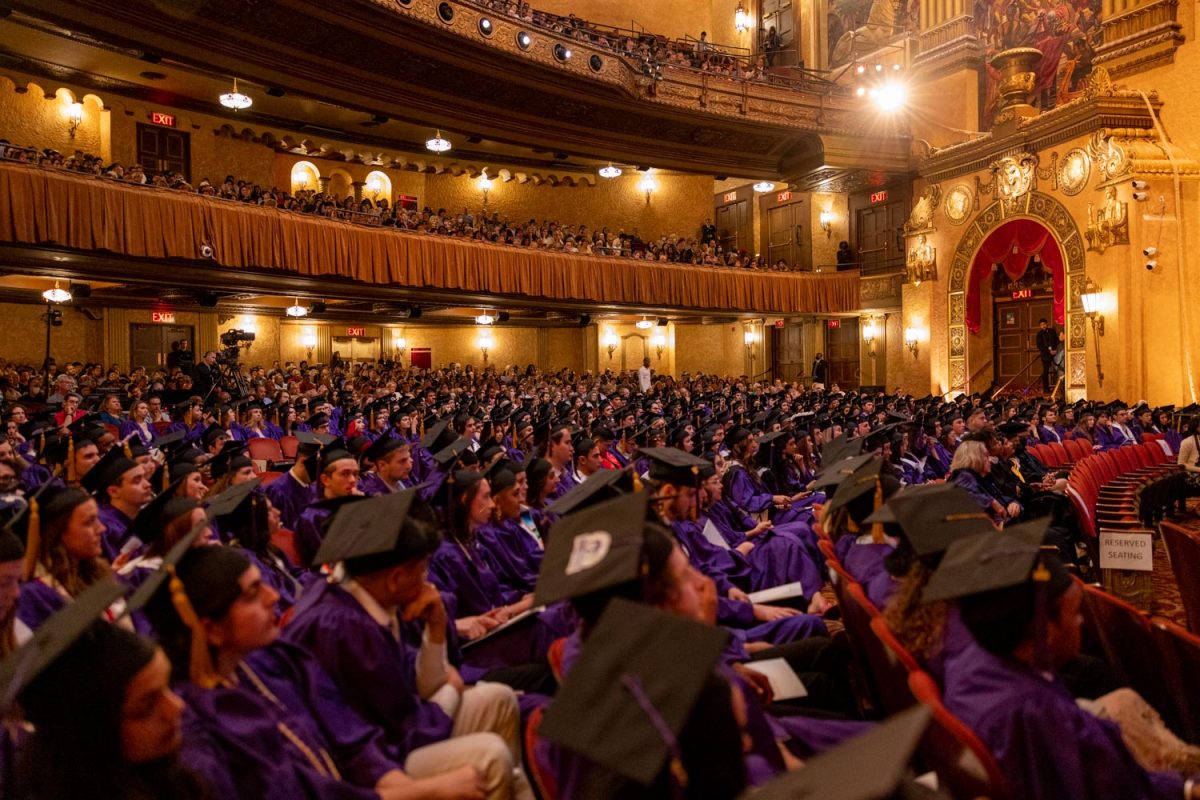
NYU’s identity-based graduation events, meant to celebrate the achievements of certain student communities, elevate a flawed and dishonest assumption behind the appearance of progress: After four years of intellectual discovery, the most important thing about you is not what you studied or who you became, but the color of your skin or your sexuality.
No serious academic institution should organize its students by cultural demographic at the pinnacle of their academic achievement. Per NYU’s logic, that masquerade has no stopping point. Why not organize ceremonies by city of origin? ZIP code? If self-segregating by surface-level characteristics is inherently affirming, the best thing NYU could do is hold thousands of individual graduation ceremonies, one per student.
An ideal university education teaches students to find common ground across their differences. At NYU, separating students by skin tone is repackaged as enlightenment. Arriving at Yankee Stadium draped in symbols of ethnic or national identity makes the same claim as affinity graduation ceremonies: Your identity matters more than your degree. Your ethnic identity did not attend your classes, go to office hours or write your thesis. You did, and the ceremony ought to reflect that.
Both affinity ceremonies — which NYU recently reinstated under a new name after canceling them in February — and political speeches at graduation proceedings rest on the same arrogant premise: the hijacking of a shared occasion by those convinced their identity politics supersede it. Political preaching is a performative, virtue signaling act of self-aggrandizement which allows one truth to become paramount — all while demanding the attention of the thousands of people who came for an entirely different reason, simply unlucky enough to be in the room.
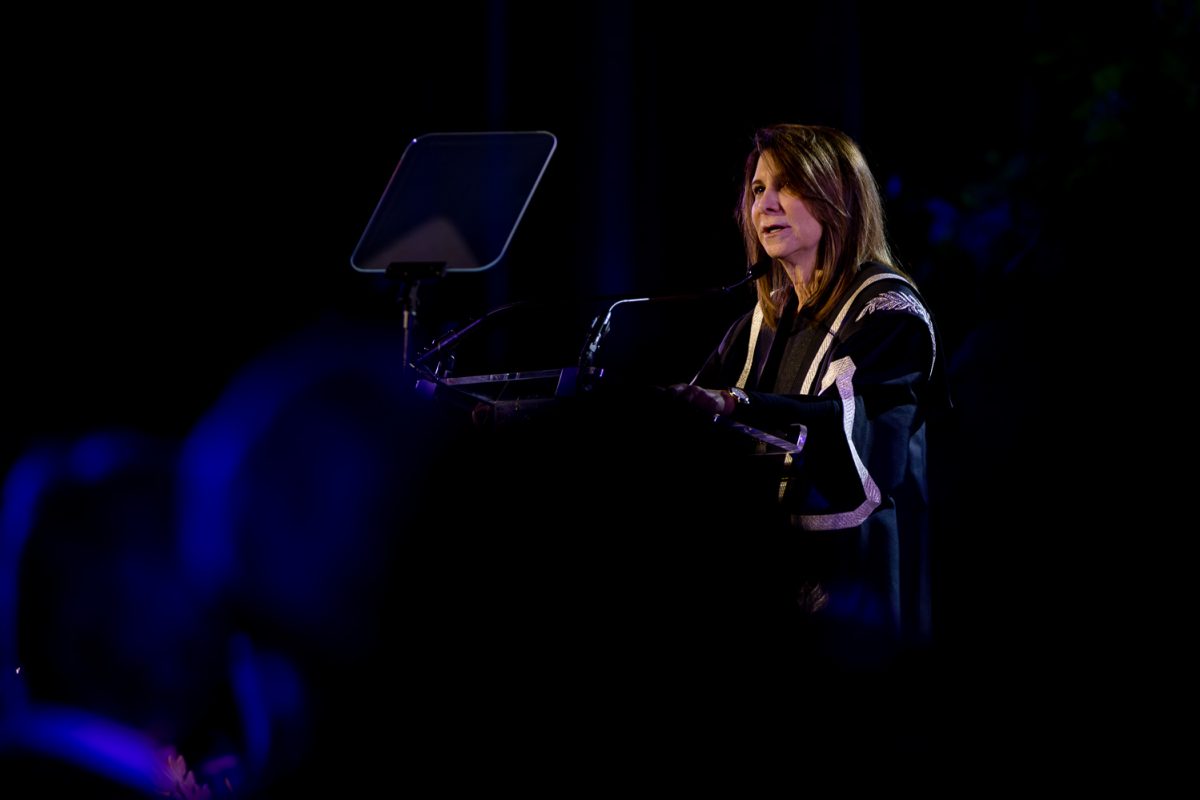
Sixty years before Logan Rozos gave last year’s student address at the Gallatin School of Individualized Study’s commencement, writer and philosopher Ayn Rand had already described exactly what he would do. In “The Cashing-In: The Student ‘Rebellion,’” she identified the pressure group playbook: Undercut, demoralize, intimidate and be louder and more provocative than everyone else, until the university, exhausted and conflict-averse, yields.
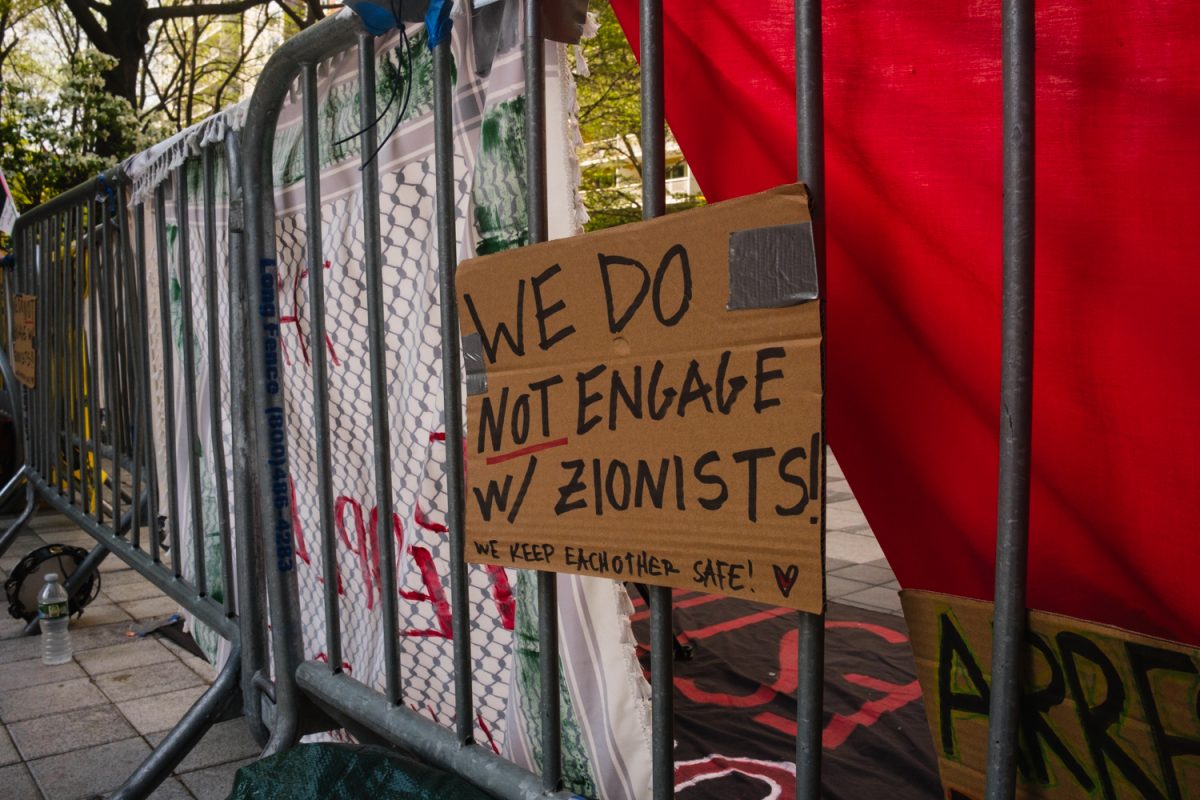
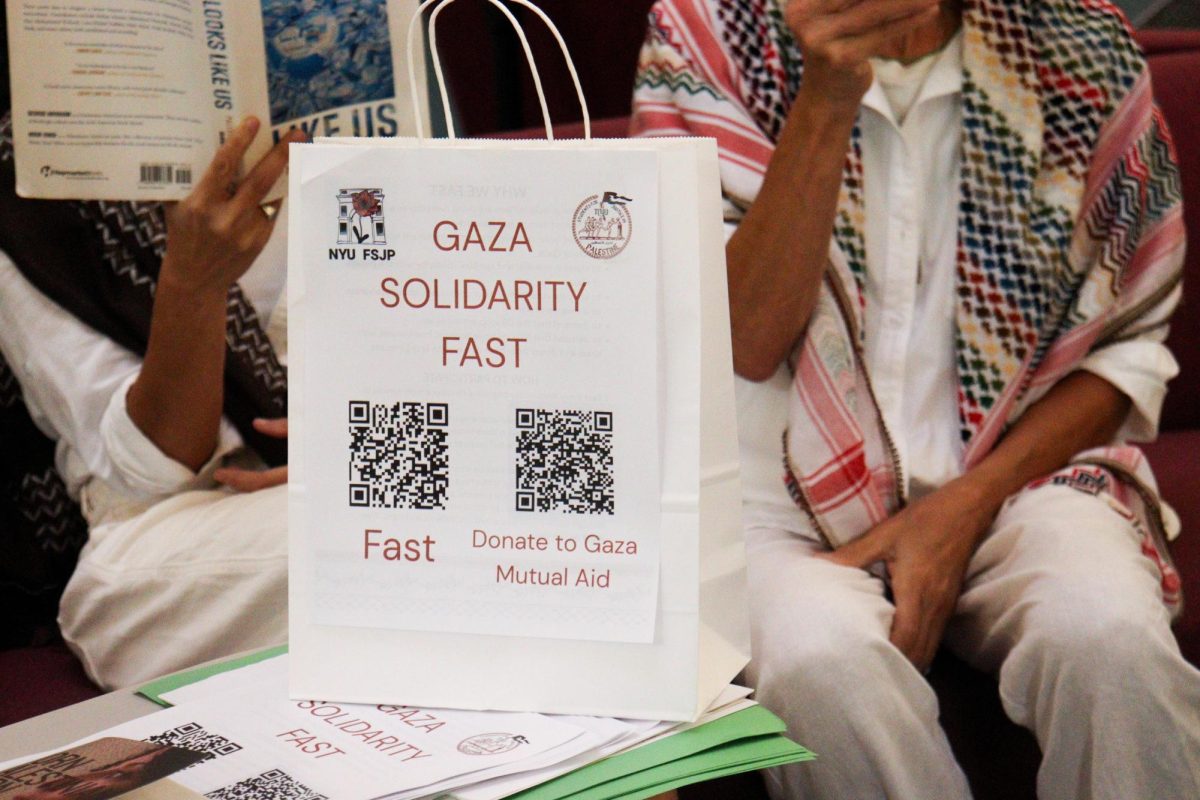
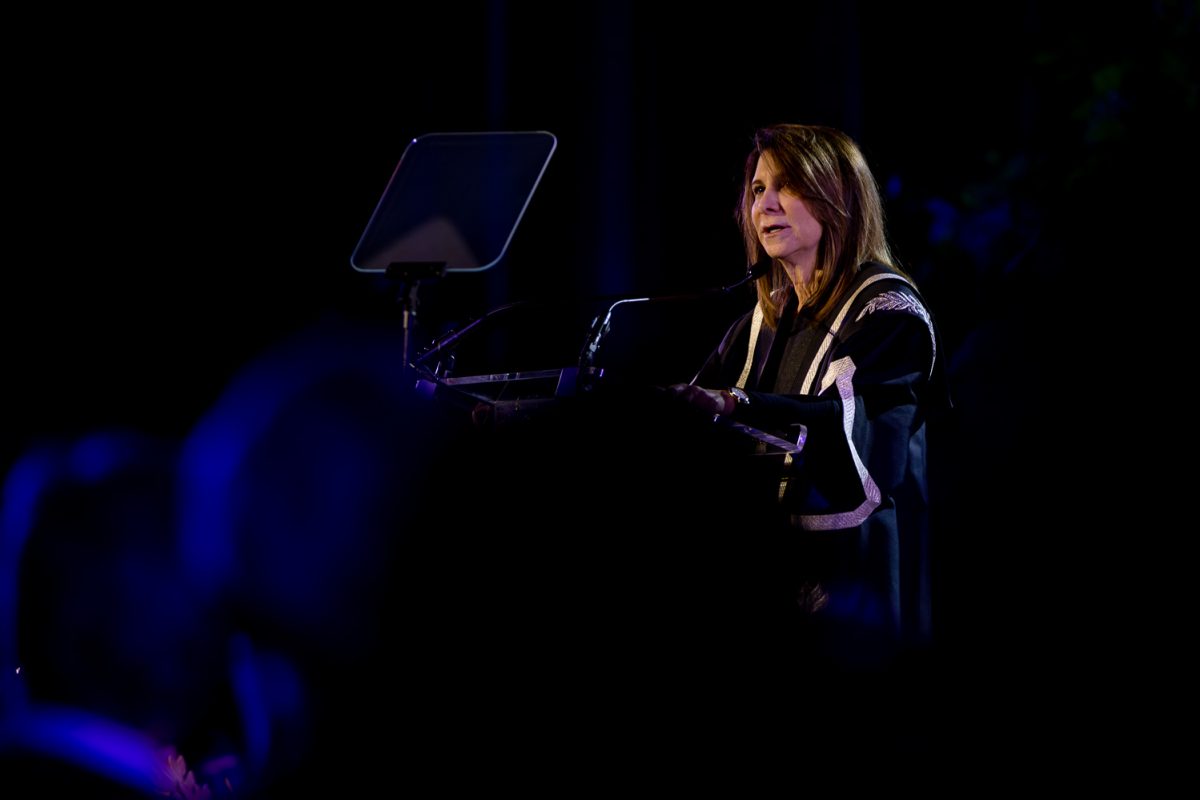
Rozos did exactly that when he departed from his prepared remarks to instead condemn the “atrocities currently happening in Palestine.” Meanwhile, the families in that room had no recourse. They had come from across the country and world to watch someone they loved graduate, and were forced to listen to a speaker who decided that his convictions were more important than his peers’ achievements.
One might be willing to grant Rozos the sincerity of moral conviction were it not for several damning omissions: If his deviation from the script was truly motivated by a compulsion to bring light to atrocities, he should have spotlighted several others. By the time of his speech, Russia’s invasion of Ukraine had produced one of the largest refugee crises in European history since World War II. Rozos also failed to mention the Sudanese civil war or mass displacement in the Democratic Republic of Congo.
There is no shortage of human suffering in the world, but Rozos used his platform to preach about whose suffering was worth discussing. Allowing students to hijack school events does not bring peace, but an escalating series of demands further into the future. When universities capitulate on disruption, they produce a race to the bottom that erodes the civility society depends on. Instead, Rozos could have easily taken his views into the streets or onto op-ed pages.
Given that NYU also recently announced that live school graduation speeches will now be prerecorded, it’s clear that the administration does not trust students to uphold its standards. When the university grovels to students demanding segregated ceremonies and political platforms at graduation, it abandons a core obligation of higher education. NYU’s mission, in part, should be to model for its students the values of civility and integration — not sorting students by skin tone nor letting agitators set the terms of campus life without consequence, because every student watching is learning what NYU believes civil conduct looks like. The university must stand its ground to preserve the sanctity of its events, before the cost of having neglected them becomes an embarrassing headline.
In a city of 8 million people drawn from all over the world, students must learn to recognize that not every occasion is a political one, and that responsible citizens are expected to share space with those whose views they find mistaken. All students should be capable of standing at a podium and looking back on a shared experience, reflecting on what we learned and what we owe to our classmates and professors. Graduation ceremonies that hinge on identity politics take away from the spirit of the occasion, and students who co-opt the event mistake the greatest privilege of their academic career for a soapbox.
WSN’s Opinion desk strives to publish ideas worth discussing. The views presented in the Opinion desk are solely the views of the writer.
Contact Becky Flanagan at [email protected].
Lorna jane • Mar 27, 2026 at 7:55 am
What a sad life you have, Becky.
To not be able to acknowledge the privilege that got you here, and for you to commit to not understanding other people’s journeys.
You’ll lead a very lonely life. And no one will be there for you when they come for you.
If you have a problem with it, why go to your graduation? Why are you entitled to celebrate how you want and no one else is unless it conforms to your ideal? Oh I see, you believe you’re the authority on this. Well, maybe reevaluate your life because you’re only the authority on entitlement.
SARIAH Vaioleti • Mar 26, 2026 at 11:53 pm
Reading pieces like these evokes pity for those who navigate life with such an unchallenging, uninteresting worldview. To have an opinion such as this signals a void of community and belonging so sinisterly bereft that it scrambles to find what it lacks in an unsuccessful and yawn-worthy offensive on our brilliant communities and their ceremony and celebration.
To those who find themselves in the same boat as this writer, I hope one day you will experience the community-derived joy, confidence, love, and empowerment that await all of us, so you can join us in understanding why we are unabashedly proud of who and of where we are.
Because the current choice of centering yourself in a paltry, dull, and shallow faction of chauvinism built on the doomed foundations of reactionary insecurity will always result in a loss at your greatest expense.
Good luck. 🙂
Christian Mcgrane • Mar 26, 2026 at 5:21 pm
If the idf didn’t kill men, women, journalists and children, no one would have to speak up. But instead we are debating whether Americans, at an American university protected by our constitutional 1st amendment rights should even be allowed to mention it. So not only are 70,000 Palestinians (since 2023) confirmed dead by the Israeli government, but American students cannot even mention it at the university they paid to attend.
ed • Mar 26, 2026 at 12:51 pm
You only live once, and at a university that prides itself on liberal ideals, it is strange to suddenly insist students should be quiet, neutral, and indistinguishable at the very moment they graduate.
Calling identity-based celebrations or student speech a threat to the “sanctity” of the occasion feels less like principle and more like discomfort dressed up as one. No one is confusing their identity with their degree; they are simply refusing to act as if the two are unrelated.
And the impulse to police what students say, celebrate, or who they gather with is not some defense of academic values. It cuts against them. All of history is fairly clear that institutions which start drawing lines around acceptable expression rarely end up on the right side of it.
Lux • Mar 26, 2026 at 12:14 pm
This entire article is based on the premise that the university sorts students into affinity graduations which just isn’t the case, its completely voluntary, and most students don’t engage in them at all. And there is a clear logical fallacy around the idea that Rozos’ comments were bad because he didn’t mention all the other issues in the world as well. This article claims that families were traumatized by a sentence about Palestine, and yet he should of instead taken a paragraph to mention every worrying conflict happening right now? That does not make sense. For hating identity politics so much, conservative talking points somehow always find a way to make it the foci of everything. This article reads like brain rot rage bait, and I’m disappointed.
Tejas Sahni • Mar 26, 2026 at 12:03 pm
This is a fundamentally dishonest piece that writes from a place of ignorance and lack of empathy. It is clear that the author has no conception of what identity is. Yes, technically, we were the ones who got our diploma. But we did it as queer people or as people of color. We carry that background and experience into the classroom and into the world. The community we choose to bring onto the stage to accept diplomas with us matters just as much as the NYU community we sit with. It tells a story of who we are as people and the struggles we had to overcome to get there. Framing this as some kind of cultural excess ignores that context entirely. Trying to police how people celebrate their achievements is just as limiting as what you are criticizing. If you are going to write about affinity graduations in such a manner, it is worth taking the time to understand the perspectives of your fellow students first instead of just blurting out the first reactionary thing that comes into mind.