





























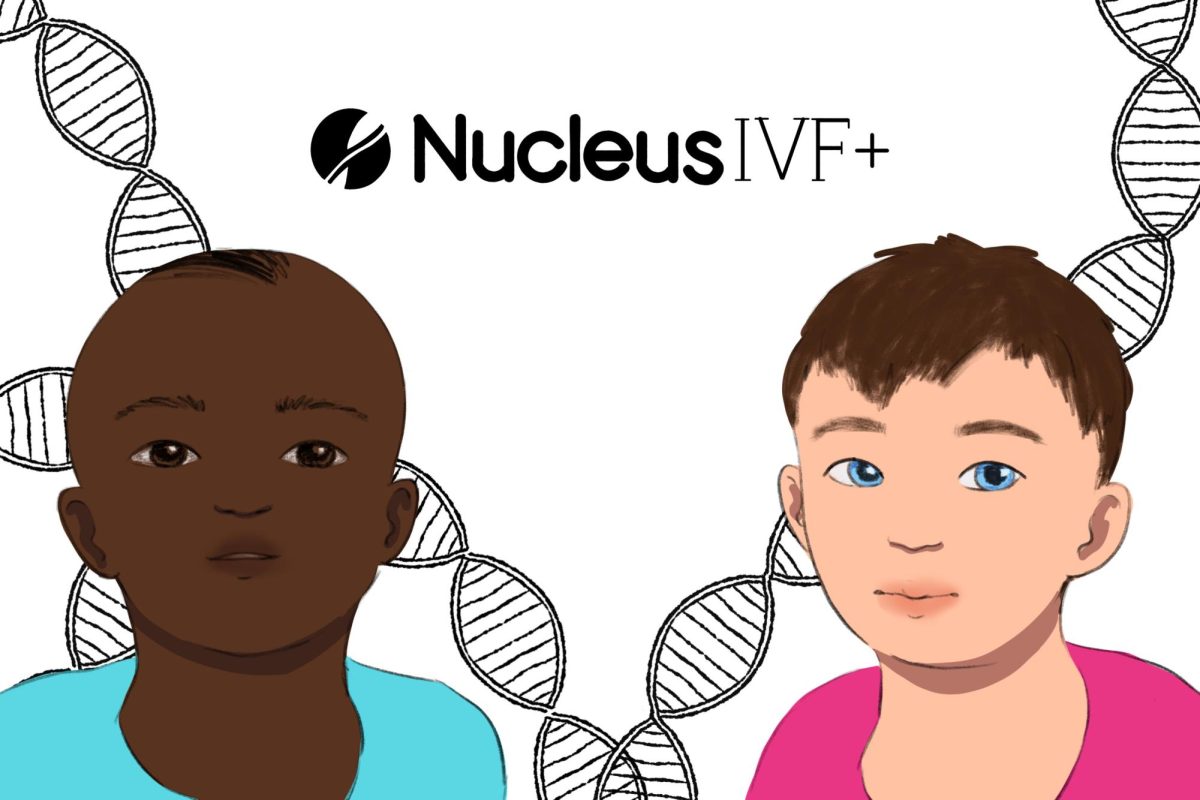
When genetics and fertility startup Nucleus Genomics plastered ads across New York City’s subway stations urging riders to “have a smarter baby,” “have a taller baby” and, most bluntly, “pick your baby,” it became instantly clear what they’re selling: a modern version of eugenics.
The company, which uses whole-genome sequencing to sample a person’s DNA and predict what users’ babies will look like, launched a massive ad subway campaign last month. The posters, which advertise “great genes,” are emblematic of the larger tech-driven fantasy that everything in life — our happiness, our health and even our future children — can be optimized and chosen under our control. The ad is alarming for its language, but more importantly for revealing how tech guilds treat natural variances in biology as a design flaw.
Nucleus’ subway campaign is a window into how deeply Silicon Valley and the tech industry’s micromanaged optimization mindset has permeated everyday life. Tech culture teaches us that spontaneity is a system failure that must be fixed by the right algorithm and updates. We hack our routines, track our mood cycles and manipulate our circadian rhythms in relentless pursuit of self-improvement. Fertility startups simply extend that logic to the most unpredictable part of human life: the biological lottery.
But unlike productivity or sleep, human genetics is not a system you can manipulate without profound consequences. Attempts to do so quickly edge into the territory of CRISPR-enabled designer genetics — the gene-editing technology that allows scientists to specifically change DNA sequences. Want your baby to have blue eyes? You got it. Similarly, it recalls the eugenic fantasies the United States helped pioneer through compulsory and involuntary sterilization in the 20th century, mostly performed on minorities. The promise of “great genes” is really the comforting illusion that you can manage the uncertainty of biological code the same way you manage your screen time. Simultaneously, it ignores the unethical, inhumane history of trying to engineer human traits, with little care for the inequalities that always follow.
This issue harkens back to Sydney Sweeney’s summer campaign for American Eagle Outfitters, where she similarly endorsed the embodiment of the conventional eugenic makeup. By promoting eugenics and glorifying whiteness, the campaign suggested genetic knowledge as just another vector of self-optimization; a so-called better self should be desired and can be obtained with the right pair of American Eagle’s jeans — sleek, effortless perfection and beauty that the ads promise. Similarly, Nucleus’ underlying message implies that if you just pay the right company, the messy parts of being human can be managed, minimized or eliminated.
When optimization becomes a worldview, people start treating the future — including the future lives of their children — as something that can be managed like a workflow. That doesn’t just change how individuals function; it changes how society understands responsibility, risk and even moral priorities. When expectations about family, success and a good life change in this way, people start to believe they are failing when their life doesn’t conform to a corporate-sponsored system or algorithm.
The “great genes” ad is less a fertility campaign than a cultural symptom. While you can frame the ad as just another subway poster selling New Yorkers a better version of themselves, the joke doesn’t land. It’s the same logic that restructures old hierarchies into new mediums — whether modern clothing campaigns or subway posters. Tech culture has expanded so far into the psychological landscape that even the randomness of heredity is being marketed as a solvable problem. It highlights how seductive the fantasy of control is—and how willing people are to buy it, even when it contradicts the basic fundamentals of being human.
WSN’s Opinion desk strives to publish ideas worth discussing. The views presented in the Opinion desk are solely the views of the writer.
Contact Elena Meves at [email protected].