



















On Tuesday, I voted for Zohran Mamdani, alongside over one million other New Yorkers. He won the election for mayor, making history as the city’s first Muslim and South Asian American to do so and drawing nationwide attention as a proud democratic socialist. As the daughter of two Indian immigrants, his win was more significant to me than just a marker of success for the Democratic Party.
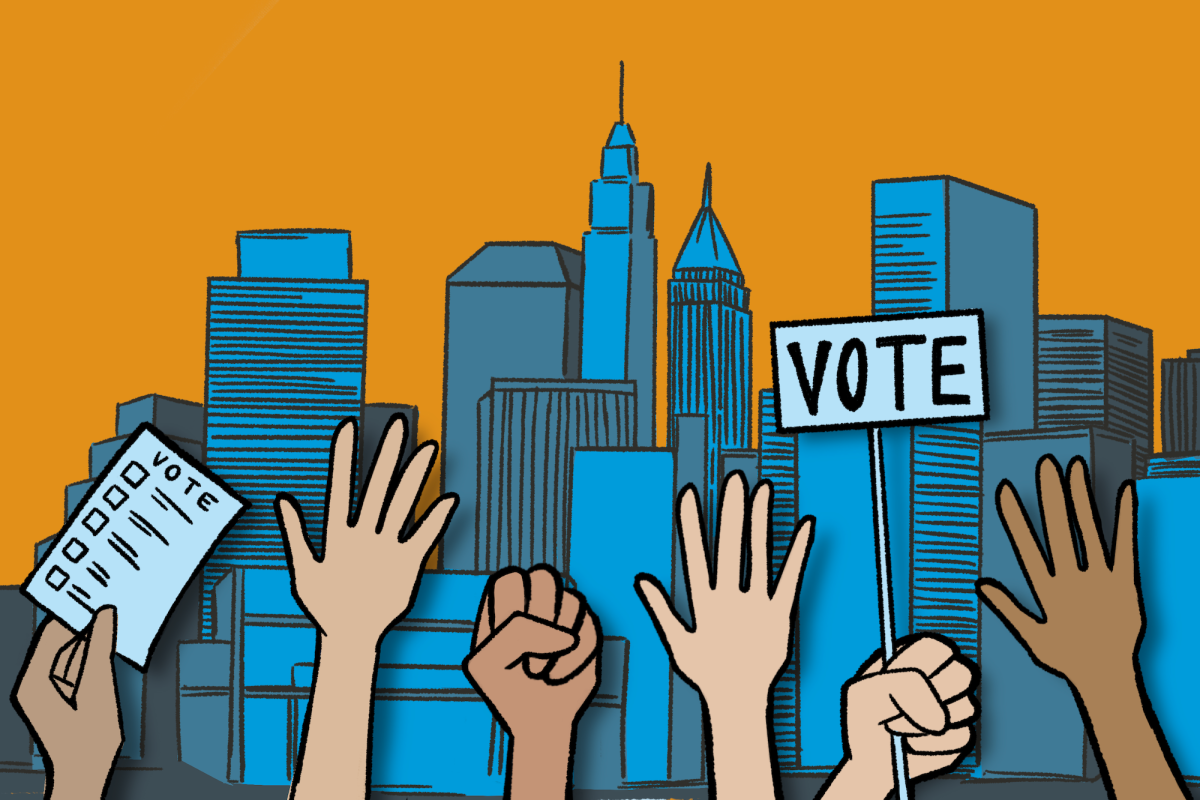
The hallmark of Mamdani’s campaign was affordability. He positioned and voted for himself as a member of the Working Families Party, after winning both its endorsement and the Democratic nomination. Quickly, he became the frontrunner of the mayoral race. Volunteers knocked on three million doors and Mamdani’s charismatic smile seemed to show up on every street and avenue across the city in the days leading up to the election.
But of course, as with any Indian person achieving something exceptional, many people didn’t know how to grapple with Mamdani. Begrudgingly, I’ll forgive the overly normalized mispronunciation of his name and people not understanding that racial identities can be more complex than they think. More pertinent was former Gov. Andrew Cuomo’s campaign resorting to grossly immature and racist campaign tactics by digitally lengthening and darkening Mamdani’s beard and snidely insinuating that his Muslim faith made him a terrorist sympathizer.
Aside from its disgustingly Islamophobic implications, Cuomo’s remark raised a critical question: In a post-9/11 New York, what does Mamdani’s win mean? The initial aftermath of Sept. 11 ushered in a new wave of anti-Muslim bigotry, as well as a rise in hate crimes toward Arabs and South Asians. Offenses in 2001 increased 17-fold from 2000. Since then, hatred toward Arabs, Muslims and South Asians has continued to grow at an alarming rate, culminating in a 69% rise just last year.
But Mamdani never shies away from his Muslim pride, explicitly expressing in his victory speech that he will not apologize for his religious identity. Throughout his campaign, he visited mosques across the city, openly practiced his faith and consistently addressed ignorant comments head-on, earning trust and support from New York City’s Muslim communities by shattering the historic narrative that they do not deserve protection from political hate and harm.
Moreover, during election seasons, South Asian immigrants are constantly scapegoated — to many politicians, we are nothing more than model minorities, money-hungry immigrants that steal jobs and pawns that can strategically be used to sway one campaign over another. Mamdani broke this status quo, though, when the city’s South Asian voter turnout increased by 40% during the Democratic primary. The engagement can in part be attributed to the way his clear agenda, promises of lowering costs and supportive character speak to so many working-class South Asian families.
Could Mamdani’s win be what starts to push back against hateful rhetoric toward Brown people, even with a federal administration that detains and deports people just because of the color of their skin? Only time will tell, but personally, I have hope.
In a world that constantly expects immigrants to conform and assimilate into regressive politics out of fear, Mamdani resists. A Ugandan-born immigrant with roots from Punjab and Gujarat, he represents the complexities of the diaspora and the fact that immigrants should not — and in fact cannot — be put into boxes. Reflecting his own identity, Mamdani supports immigrants of all backgrounds, not just those who appeal to the Republican Party. His vigor in challenging the oppressive status quo, fueled by his personal experience, is what gives me hope for the future under Mayor Mamdani.
In his victory speech, Mamdani encouraged listeners to “breathe this moment in,” and that is exactly what I’ll be doing. Preemptive cynical politics aside, it is overwhelmingly inspiring to see someone with my complexion leading one of the most powerful offices in the United States — especially an immigrant daring to lead with the values of kindness, community and acceptance that I associate with our culture, not the hateful lies that the political world likes to spread about us.
WSN’s Opinion section strives to publish ideas worth discussing. The views presented in the Opinion section are solely the views of the writer.
Contact Anjali Mehta at [email protected].