






























At the beginning of mayor-elect Zohran Mamdani’s canvassing events, we would all stand in a circle on the street and discuss why we each joined his campaign. I remember one older man who said that, for him, “Everything seems to be coming apart, and all I want to do is lay on my bed and cover myself with my blanket and hide.”
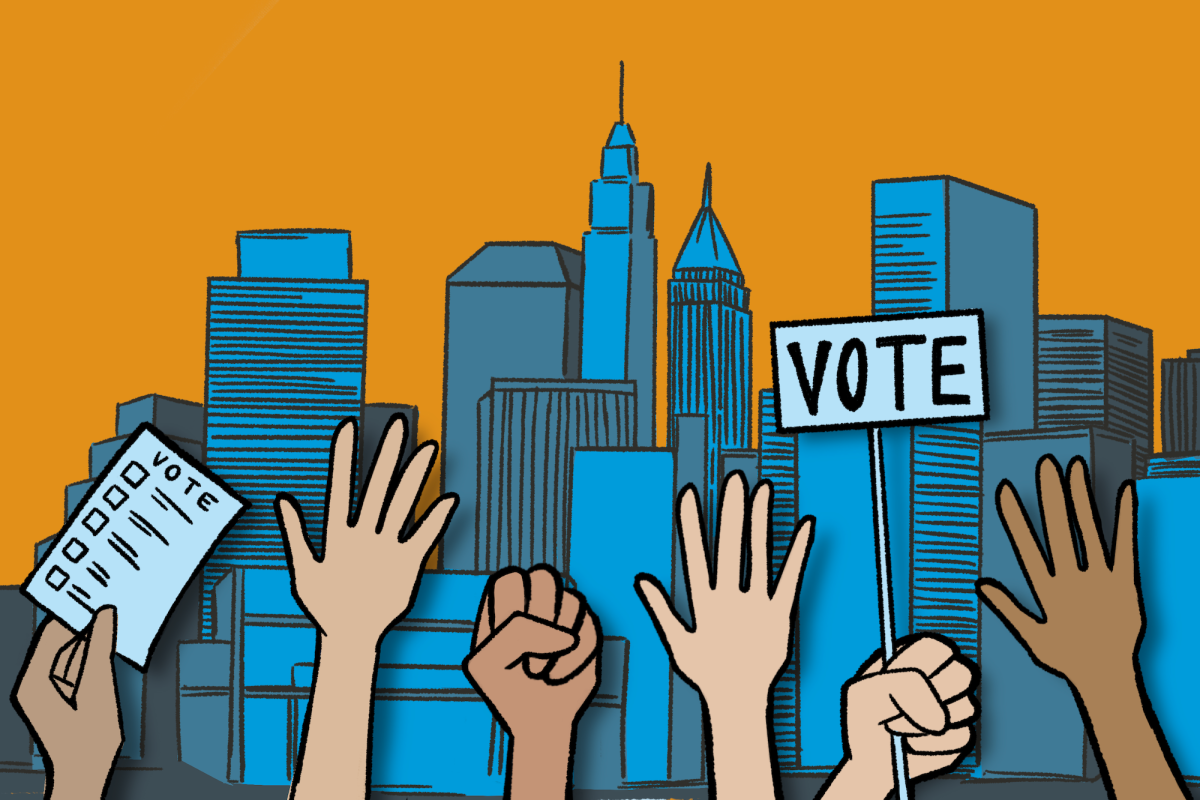
He saw a group of young people gather in his neighborhood to canvas for Mamdani, did some research and decided that the campaign was something he could participate in to help counter the recent wave of regressive politics. His experience, while only one, is reflective of a broader theme behind the mayor-elect’s success: Canvassing, when done right, is a uniquely inclusive and practically contagious way to spread support for political causes.
Mamdani started in the polls at a measly 1%, far behind incumbent Eric Adams and former Gov. Andrew Cuomo — as well as a half-dozen other politicians vying for the mayoralty. However, while he ran with amazing campaign management, policy proposals that resonate with New Yorkers and an undoubtedly effective online presence, those weren’t what set his campaign apart the most. Rather, I believe it was the network of 100,000-plus volunteers, actively working to spread the good word on Mamdani, that ultimately saw him through the finish line.
Earlier this year, digital strategist Deja Foxx lost the Democratic primary for Arizona’s seventh congressional district. There were a lot of things about her campaign that, on paper, looked very similar to Mamdani’s: social media savvy marketing, appeal to young progressives and calls for big changes to a political system people are dissatisfied with. But despite Foxx’s youth and digital expertise, Adelita Grijalva, the daughter of the late Congressman Raúl Grijalva, won anyway. Foxx was regarded more as an influencer than a political candidate and never really crossed over into the mainstream.
So what was the major difference between Mamdani’s campaign and Foxx’s? She lacked his canvassing network that represented every possible constituent. Foxx needed to convince the Arizona populace that it could have something radically different from what has been expected in politics, even for those the Democratic Party has disillusioned in the past. It’s one thing to have a social media campaign that gets a lot of views, likes and shares — but if you can’t get people actively engaged in political circles to get out on the street and volunteer for you, who’s to say that anyone else will go to the polls and vote for you?
A critical part of canvassing, and the reason for its success in the case of Mamdani, is the special connective power of one person appealing to another, face-to-face in good faith. In a study from Yale University, researchers Donald Green and Alan Gerber found that door-to-door canvassing was “the most consistently effective and efficient method” in increasing vote turnout. When I was canvassing, I was encouraged to admit when I didn’t know all the facts about certain political issues if they came up. While counterintuitive, it demonstrated that the campaign was not trying to sell a cure-all solution to your problems. Rather, it was trying to convince you that there’s a man running for office who’s genuinely concerned about solving them — one who I believed in enough to rally for door-to-door.
In the future, hopefully we’ll see more campaigns run on the idea that individual people are more important to a politician winning than the electoral college or PACs. Or better yet, fewer campaigns will use scare tactics and intentionally misunderstood policies to steer the crowd toward their agenda.
Mamdani’s candidacy is not just a campaign, but a movement motivated by the hope of people working towards his ideas. Politicians must take the proper message from this victory, that genuine interpersonal efforts to gain support for a movement will always work better than trying to guide people with fear. Grassroots campaigns like these are the essence of good democracy, where everyone’s vote matters, anyone can rise to be a viable candidate for office and anyone can feel they’ve contributed something substantial towards a greater future.
WSN’s Opinion desk strives to publish ideas worth discussing. The views presented in the Opinion desk are solely the views of the writer.
Contact Zack Leitman at [email protected].