























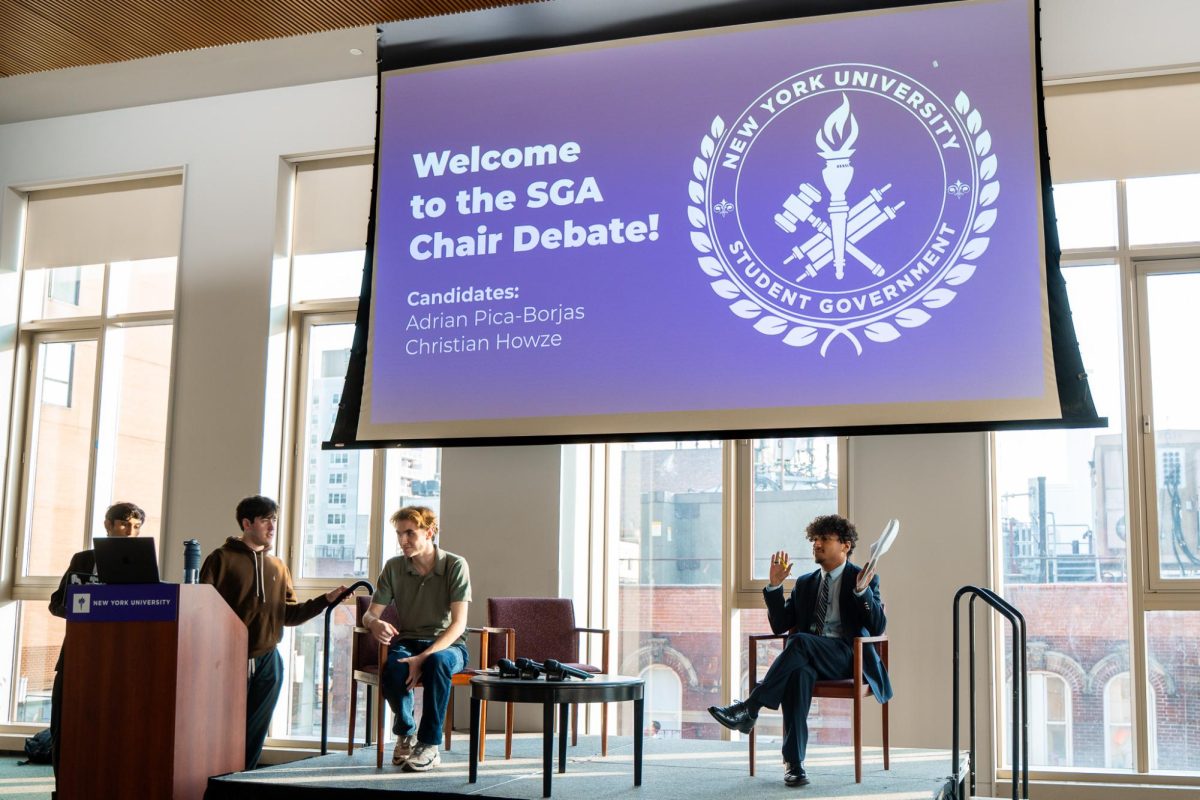
With just two days left to vote for the next chair of NYU’s Student Government Assembly, the two candidates — Christian Howze, Stern junior and president of NYU’s Black Student Union, and Adrian Pica-Borjas, CAS sophomore and former door-knocker for Mayor Zohran Mamdani — focused on NYU’s response to the Trump administration and student safety in Abu Dhabi during a Tuesday evening debate.
This is the second year that all students will be able to vote for SGA chair via a poll on NYU Engage set to close on Friday. Elections were previously open only to voting members of student government. The chair-elect will represent NYU’s 60,000 students to administrators at University Senate meetings and is responsible for executing the organization’s resolutions, which draw from a $500,000 annual budget.
Candidates gave opening remarks before responding to five predetermined questions, which focused on their experience in student government and how they would lead the organization as chair. Around 20 students observed the debate, which took place at the Global Center for Academic and Spiritual Life.
When asked how he would work with students to ensure he had their best interests in mind, Pica-Borjas — who is senator-at-large for LGBTQ+ students of color — said he would focus on protecting values common among NYU students, like respect for human rights.
“We share our respect for human rights, and we have to pursue those human rights,” Pica-Borjas, who co-sponsored a resolution to restore affinity graduations after NYU canceled the celebrations in February, said. “When I see the names of certain offices and titles being changed due to an aggressive, authoritarian federal government, and when I see students being afraid that they’re going to be taken by federal immigration agencies, I simply cannot close my eyes and cry neutrality.”
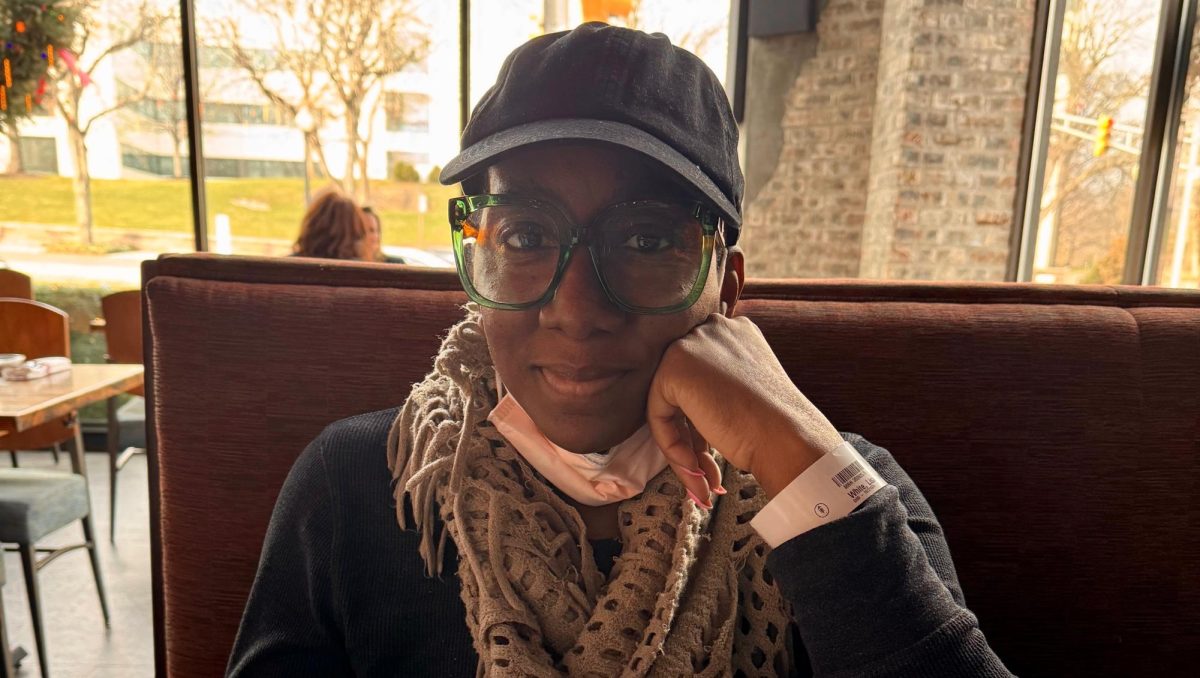
Howze, who is currently studying away at NYU London and serves as a senator-at-large for Black students and students of color, attended the debate via Zoom. He offered to meet with students to hear their concerns and bring them to administrators, regardless of if he agreed with them or not.
“The administration can feel an echo chamber of not necessarily knowing how their actions and lack of statements are affecting students,” Howze, who wrote a letter last semester urging NYU to strengthen protections for Black students, said. “If students don’t know that the university is protecting them in this specific area, how can they feel safer?”
Halfway through the hour-long debate, moderators opened the floor for audience members to ask questions. One student asked both candidates how they would respond to the Iranian government’s threats against U.S. university campuses in the Middle East, including NYU Abu Dhabi — which NYU temporarily closed over the weekend, alongside its study away site in Tel Aviv.
Howze said he would maintain close communication with student government representatives at the site and advocate for more substantial university communication about the potential risks of studying abroad.
“When students are going there, we need them to feel safe,” Howze said. “The current situation of so many students fearing for their lives is really scary and sad. I think the university could do a lot more to educate students into what environment they may be going into at any of our abroad sites.”
Pica-Borjas highlighted interviews he held with LGBTQ+ students at NYU’s degree-granting campuses in Abu Dhabi and Shanghai — which he used to develop a travel guide to ensure they could stay safe in the areas — and said that student government should respond to the threats in a way that was informed by their experiences and possible trauma.
Students also asked what the candidates would do to combat shrinking food stocks at NYU’s food pantries and what both senators were most proud of doing outside NYU.
WSN interviewed both candidates on March 13 about what they would do if elected and what they believed the SGA could have done better over the past academic year. Howze focused on his plans to improve support resources for low-income and first-generation students and bolster engagement between the SGA and the student body, while Pica-Borjas stressed expanding NYU’s limited meal sharing program and supporting unions on campus.
At the end of the debate, organizers gave both candidates 90 seconds to deliver closing remarks. Howze emphasized his “willingness to learn” about the needs of different parts of the student body so that the SGA could represent all of its constituents. Pica-Borjas cautioned that the student government could not “fall into appeasement.”
“I would like to remind the student body that you are powerful,” Pica-Borjas said. “Your advocacy means so much, and I truly believe that even paired against corporations, billionaires, that you’re more powerful than them.”
Contact Zachary Karp at [email protected].