





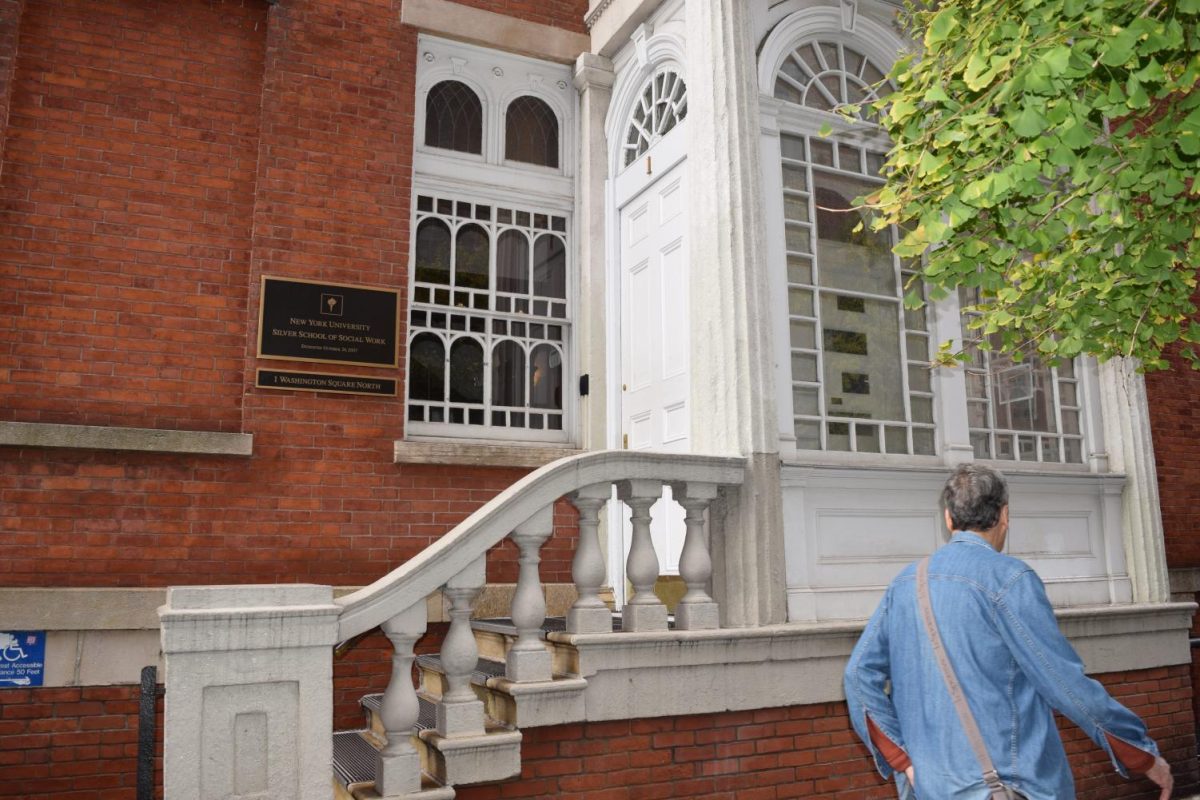




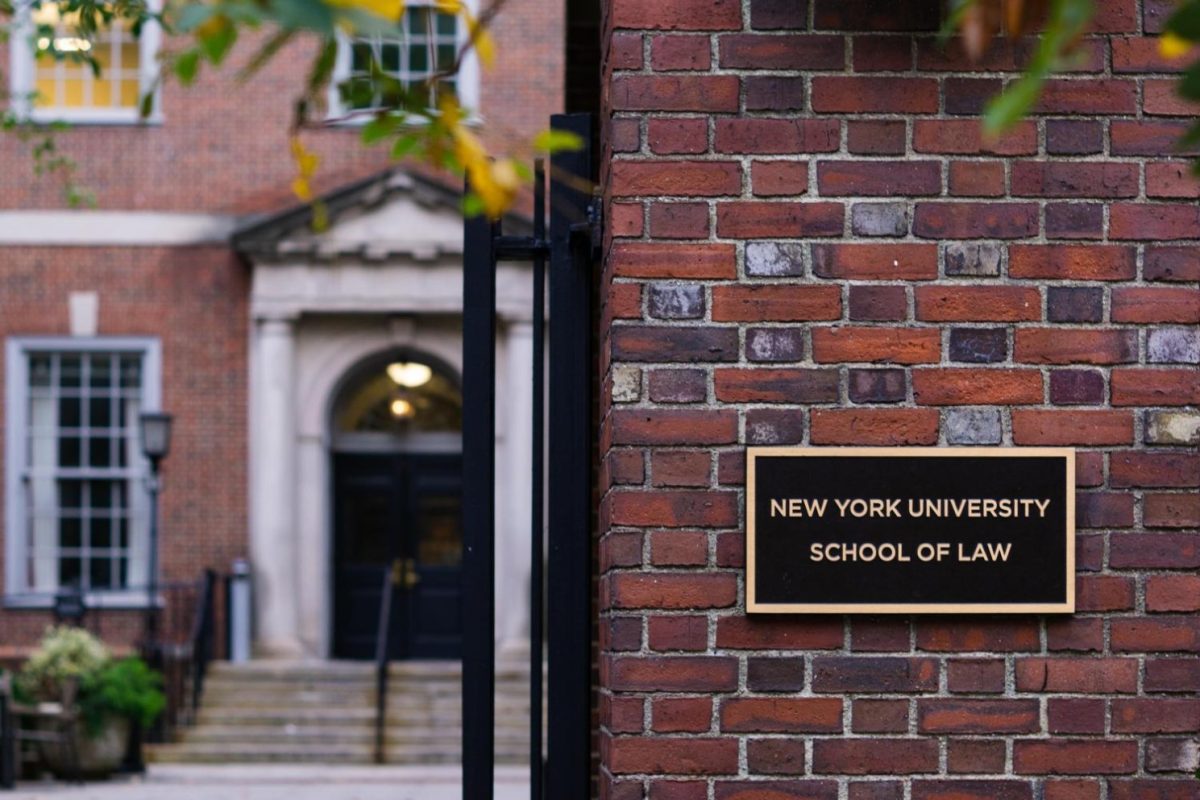


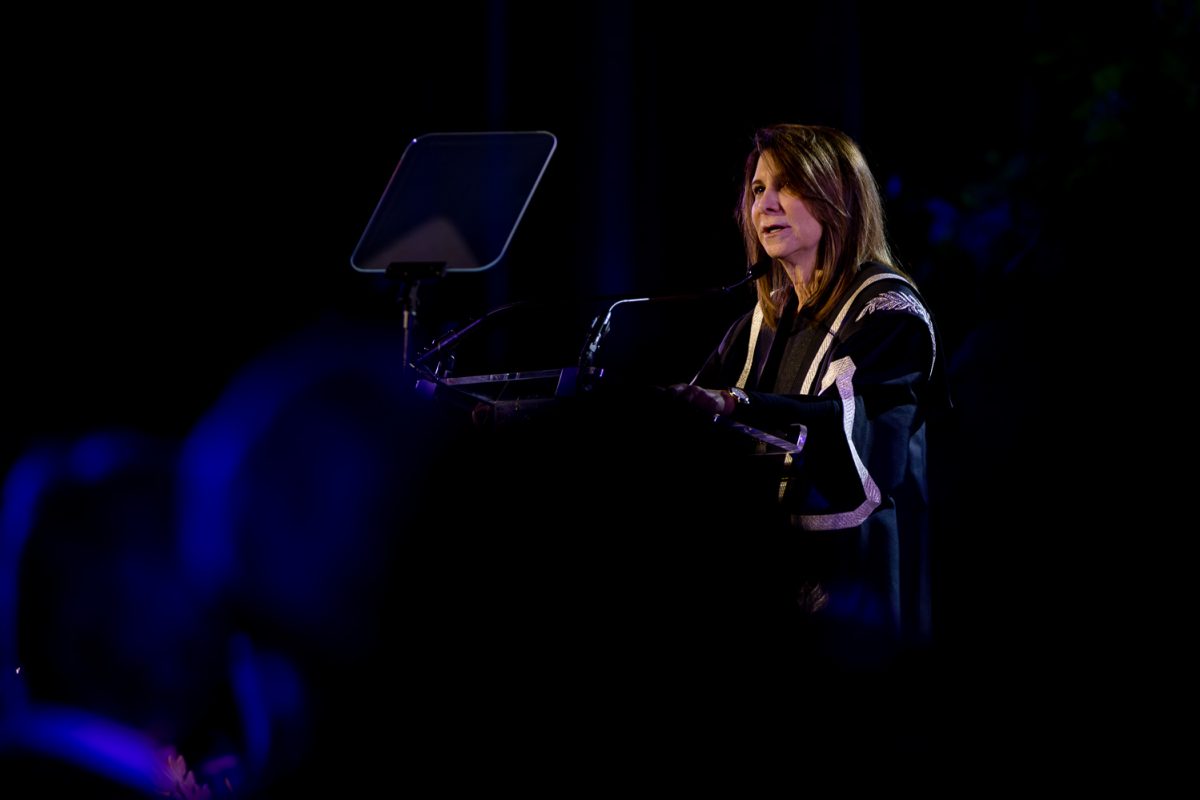

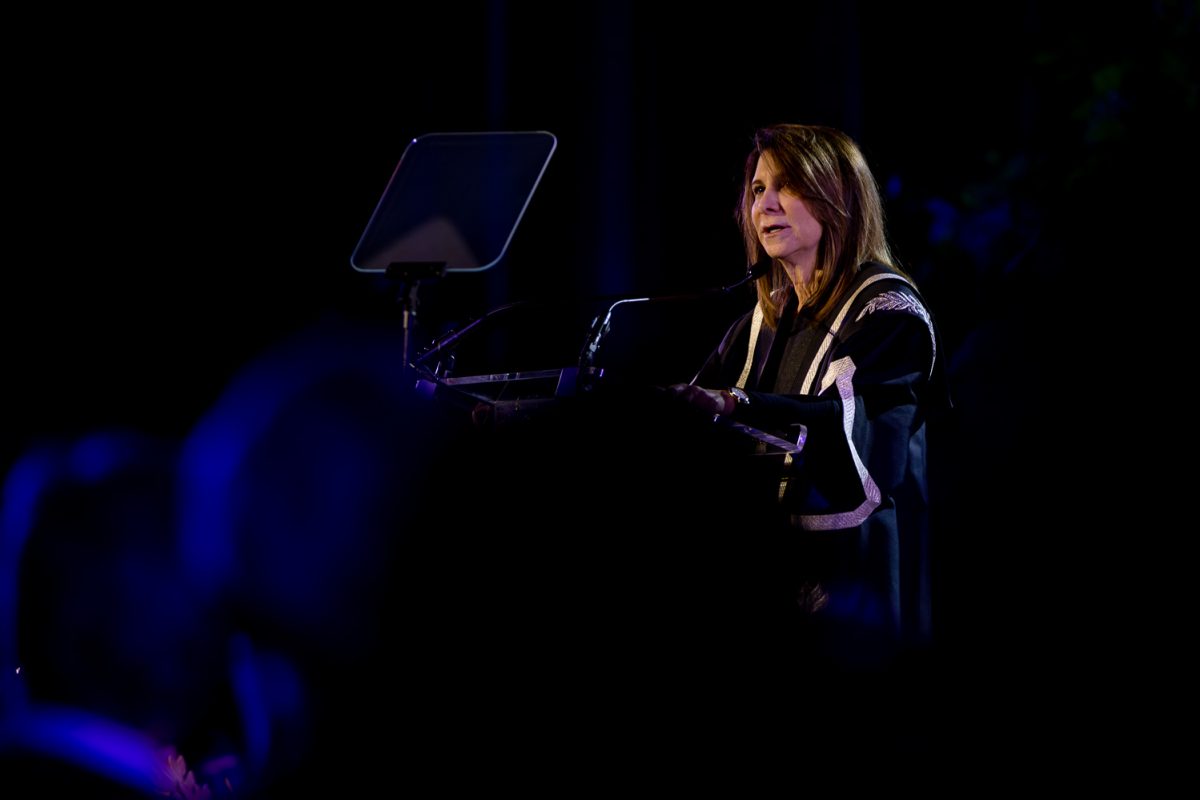















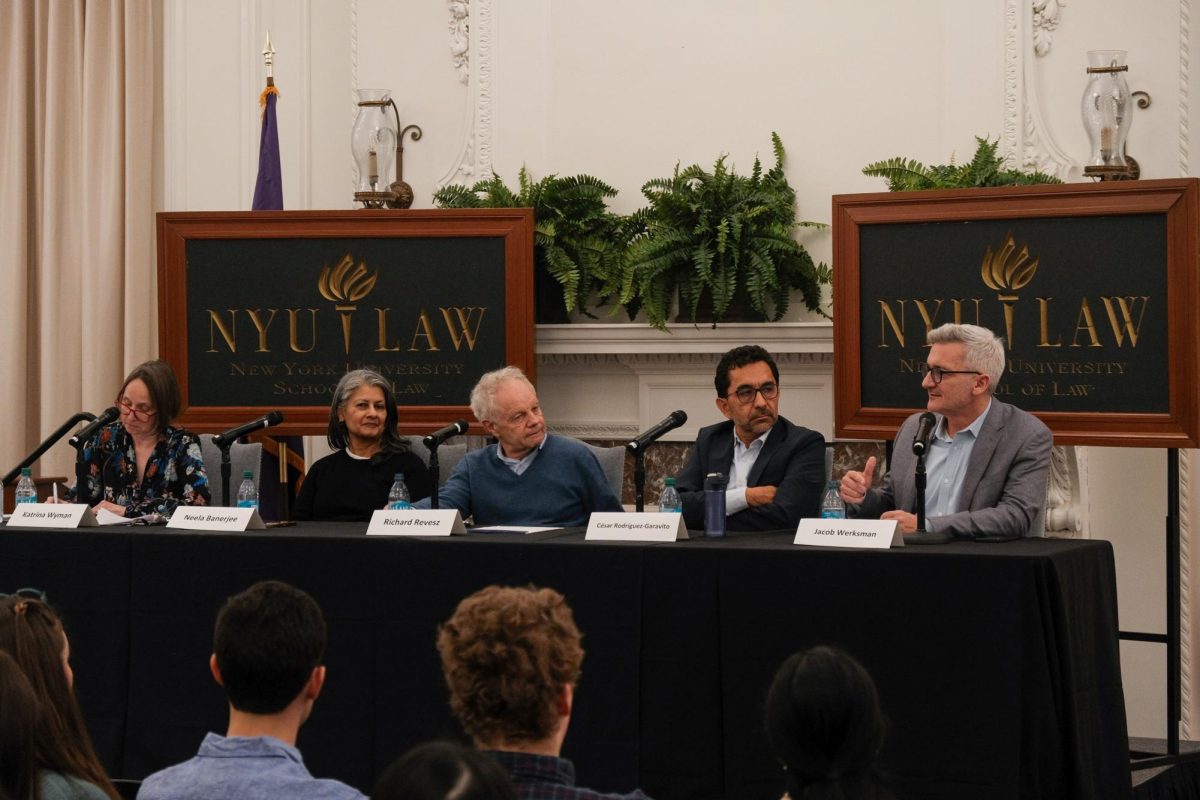
Lawyers and academics criticized the Trump administration’s rollbacks on climate measures and encouraged an audience of around 150 students to take action advancing climate justice at an NYU Law panel Wednesday afternoon — what the school called one of its “signature intellectual events.”
The discussion, titled “Fighting Climate Change in an Age of Opposition,” featured four panelists — three experts from the NYU School of Law, along with NPR chief climate editor Neela Banerjee — who discussed addressing climate change despite federal targeting of major sustainability initiatives. Conversations centered on ways to pursue climate advocacy during what panelists described as a “hostile” environment for regulation.
NYU Law Dean Emeritus Richard Revesz criticized the Environmental Protection Agency’s recent rejection of the endangerment finding, a principle acknowledging that greenhouse gas emissions harm public and environmental health. He argued that despite emissions causing approximately 4,500 deaths annually, the EPA’s new policy gives them “no value at all.”
“EPA decided it was no longer going to either quantify or monetize any public health impacts of any environmental regulations,” Revesz said at the event. “This is not plausible. This is an embarrassment. It’s profoundly embarrassing that the U.S. government will produce work of this abysmal quality.”
A coalition of more than 15 environmental and health groups filed a lawsuit against the EPA on Wednesday, deeming the agency’s decision as illegal. Earlier this month, the Trump administration placed nearly 200 environmental justice employees at the EPA on leave, pursuing longstanding efforts to downsize the department.
Banerjee and César Rodríguez-Garavito, professor and chair of NYU Law’s Center for Human Rights and Global Justice, lamented the rising insurance costs for homeowners’ spurred by extreme weather events. Banerjee specifically referenced Florida Gov. Ron DeSantis’ decision to pass a law that impedes protections for outdoor workers who are subjected to extreme heat in 2024.
Revesz also advised students hoping to support climate justice to seek positions within local and state government, as well as in private sector groups that prioritize environmental, social and governance standards. The panelists noted that even if humans don’t meet their set climate goals, small changes still help make a difference.
Last year, the law school launched a climate justice lab to conduct research and litigation on environmental policy affecting marginalized communities. NYU also partially funded a $2 million Village greenery project that will plant tree beds, safety planters and shade trees to sidewalks around campus.
“We now stand at an interesting moment in climate litigation history, where we have the law that litigants and many of the courts would have dreamed of 20 years ago,” Rodríguez-Garavito said at the forum. “And yet climate politics is pulling in a different direction, so the gap is now more abysmal, more spectacular. And one of the challenges going forward is going to be how to help close that gap.”
Contact Taylor Kase at [email protected].