
































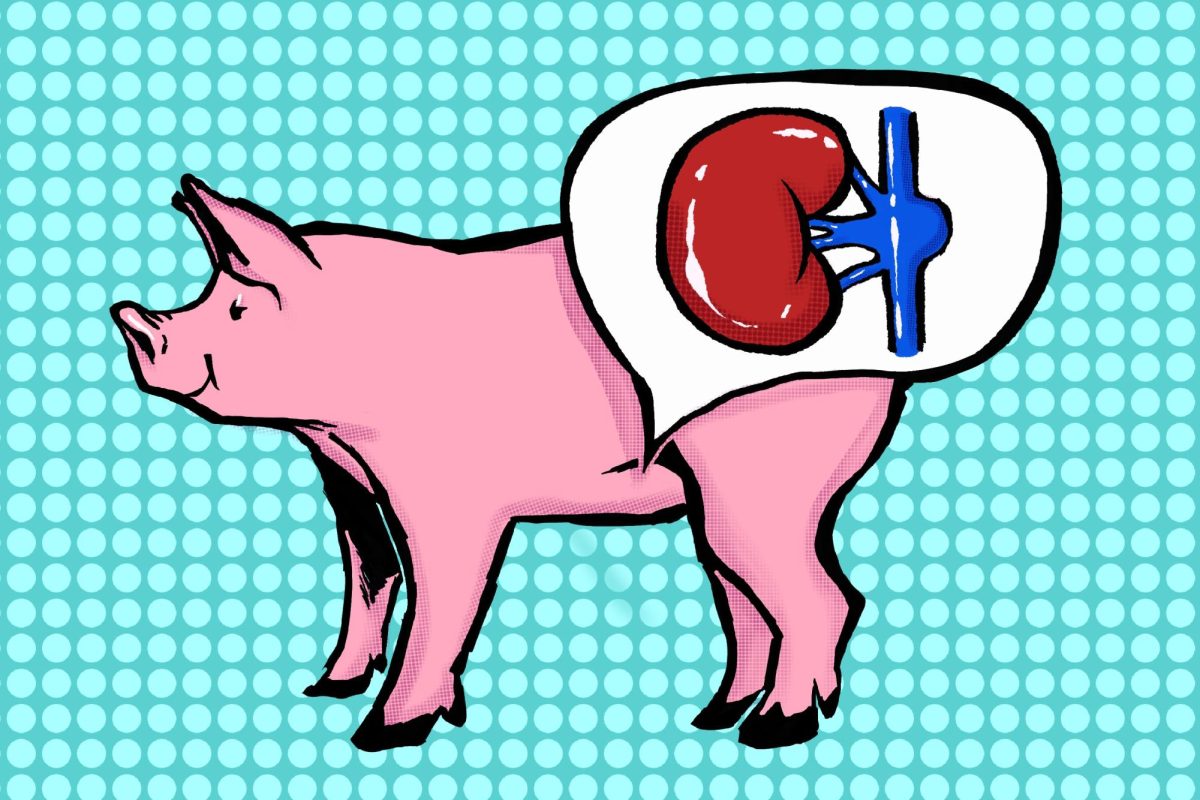
Researchers at NYU Langone Health reversed the rejection of a transplanted pig kidney, taking first steps toward substituting a human kidney with a genetically modified one.
The November study aimed to transplant a kidney and part of the thymus from a pig to the brain-dead body of 57-year-old Maurice Miller, whose body was donated to science by his family when he died from a mass in his brain in 2023. For over two months, researchers collected tissue, blood and body fluid samples from the body, which retained a beating heart and was on a ventilator. They were able to document how immune cells adapt to a pig kidney along with the cause of rejection, which occurs when a recipient’s immune system views the transplanted organ as a threat to the body and attacks it.
Miller’s body rejected the pig kidney twice over the course of the 61 days of study. After identifying the immune reaction causing the rejection, researchers administered immunosuppressors to reverse it both times, the first successful attempts in modern medicine.
“We were able to see what’s happening in the blood and the tissue before, during and after those time points,” lead researcher and NYU Langone Department of Surgery professor Brendan Keating told WSN. “We did gain a lot of insight into what immune cells come up first in the blood before they end up in the tissue. That information is really helping us now as we move on to living human studies.”
When researchers inspected the samples to determine the immune system interactions that lead to rejection, they found that antibodies in the immune system and T cells, a type of white blood cell that attacks infected and foreign cells, rejected pig kidneys.
In April, NYU Langone surgeons removed a pig kidney from 53-year-old Towana Looney, who had lived with it for 130 days — the longest amount of time any patient with a pig kidney has lived— before her body rejected it. Keating said that the study’s findings could be used to treat future rejection episodes in pig kidney transplants for both brain-dead and live patients.
Nearly 90,000 patients are awaiting kidney transplants in the United States, 11 of whom die every day, according to the United Network for Organ Sharing.
“A lot of the knowledge we gained from the screening of the immune suppression regimens is when to intervene and the type of medication to use,” Keating said. “Through these molecular studies, we’re getting greater insight into the biology of it, which then translates into knowledge that we can use for treatment of the rejection.”
Contact Zachary Karp at [email protected].