









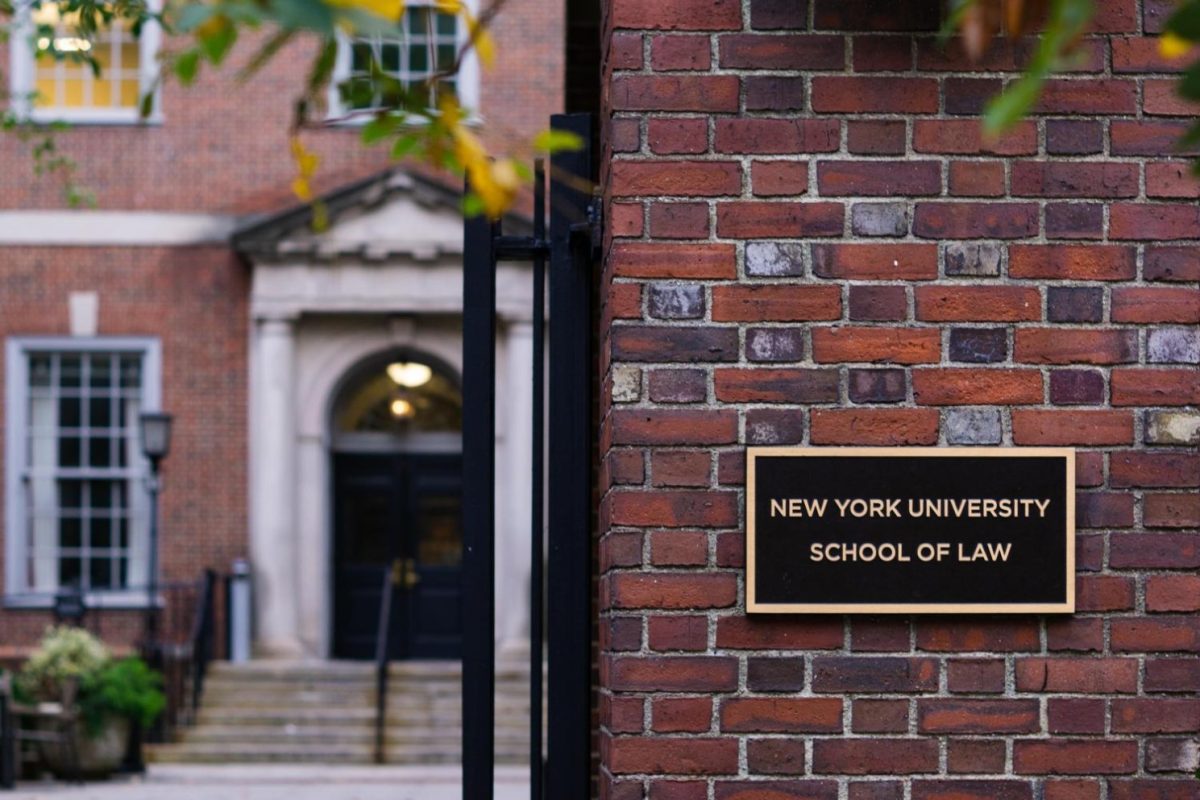
















The NYU School of Law is seeking to shut down libel claims filed by a former Philadelphia prosecutor who accused researchers of defaming her in a report. Now, legal experts are using the case to raise questions about how libel rules change in the context of academia.
In March 2024, NYU Law researchers published a 180-page report detailing 52 cases over five decades in which Philadelphia prosecutors secured convictions that were later overturned. Beth Ann McCaffery, an assistant district attorney in Philadelphia of 13 years, was named in the report and accused of withholding relevant information.
One year later, a lawsuit that Philadelphia District Attorney Larry Krasner filed against McCaffery, accusing her of the same misconduct, was deemed “maliciously intended.” McCaffery then filed a libel lawsuit against NYU Law, claiming that its report — housed under the school’s Zimroth Center for the Administration of Criminal Law — was “disseminating lies” about her.
“The Zimroth Center had every right to report accurately on the proceedings under the fair report privilege,” the law school’s response to McCaffery read. “Defendants should not be forced to devote additional time and resources to defending a meritless lawsuit targeting the exercise of their First Amendment rights.”
NYU Law’s report alleges that Dontia Patterson spent 11 years in prison after being wrongfully convicted of shooting his friend outside a grocery store in 2007. When former ADA McCaffery first tried to convict Patterson in 2008, she was unsuccessful. Patterson was found guilty of first-degree murder and sentenced to life in prison without parole after former ADA Richard Sax retried the case with a new witness.
In 2018, however, the Philadelphia District Attorney’s Office determined that the case lacked integrity and that Patterson was “probably innocent.” McCaffery refuted the argument, saying it was false and later calling it part of a “so-called progressive” movement.
“Backed by NYU and widely circulated throughout the legal community for the express purpose of ‘publicly shaming’ Beth and other prosecutors, this report has inflicted a direct and devastating blow to Beth’s personal and professional reputation,” McCaffery said in the complaint against the law school. “Its false allegations continue to cast a long, damaging shadow over her name.”
The Philadelphia DAO found that prosecutors, including McCaffery, were hiding crucial evidence and that the case was primarily based on two eyewitnesses who saw the shooting far away. The office also found that prosecution against Patterson was “illogical” because he appeared at the scene minutes after the killing and was found “distraught.” Prosecutors also failed to consider testimony from the grocery store owner, who said that Patterson was not the shooter.
McCaffery maintains that the claims are false, saying that NYU Law has demonstrated a “reckless disregard for the truth” and “complicity in perpetuating a false and damaging narrative.” Her case is ongoing in Pennsylvania courts.
Still, McCaffery’s libel claims are raising broader questions within the legal community. Under the fair reporting privilege in both New York and Pennsylvania, writers are protected from defamation lawsuits if they reported fairly and accurately using official documents, such as police records and court documents — particularly when their work is part of an academic report. One judge said they were “puzzled and surprised” by the fact that McCaffery’s case for libel was not holding up.
NYU Law and research scholar Patricia Cummings, who led the report, is demanding McCaffery cover all legal expense fees for the saga. Attorneys on both sides did not respond to WSN’s requests for comment.
Contact Paige Ablon at [email protected].