




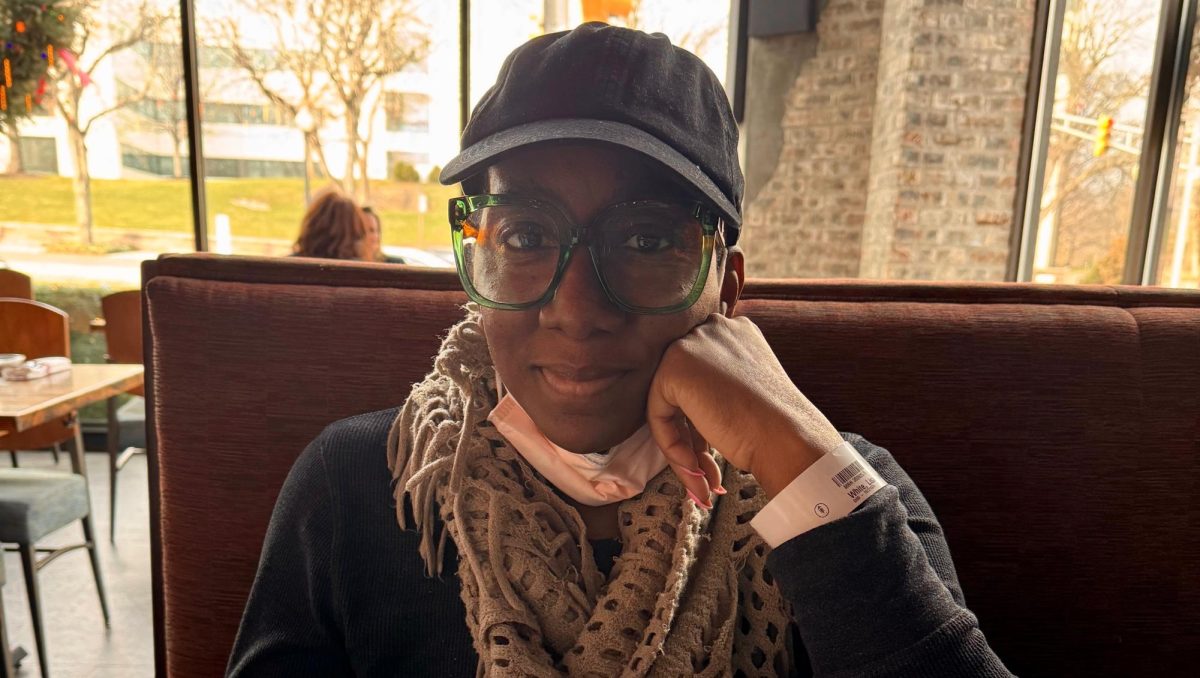








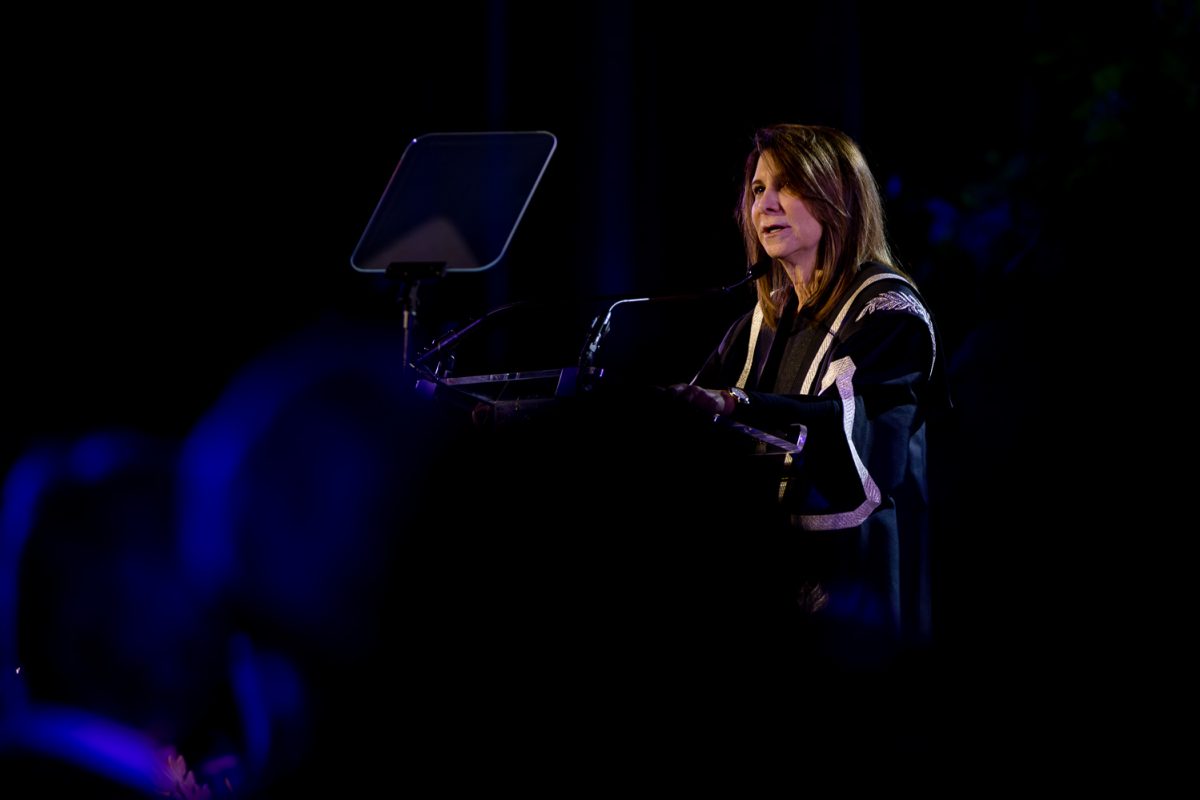















After more than a decade at NYU, Chief Research Officer Stacie Bloom will step down in January to serve as president and CEO of the Alfred P. Sloan Foundation — a not-for-profit that disperses 200 research grants annually and gave NYU $1.2 million in research funding last year.
Bloom joined NYU in 2011 as the inaugural executive director for NYU Langone Health’s Neuroscience Institute, before becoming the university’s chief research officer and vice provost for research in 2018. During her tenure, Bloom oversaw the NYU’s rise to the top university for research spending in New York state and No. 12 nationally — up from No. 3 and No. 24, respectively — as well as its response to a federal crackdown on research.
Bloom spoke with WSN about how her time at NYU brought her to lead the Sloan Foundation president and what she hopes to accomplish in the position.
This interview has been edited for length and clarity.
WSN: How might your higher education experience contribute to the new role?
Bloom: A lot of the skills that I picked up here are really transferable. So being very strategic, being a good manager and being a good listener to stakeholders in our community are all things that are really important. But the most important thing is being a champion for science and for research. There are a lot of things that are going to be very different about leaving an institute of higher education and going to a foundation. Overall, it’s just an interesting time to lead through so much change.
Before joining NYU, Bloom served as vice president and scientific director at the New York Academy of Sciences from 2005 to 2011, and had previously worked as an associate editor for Nature Medicine. As chief research officer and vice provost for research, Bloom managed NYU’s research strategies, including its policies, partnerships and grant portfolio. In 2024, 25 NYU faculty across science, engineering and math were named among the world’s most cited researchers.
WSN: What do you enjoy about working at NYU?
Bloom: It’s going to be really hard to leave NYU. I really love our research community and my team. We have an amazingly large research community, and a big part of what we try to do is get that research out of the university and into society. But I’ve taken a lot of comfort knowing that the Sloan Foundation and NYU have a really longstanding relationship. So I’m really excited that the link will still be there.
The Sloan Foundation offers grants to support original research and education related to science, engineering, technology, mathematics and economics. It provided nearly $700,000 to Tisch students who created films about science and technology last year, as well as over $500,000 in grants for scientific and historical research.
WSN: How did you get in touch with Sloan Foundation?
Bloom: I was contacted back in the summer by the firm because they wanted to hire a new president and CEO, and as soon as I got the phone call, I was so excited. This is a dream job. Through the interview process, I really realized that this next step represents the culmination of everything I’ve done in my career. It brings together all of my experience in science, in technology, in research, leadership and innovation and gives me that next step on the ladder.
Its Tisch-focused grant offers a $30,000 production grant and three $10,000 screenwriting awards, whose applicants are also eligible for a $20,000 Sloan Grand Jury Prize and a year of mentorship.
Since 2008, 10 NYU Tisch students have received the Sloan Foundation Feature Film Award, which is given to projects that focus on science and technology or involve a scientist or engineer as a major character. These works range from graduate films about using reality to mend a broken family to undergraduate films about a mysterious illness.
WSN: What do you hope to achieve in your new role?
Bloom: So many things. Working really closely with their staff and with our board to really sustain their unmatched legacy. The foundation has an incredibly rich history, and my job is to steward and honor that history. It has an incredible legacy of funding original research, and we need that more than ever. It’s important to support really talented people who are working on curiosity-driven questions that really could have a major impact on societal challenges and on important fields.
Contact Zachary Karp at [email protected].