


























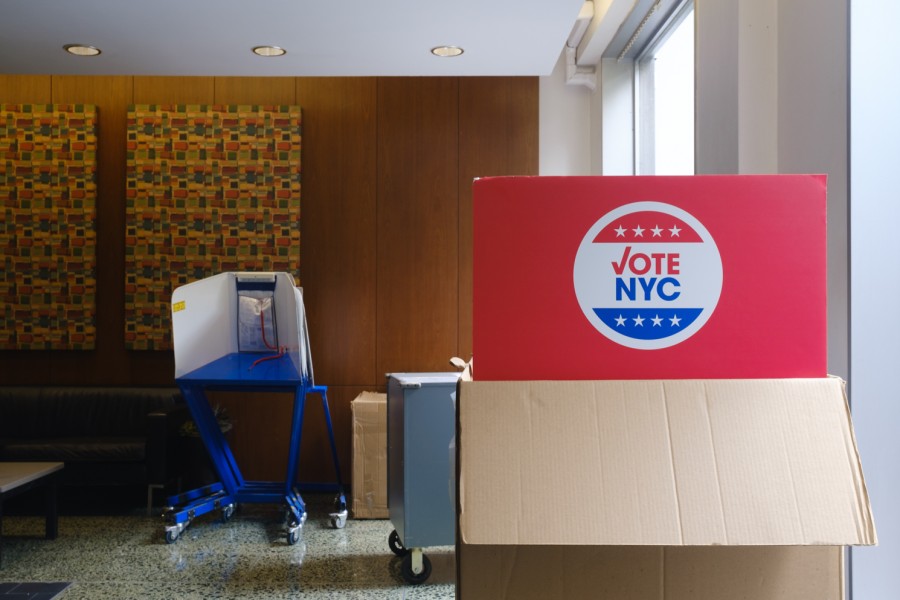
Representing a face-off between establishment candidates and young progressives, New York City’s mayoral election has become topical across the country. But as millions of New Yorkers show up to vote, they’ll see six other proposals on forest preserves, affordable housing and election years.
Though voters can leave the page blank, proposals 2 to 6 — which were approved by Mayor Eric Adams’ Charter Revision Commission — could change the lives of millions of New Yorkers if passed. Here’s a brief breakdown of each one.
Proposal 1 – Expanding Olympic Sports Complex on Forest Preserve
How it appears on the ballot: Amendment to Allow Olympic Sports Complex In Essex County on State Forest Preserve Land
Allows skiing and related trail facilities on state forest preserve land. The site is 1,039 acres. Requires State to add 2,500 acres of new forest land in Adirondack Park.
A “Yes” vote authorizes new ski trails and related facilities in the Adirondack forest preserve.
A “No” vote does not authorize this use.
Passing Proposal 1 would modify Article 14 of the New York State Constitution, which prohibits forest preserves from being leased, sold or exchanged and requires them to be “forever kept as wild.”
The proposal would allow the Mount Van Hoevenberg Olympic Sports Complex in Essex County to use 323 more acres in Adirondack Park, in an effort to improve its trails and facilities. In return, 2,500 acres of unoccupied land elsewhere in the Adirondack Mountains will be made forest preserve.
The Adirondack Council and many community members say the passage would boost Adirondack’s economy, with several environmental organizations also in support of the change. However, opponents such as Queens Council Member Robert Holden warned that making it possible to exchange forest preserves sets a dangerous precedent.
Proposal 2 – Expedite Affordable Housing Projects
How it appears on the ballot: Fast Track Affordable Housing to Build More Affordable Housing Across the City
Fast track publicly financed affordable housing. Fast track applications delivering affordable housing in the community districts that produce the least affordable housing, significantly reducing review time. Maintain Community Board review.
“Yes” fast tracks applications at the Board of Standards and Appeals or City Planning Commission.
“No” leaves affordable housing subject to longer review and final decision at City Council.
Proposal 2 aims to streamline affordable housing projects by implementing two new processes as alternatives to the seven-month Uniform Land Use Review Procedure typically needed to begin construction.
If passed, the Board of Standards and Appeals would be able to approve publicly financed affordable housing projects following a 60-day review by the local Community Board and a 30-day review by BSA itself. For projects in the 12 community districts with the lowest rates of affordable housing — such as Bayside and Ozone Park — the 13-member City Planning Commission would make final calls instead of the City Council, similarly expediting the process.
Mayor Eric Adams said he believes that the measure would help solve a worsening housing crisis in New York City, which was only 1.4% vacant in 2023. Democratic nominee Zohran Mamdani, whose campaign emphasized housing accessibility, announced his support for the measure on election day after independent candidate Andrew Cuomo and New York Gov. Kathy Hochul also endorsed the measure.
City Council speaker Adrienne Adams, on the other hand, claimed the proposal is an overreach of mayoral power that hinders City Council’s ability to push for parks, infrastructure improvements and other deals with developers. Republican nominee Curtis Sliwa also stands in opposition, along with several labor unions who say City Council’s negotiations can make for better employee contracts.
Proposal 3 – Easier Modest Housing Applications
How it appears on the ballot: Simplify Review of Modest Housing and Infrastructure Projects
Simplify review of modest amounts of additional housing and minor infrastructure projects, significantly reducing review time. Maintain Community Board review, with final decision by the City Planning Commission.
“Yes” simplifies review for limited land-use changes, including modest housing and minor infrastructure projects.
“No” leaves these changes subject to longer review, with final decision by City Council.
Proposal 3 would similarly speed up the review process for smaller, “modest” infrastructure projects so they do not have to undergo the ULURP’s lengthy, seven-month process.
If approved, the city would apply a 90-day Expedited Land Use Review Procedure to housing improvement projects up to 45 feet tall — 30% bulkier than what rules current say can . Officials including New York City Comptroller Brad Lander and Gov. Kathy Hochul are in favor of the proposal because it could help attract developers, and Mamdani also said it would make building affordable housing more feasible.
Like Proposition 2, the measure would eliminate the need for City Council approval on some development projects — a procedure some argue can turn overly politicized. However, Sliwa and Adrienne Adams said that it leaves critical viewpoints from local residents and community boards out of the decision-making process.
Proposal 4 – Affordable Housing Appeals Board
How it appears on the ballot: Establish an Affordable Housing Appeals Board with Council, Borough, and Citywide Representation
Establish an Affordable Housing Appeals Board with the Council Speaker, local Borough President, and Mayor to review Council actions that reject or change applications creating affordable housing.
“Yes” creates the three-member Affordable Housing Appeals Board to reflect Council, borough, and citywide perspectives.
“No” leaves affordable housing subject to the Mayor’s veto and final decision by City Council.
Like Proposals 2 and 3, Proposal 4 aims to speed up some housing developments by developing a new advisory board.
If the proposed Affordable Housing Appeals Board — composed of the mayor, City Council speaker and a project’s respective borough president — has at least two members vote in favor, it could overturn a ULURP rejection of an affordable housing project.
Supporters and opponents of Proposals 2 and 3 often felt similarly about Proposal 4, although it has faced slightly more pushback because some say the veto power would influence development plans.
Proposal 5 – Unified Digital City Map
How it appears on the ballot: Create a Digital City Map to Modernize City Operations
Consolidate borough map office and address assignment functions, and create one digital City Map at Department of City Planning. Today, the City Map consists of paper maps across five offices.
“Yes” creates a consolidated, digital City Map.
“No” leaves in place five separate map and address assignment functions, administered by Borough President Offices.
Proposal 5 would allow the Department of City Planning to aggregate 8,000 paper maps into one centralized digital City Map by January 2029. Most City Council members have no opposition.
Proposal 6 – Host City Election on Even-Numbered Years
How it appears on the ballot: Move Local Elections to Presidential Election Years to Increase Voter Participation
Move the City’s primary and general election dates so that City elections are held in the same year as Federal Presidential elections, when permitted by state law.
“Yes” moves City elections to the same year as Federal Presidential Elections, when permitted by state law.
“No” leaves laws unchanged.
Proposal 6 seeks to host city elections during the same years as presidential elections to increase voter turnout. The measure, which follows similar moves in Los Angeles and San Francisco, would amend the New York state constitution and require further approval from two consecutive state legislatures and voters in a statewide referendum.
NYU’s Brennan Center for Justice said that the change would help cast more ballots during mayoral general elections, which saw a record low of 23.3% in 2021. Local elections typically see much lower voting rates than national ones, with approximately 54% of eligible New York City voters turning out for the 2024 presidential election.
However, Charter Revision Commission member Diane Savino said in a July meeting that changing election years would cause local candidates to “be drowned out” by presidential candidates. For the most part, City Council has not taken a strong stance on the issue.
Contact Amanda Chen at [email protected].