


















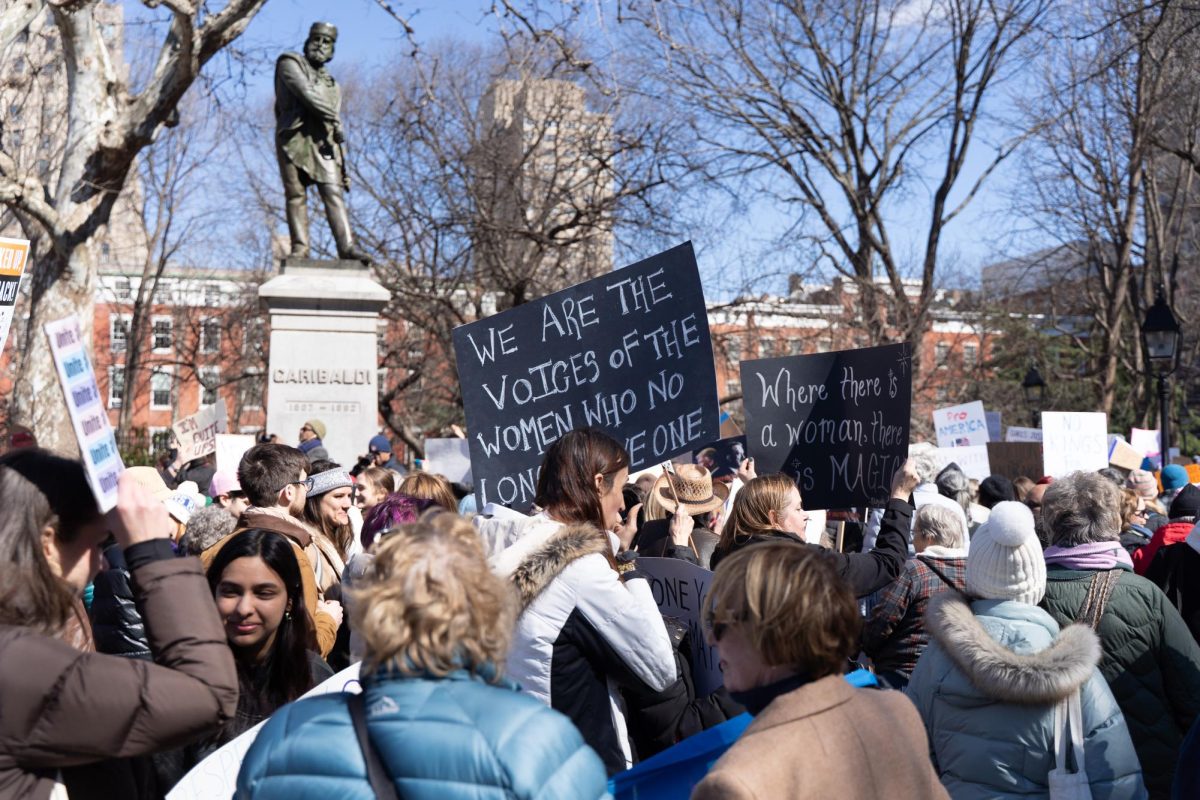
Violence against women lives in a detention center where migrant women are shackled and transported across the country. It lives in the 24-hour shift where a home care worker is paid for only 13 hours of work. It lives in the mineral mines of the Congo, in the ceasefire violations in Lebanon and in the housing insecurity of colonized peoples. According to the organizers, activists and advocates who gathered to speak at The People’s Commission on the Status of Women panel discussion on Saturday, these situations persist because the institutions that claim to address violence against women continuously fail to name what’s causing it.
The event — organized by the International Women’s Alliance alongside Adolfina NYC, Ain’t I a Woman?!, GABRIELA New York and the Palestinian Feminist Collective — was a response to what participants described as a critical gap in the United Nations’ 70th Commission on the Status of Women. Held from March 9 to 19, the UN commission promised to promote justice for women globally. The panel’s organizers, however, insisted it evaded addressing how colonial and imperial powers underpin gender-based oppression in Palestine, the Philippines and Puerto Rico — leaving Western imperialist policy unchallenged and solutions out of reach.
The People’s Commission called for a new approach: Explicitly naming the root causes of gender-based violence and elevating the voices of those most affected. The group sought to establish an anti-colonial, anti-imperialist feminist framework.
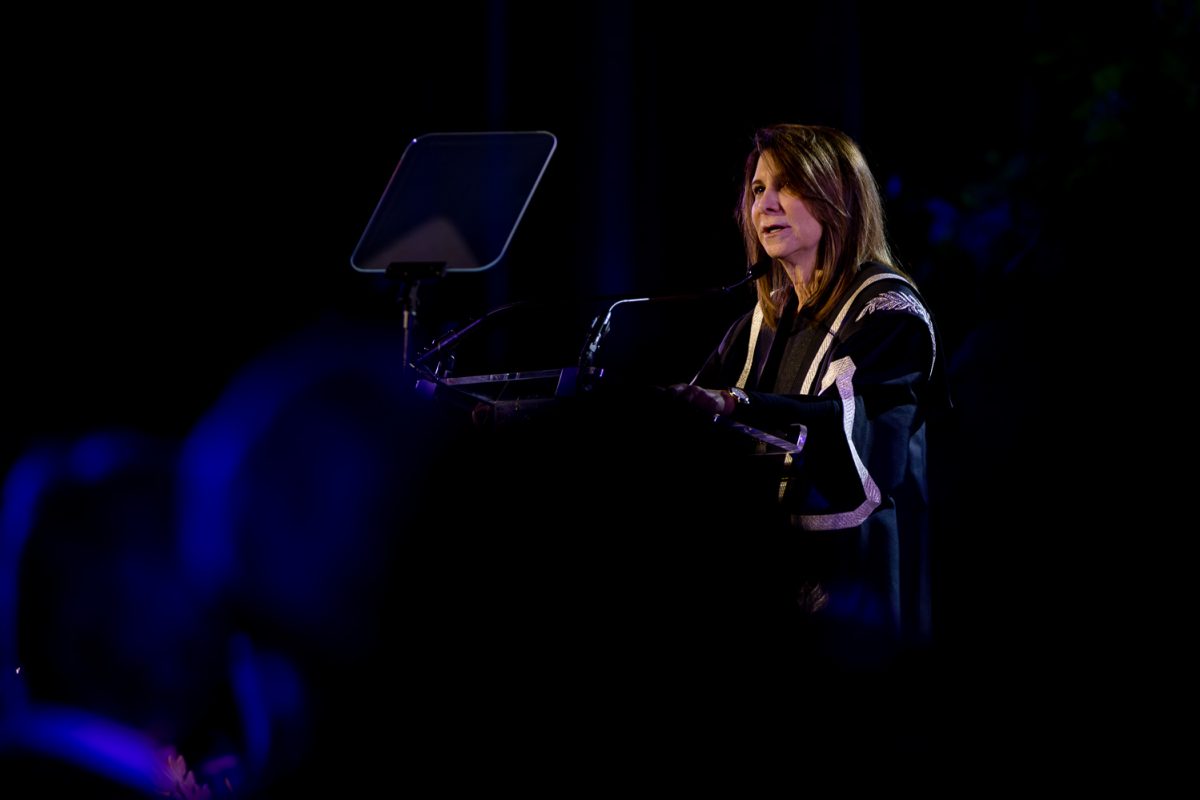
Adrianne, who did not disclose their last name at the event, opened the discussion with the UN’s Beijing+30 Action Agenda, a three-decade-old framework calling for women’s inclusion in the digital economy and national legislation to end gender-based violence. Despite the agenda’s intentions, Adrianne argued that the UN routinely sidesteps structural causes of violence against women, overemphasizes women’s participation in militaries and defers too readily to the United States’ interests — leaving little room for national sovereignty or meaningful change. While critical of the UN’s shortcomings, Adrianne pointed to community-based organizing as a path forward.
“The more that we show up, the more that they build trust in the organizations, but also see themselves as a part of,” Adrianne, who represents the IWA, said. “There are pathways and organizations that have done it before. So we’re really not the first ones to think about how to get ourselves organized.”
Yazan from the PFC, who also did not disclose their last name, traced how this plays out for Palestinian women, whose experience within UN spaces is shaped by the institution’s foundational role in legitimizing the Zionist project. Sexual violence, Yazan said, is not incidental to colonial violence, but inseparable from it. The CSW’s tendency to treat it as a technical policy gap, rather than a structural one, reflects exactly the kind of analysis the UN cannot afford to make. Panelists drew the same throughline when addressing the Philippines and Puerto Rico: Remilitarization, low-wage exploitation and displacement are feminist issues that were conspicuously absent from the CSW70 agenda.
“At the end of the day, the UN is an entity that does not and cannot enact anything beyond what the nations within it will allow,” Yazan said. “But I think it does give us a sense of, right now, where’s the basis of the majority of mainstream folks in terms of liberalism and moderate histories? And based on that, what are the ideologies we can take for granted in our organizing, and what are the ones we still have to try and dispel and convince people of?”
The most urgent call to action came from Kara, who did not disclose their last name and serves as an organizer for Ain’t I a Woman?! — the coalition fighting to pass the No More 24! Act in New York City. The legislation, introduced by City Councilmember Christopher Marte, would ban 24-hour shifts for home care workers, a predominantly immigrant and women-of-color workforce, and cap weekly hours at 56.
The bill has stalled, and organizers pointed to political hesitation from Gov. Kathy Hochul and Mayor Zohran Mamdani — who supported ending 24-hour shifts as a state assemblymember but has since signaled opposition to the bill in its current form. In response, home care workers announced a hunger strike beginning April 16, and urged attendees to join in person, pressure their unions and make noise publicly.
“If women waited for the UN to do something, we wouldn’t be at this point now,” Kara said. “That wasn’t because of the UN. That was because of us.”
Attendees were also invited to gather at a community altar and reflection area, which were dedicated to honor those lost to gender-based violence. They had also been encouraged beforehand to bring a photograph or a meaningful object to contribute to it, as a space for collective grief and commemoration alongside the political work of the night.
For students especially, there is something irreplaceable about hearing directly from organizers about how they understand and respond to institutions like the UN. Attending panels like the People’s Commission is one of the more grounded ways to understand what that actually looks like.
“It does start with building the genuine relationship and trust with impacted women that are in the face of their struggles right now,” Adrianne said. “But I think what’s great about getting migrant women organized is giving them a platform to tell their stories for themselves — and when we create those venues and encourage them to speak out.”
Contact Macey Zhang at [email protected].