

















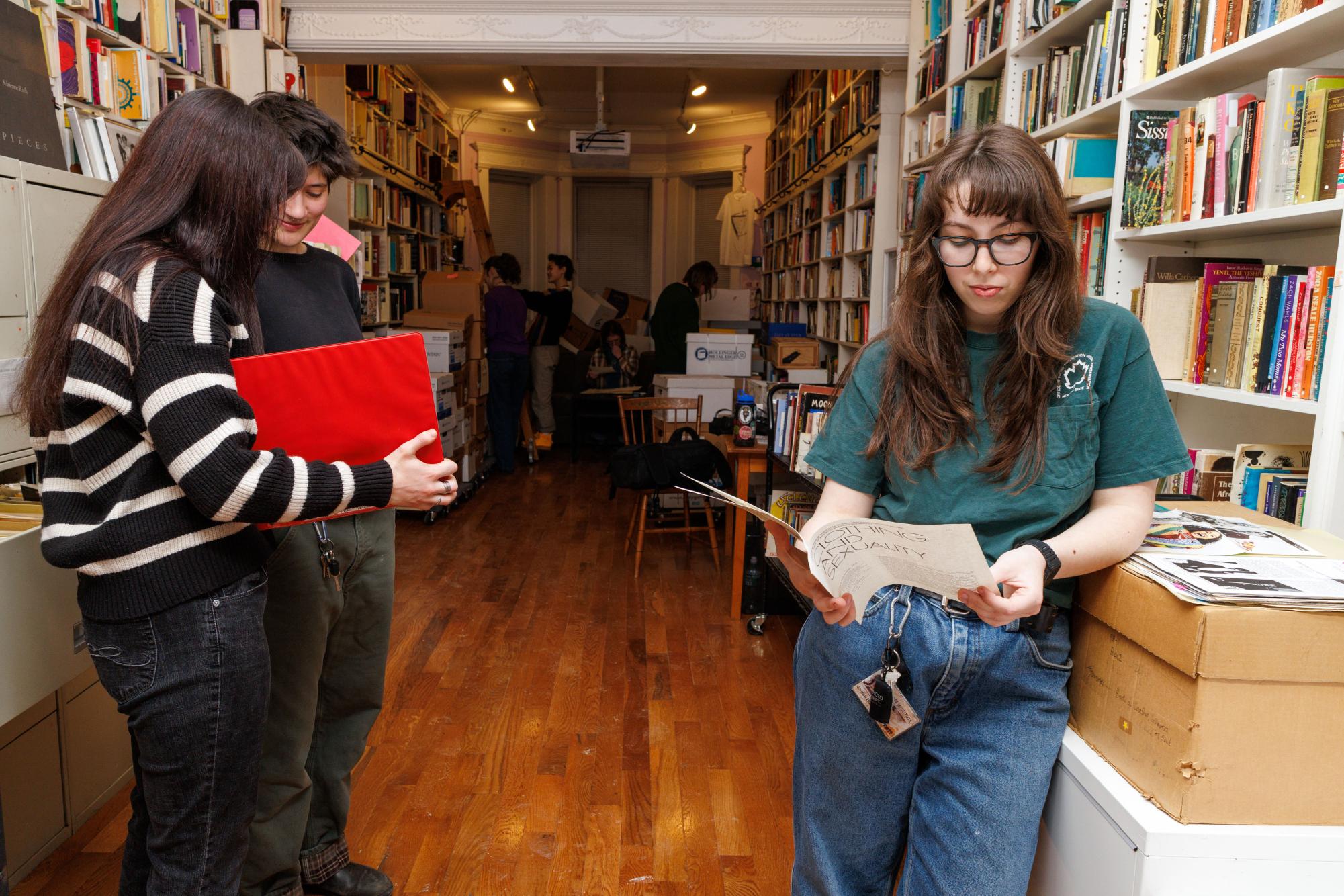
Unlike the sterile shelves you might be used to, the Lesbian Herstory Archives in Park Slope is a home filled with warm memories of lesbian life, transforming a once-residential brownstone into a hub for preserving queer history.
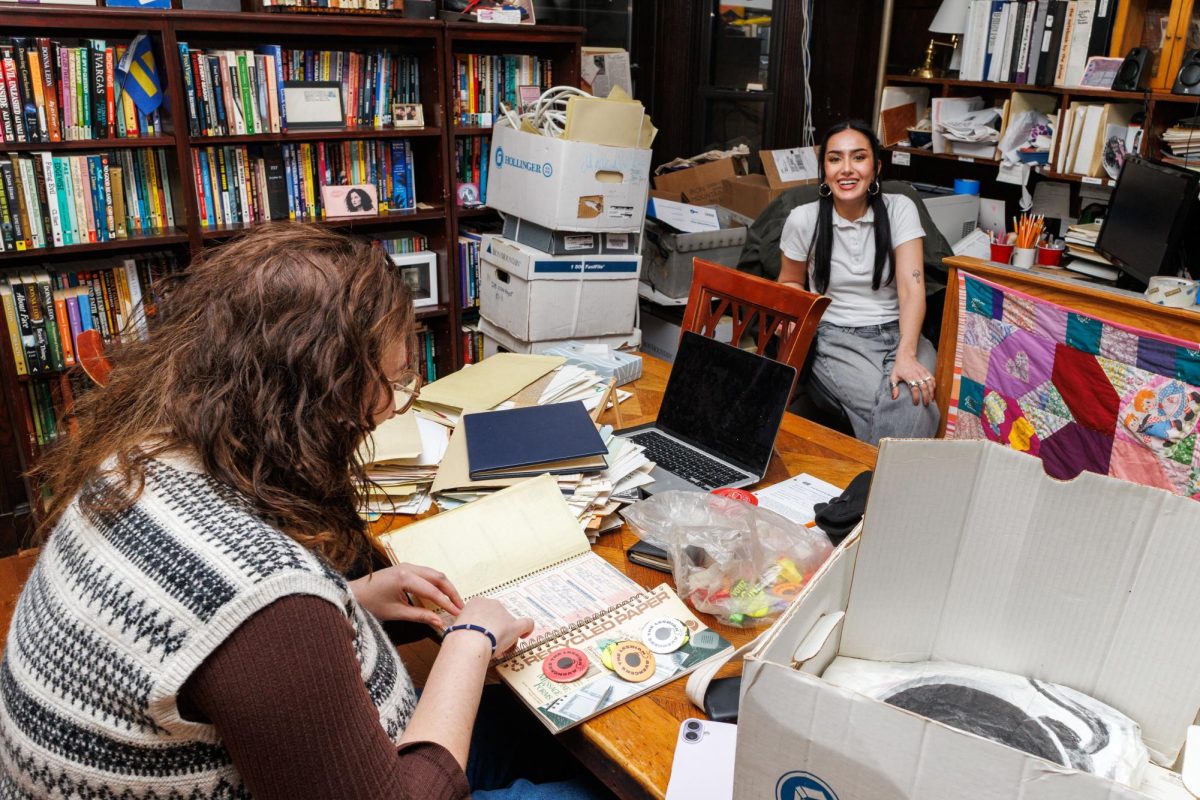
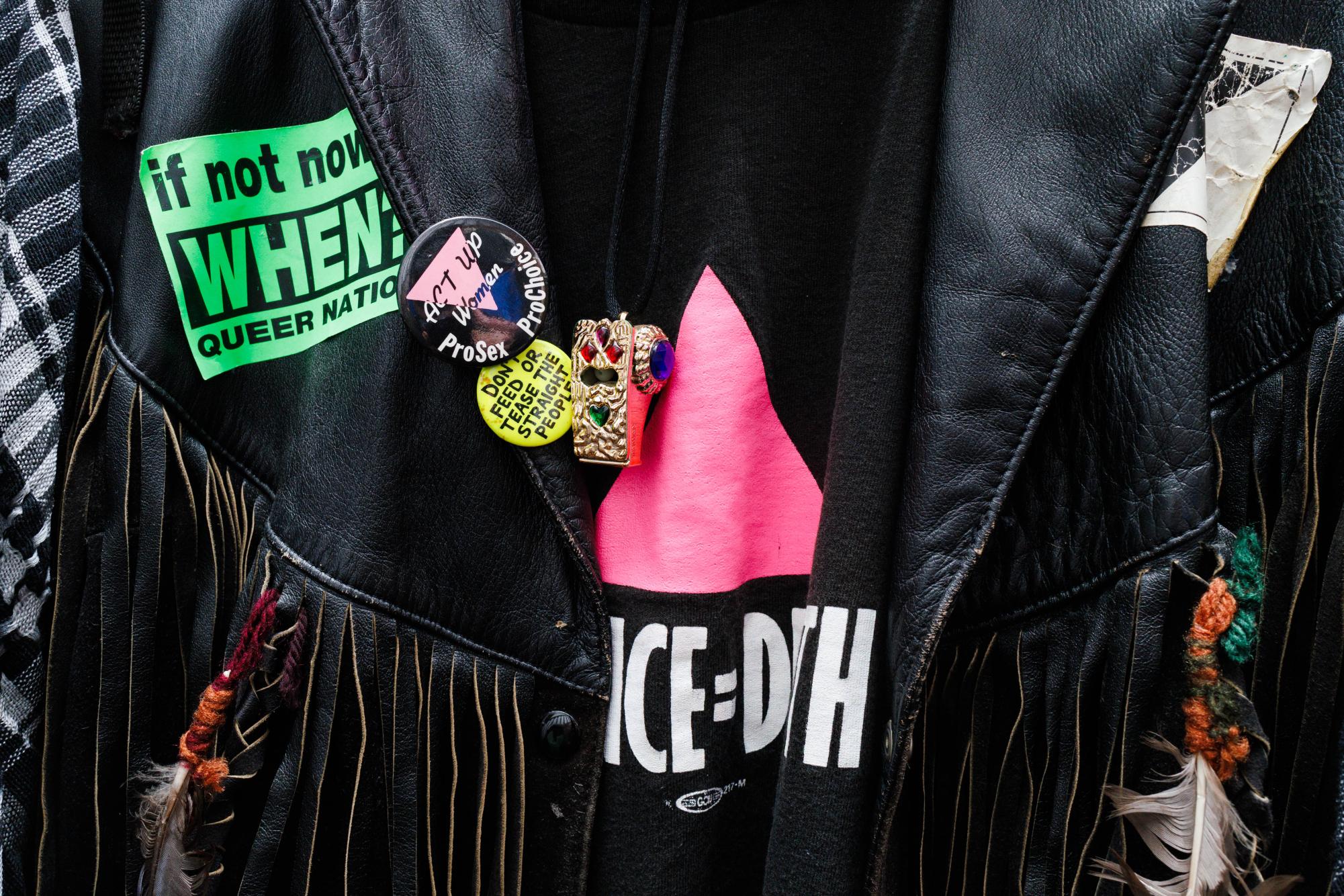
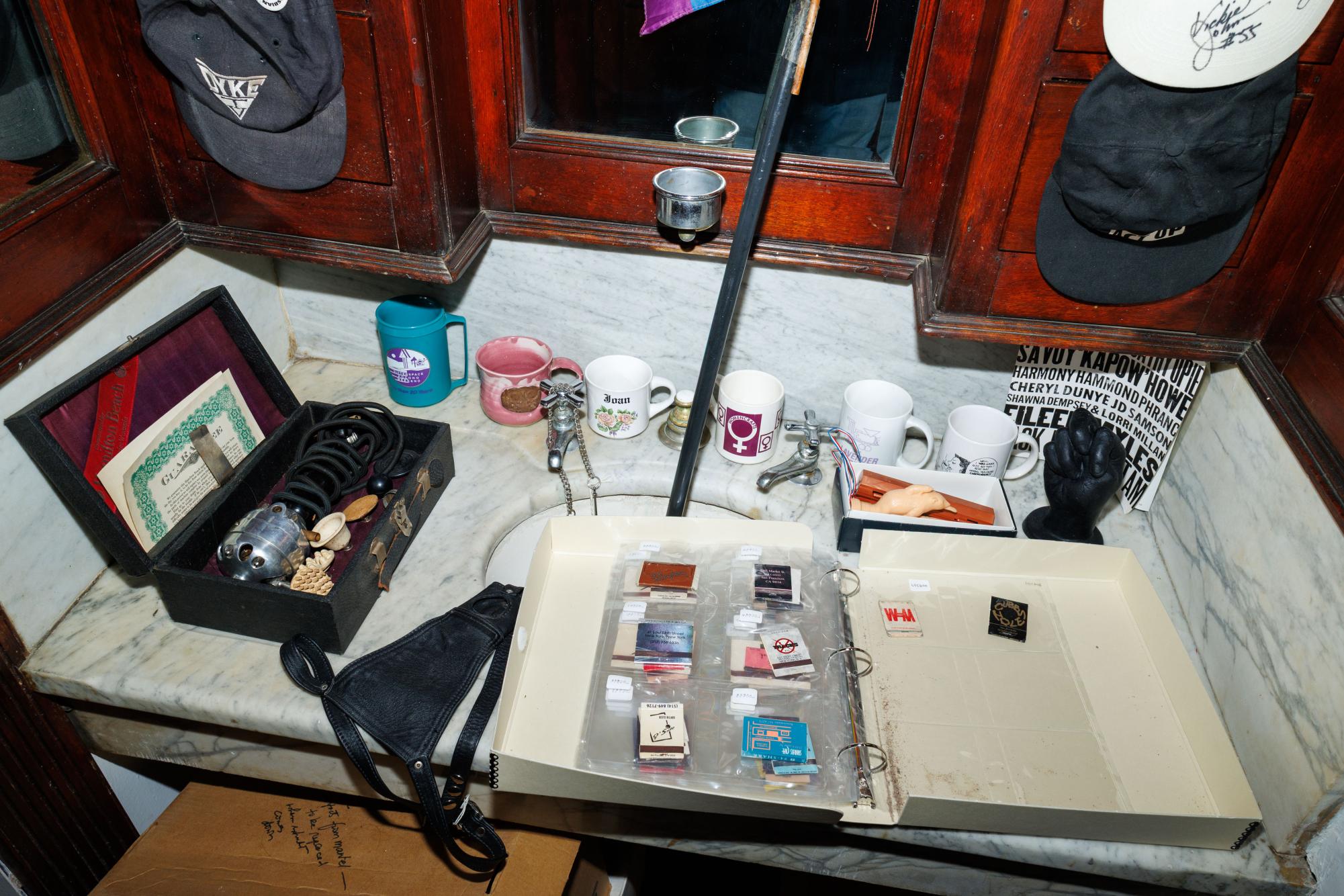
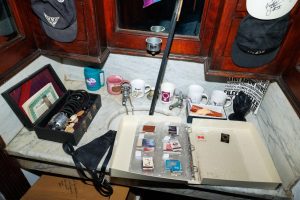
The walls are covered with photographs, flyers, banners and artwork depicting lesbian organizing from as early as the 1950s. Framed pictures, tassel lamps, throw pillows and scattered memorabilia soften a living room lined with floor-to-ceiling bookshelves, stacked with what could be an endless number of genres: herstory, sexuality, art, photography, fiction and more.
“It’s not a sort of stuffy academic archive — my ex-girlfriend used to call it a lesbian clubhouse, which is very accurate,” volunteer coordinator Nora Della Fera, who has been working at the LHA since 2017, told WSN. “There are other lesbian archives, there are other gay archives. But what feels so special about LHA is that it’s an archive where it feels like your history, and you can touch things, and you can look at things, and you can feel like you’re part of it.”
Founded in 1974 and run entirely by volunteers, the Lesbian Herstory Archives is the nation’s oldest and largest collection of lesbian material. The archive emerged as feminists involved in the Gay Academic Union — a national organization that fought to establish LGBTQ+ studies at universities — recognized the erasure of lesbian history within patriarchal academia. Advocates including Joan Nestle and Deborah Edel realized that, without deliberate preservation, it would not only fade, but be actively erased amid an era of McCarthyism and the Lavender Scare.
“[Nestle] said we had a plan of where we would bury the archive if we had to. And I thought she was talking figuratively — and she was like, no, quite literally,” Della Fera said. “That has always been part of their consciousness of being surveilled.”
Within the living room alone, subjects span a wide variety of topics — from lesbian nuns to Asian American lesbians. All the shelves are organized by first name — an homage to mid-century activists’ push to decenter last names typically passed on by men.
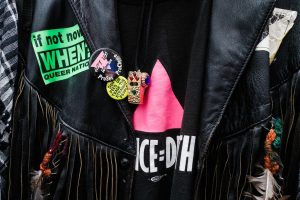
The house then unfolds into rooms of about 18 collections, ranging from geographical files to a t-shirt collection. One room contains shelves of periodicals — magazines, newspapers and newsletters — alongside biographical files of notable lesbians. The periodicals span continents and decades: Moonrise, a Michigan-based social and political newsletter from 1979; Lesbia, a French magazine from the 1980s; Manushi, a New Delhi publication documenting feminist and lesbian struggles in South Asia.
Among these archives sits the Yellow Wallpaper Room — a deeply personal collection of donated archives from individual lesbians. Boxes of personal journals, love letters and photos sit quietly on the shelves. In one of the boxes sits a pair of diaries from the same woman, with the first detailing her desire to go to a prom with a boy in 1956 and her second, written over a decade later, documenting how she’s fallen in love with another woman five years older than her. While visitors may photograph most of the Archive, photos are not allowed in this room.
“There are so many different ways to contribute to preserving the history,” Della Fera said. “Even if you’re not an archivist, and you’re not directly working with the collections — we help by giving tours and making it more accessible to people.”
For the first 15 years, the archives were housed in Nestle and Edel’s Upper West Side apartment on 92nd Street. The two women were committed to building trust within the community they served — offering free services, rejecting government funding and building grassroots support to form a non-hierarchical collective. Thousands of volunteers and visitors would eventually pass through the space, starting as simply members of the surrounding community.
“They were in between caretakers and they needed someone to take out the trash, and I live in Park Slope, so I was like, ‘Oh, I’ll take out the trash,’’’ Mariah Lonergan, now an LHA volunteer of two years, told WSN. “I’m not from an academic background, I don’t do archival things — honestly, I barely even read.”
By the mid-1980s, the archives had outgrown their space: leading members to establish a coordinating committee and launch a fundraising campaign to secure a permanent home. In 1992, they purchased its current home in Park Slope, which opened in June of the following year. Though the bank hesitated to sign off on a mortgage for a community-based collective with no steady income, the LHA raised funds and repaid the loan faster than expected.
For Lonergan, the community’s legacy lives on in the stories they hear from elders at LHA, who have been involved for decades.
“Being in person with our elders — it’s like an oral history right there, where they talk about fundraising for the building and everything that happened,” they said.
Today, the LHA accepts personal archival donations from lesbians willing to share their stories with visitors. Its programming aims to reflect the same community spirit found in the pages of its collections — including a biannual book sale held during Brooklyn Pride, a 40-over-40 speed dating event and an annual Dyke Prom, taking place this year on May 30.
“My wish for people coming here for the first time is to absorb not just that this physical space exists, but that this history exists,” Della Fera said. “I would hope for people to have a realization of how deep and rich this history and culture is, that it can fill a building and beyond.”
-
(Jason Alpert-Wisnia for WSN)
-
(Jason Alpert-Wisnia for WSN)
-
(Jason Alpert-Wisnia for WSN)
Contact Aryana Arora at [email protected].