






























As I sat at the bar of Community Kitchen in Alphabet City last week, eating a carrot cooked in its own juices and glazed with butter, I couldn’t help but think that this was the most subversive meal I’ve ever had.
By subversive, I mean wonderfully ambitious in its reckoning with systemic issues across the restaurant industry and global food system. For one, it’s rare for New Yorkers to see a tasting menu restaurant that regularly takes walk-ins. Fruits and vegetables take center stage in nearly all of Community Kitchen’s nine courses. And most striking of all, the restaurant’s sliding price scale means that while everyone gets an identical meal, how much it costs — $15, $45 or $125 — is up to diners themselves.
“We thought about asking for justification — for $15, you should show your SNAP or WIC card,” founder Mark Bittman told WSN. “We decided that we didn’t like the relationship that set up between us and the people coming into the restaurant, and we wanted to make sure that everybody was treated in a dignified way.”
Can a fine dining restaurant pay its servers roughly $35 an hour, ethically source its ingredients and still be financially accessible? The industry will tell you no, but if Bittman’s experiment proves successful, that answer might be less black and white.
“This is a nonprofit before it’s a restaurant — a nonprofit that is manifesting as a restaurant,” Bittman said. “I wanted to think of a way to demonstrate what an aspect of a good food system would look like.”
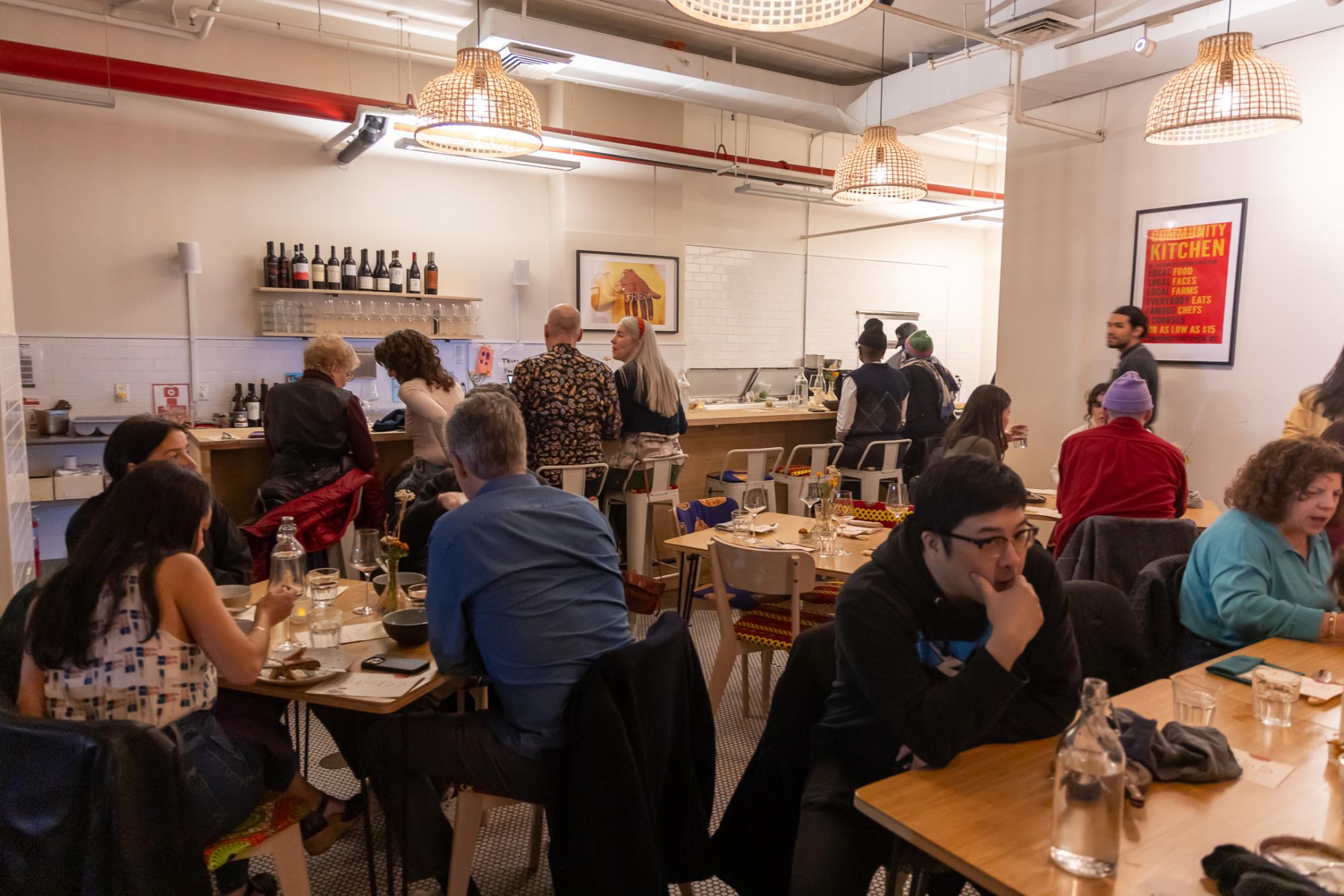
The pioneering food writer — best known for his “How to Cook Everything” cookbooks and decadeslong-stint as a New York Times food columnist — opened Community Kitchen in September as a pilot program. The restaurant is housed in the Lower Eastside Girls Club on East Seventh Street and will conclude its first iteration on Dec. 13, likely reopening late next year or in early 2027.
“One of my fears from day one was being inundated with wealthy people,” Bittman said. “Our biggest challenge has been getting people from the neighborhood to come in and pay the lower two prices.”
Thanks to community outreach that has bolstered patronage from local residents, only about one-third of customers pay the $125, Bittman estimated. However, the restaurant is primarily powered by a $1.2 million budget acquired through philanthropy. It also has a star-studded board of advisors, including restaurateur Alice Waters, celebrity chef and humanitarian José Andrés and author Marion Nestle, who founded NYU’s Department of Nutrition and Food Studies.
Ideas rooted in food justice have long been at the heart of Bittman’s writing and now serve as Community Kitchen’s north stars: the need for a more equitable, sustainable food system, liveable wages for service workers and universal access to nutritious food.
“If you’re going to make it widely accessible with a sliding scale, then you’re obviously a nonprofit restaurant,” Bittman said. “Every day that we’re open is more or less a guaranteed money-loser.”
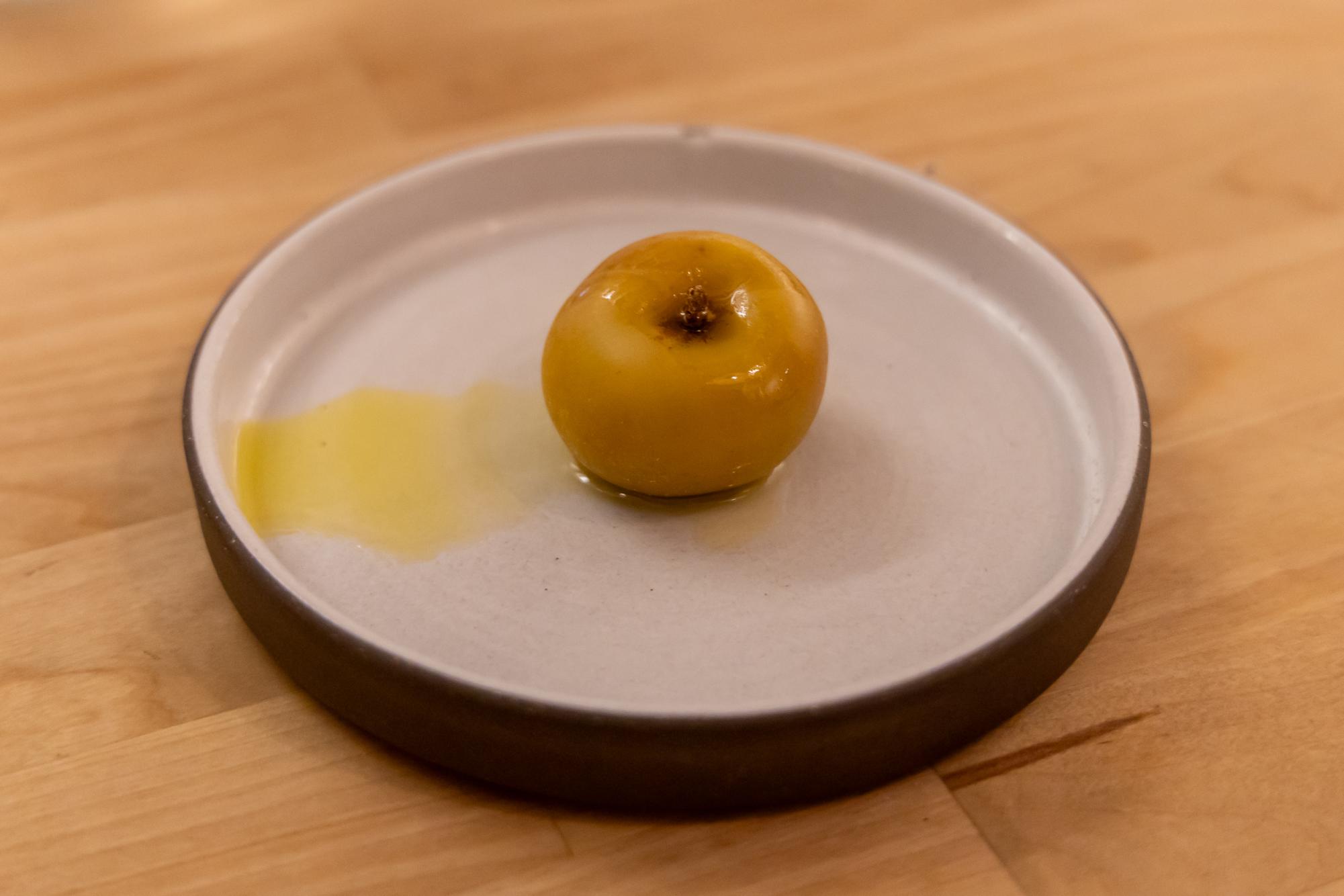

Culinary director Mavis-Jay Sanders’ seasonal, produce-forward approach is most evident in the first course, “Apples”: Diners enter the minimalist space — think sleek wooden tables with pops of color from artsy cushions — to find a spoon accompanied by a paintbrush on their table. After using their spoons, as instructed, to hack away at the shell of a salt-baked Lady apple until it cracks, they dust away the excess salt with the paintbrushes.
“The guiding thing is, how can you, as a chef, center these fruits and vegetables to make it a meditation on the experience of having it and truly seeing it in various dimensions,” executive director Rae Gomes told WSN. “I’m sold on the fine dining, at least for this iteration, mostly because a lot of people don’t have opportunities to experience it.”

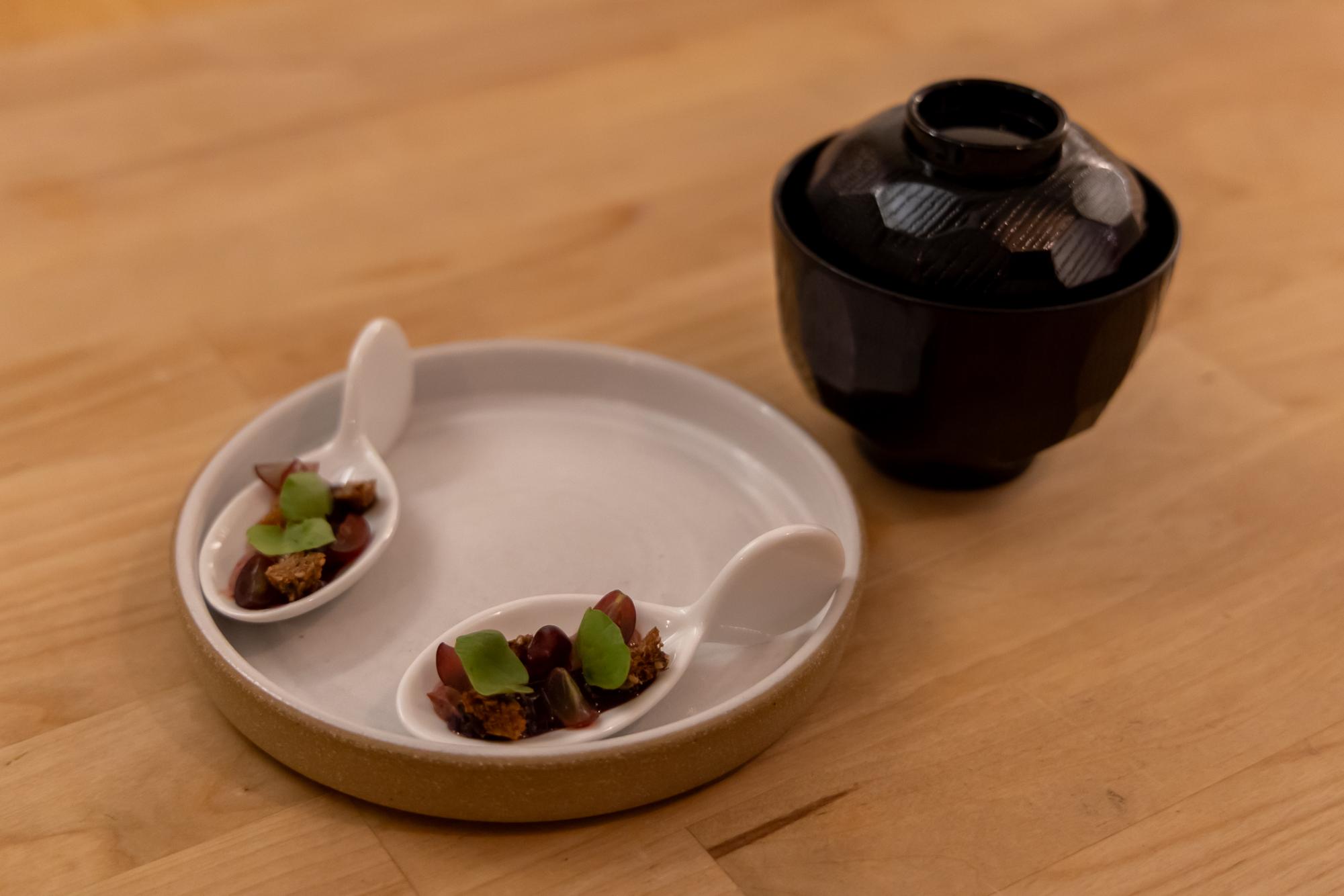
The rest of “Apples” consists of a small piece of seared scallop — accompanied by slices of pickled Golden Delicious apple and dusted with fennel pollen — and a few sips of tart green apple cider. The second course, “Grapes,” is also ripe with experimentation: Halved grapes with chicken liver mousse, multigrain croutons and grape jelly are served with three carbonated grapes, still fizzing at the seams, and a small bowl filled with a smoked grape juice.
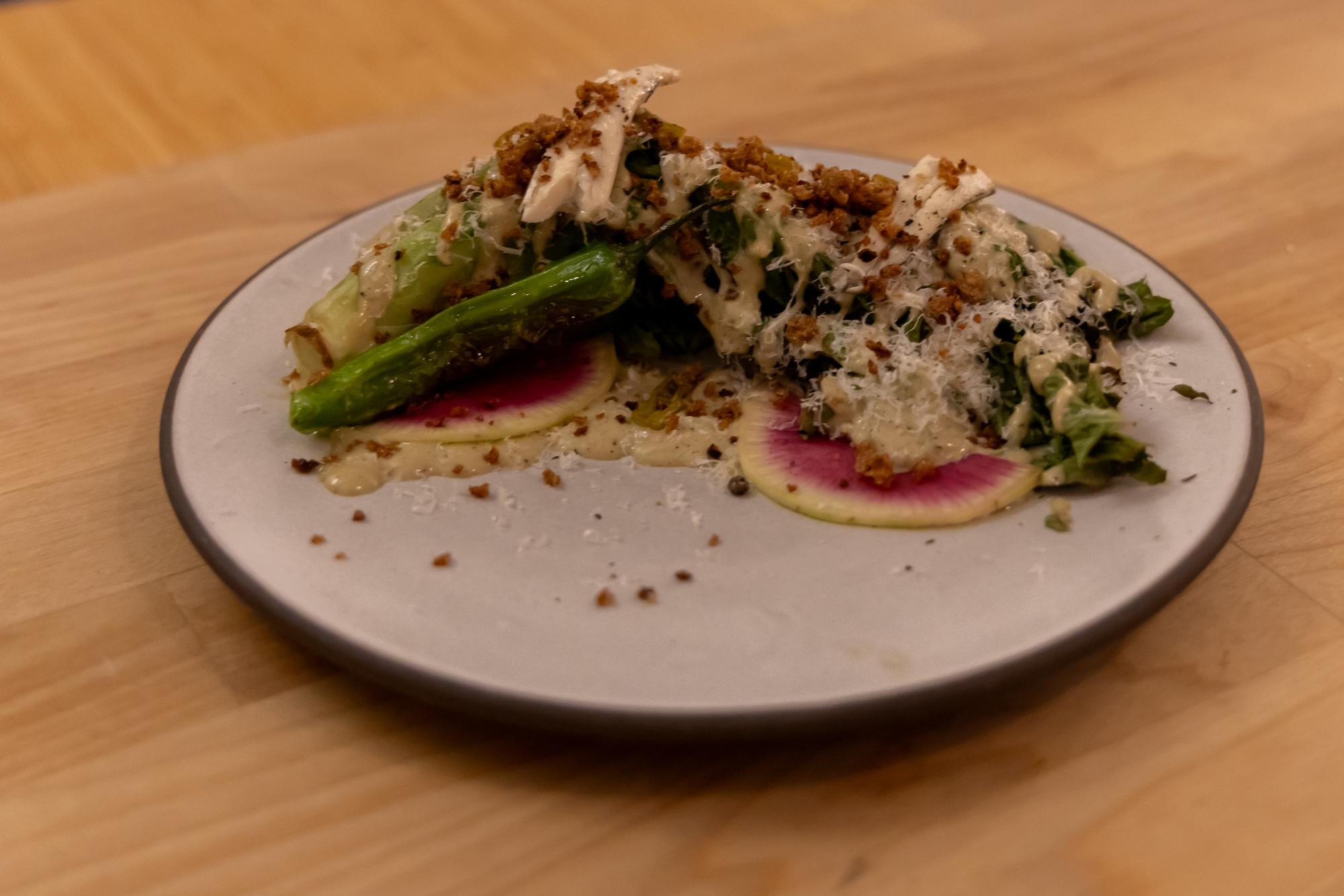
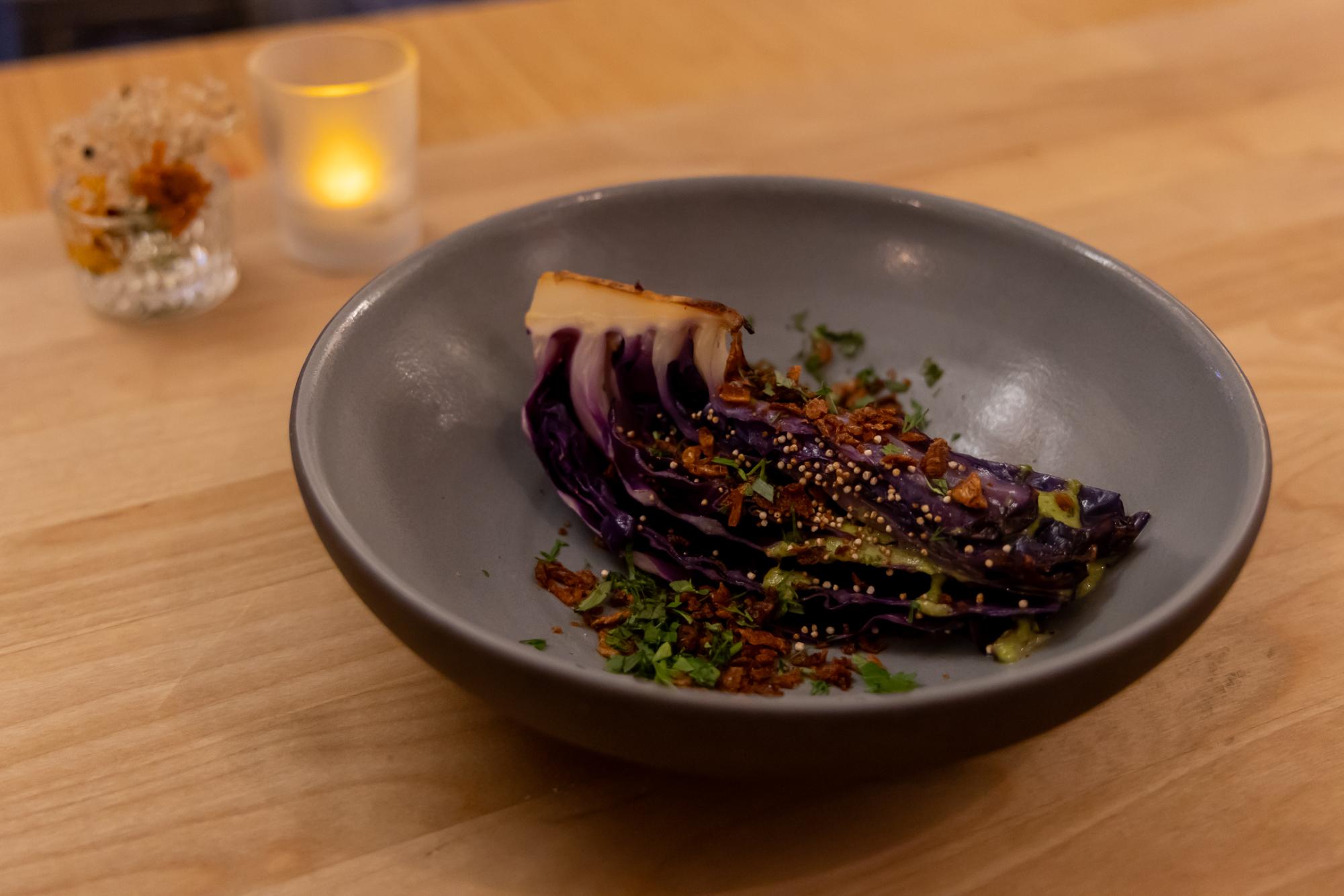
The Caesar salad-inspired third course was the best of the night, featuring a hefty crest of Dino Lettuce topped with fresh white anchovies, shaved parmesan, breadcrumbs and a heavy drizzle of an aioli-like dressing. The “Caraflex Cabbage” followed this format, with leaves layered with an herb-hazelnut sauce, but felt a bit one-note in comparison.
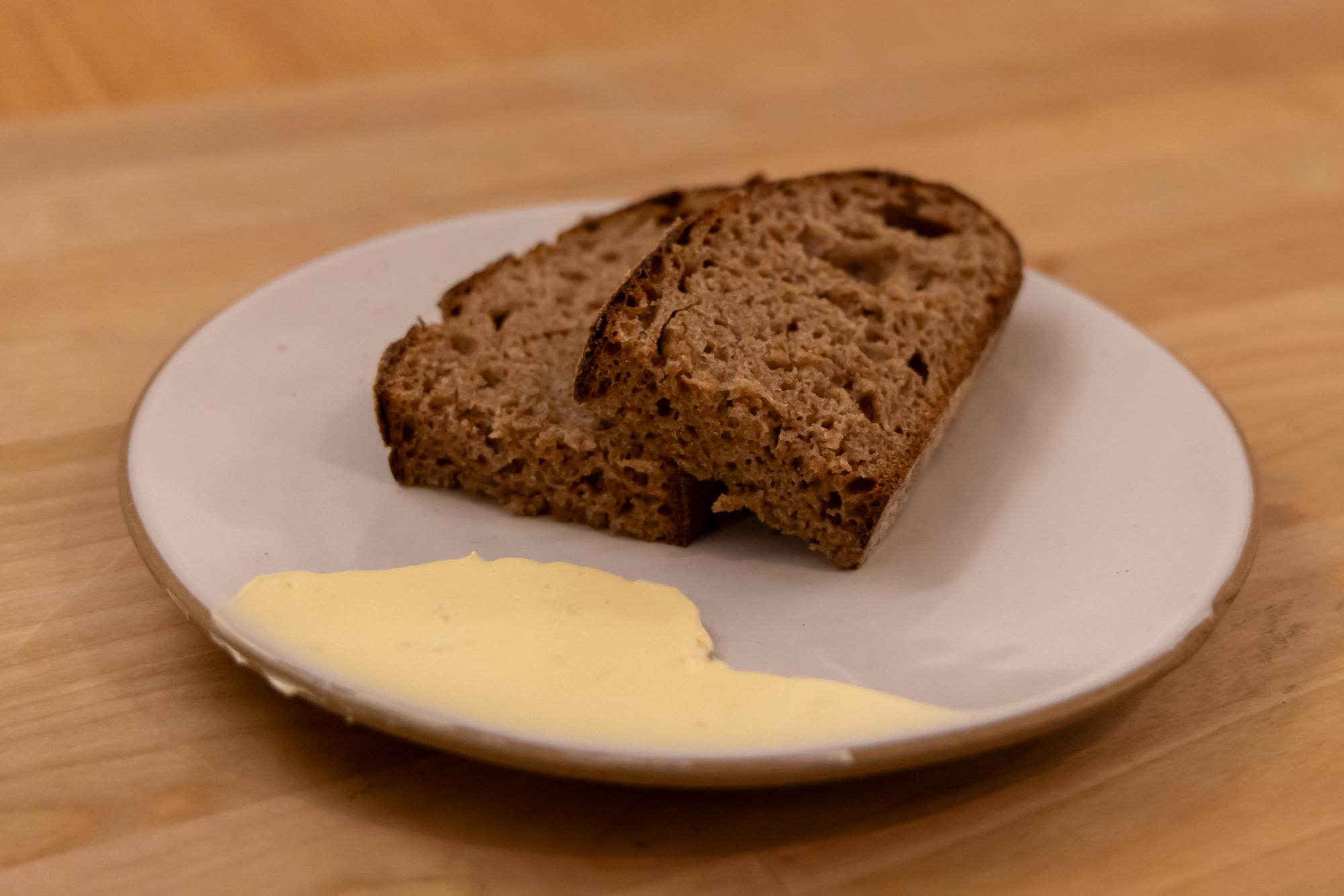
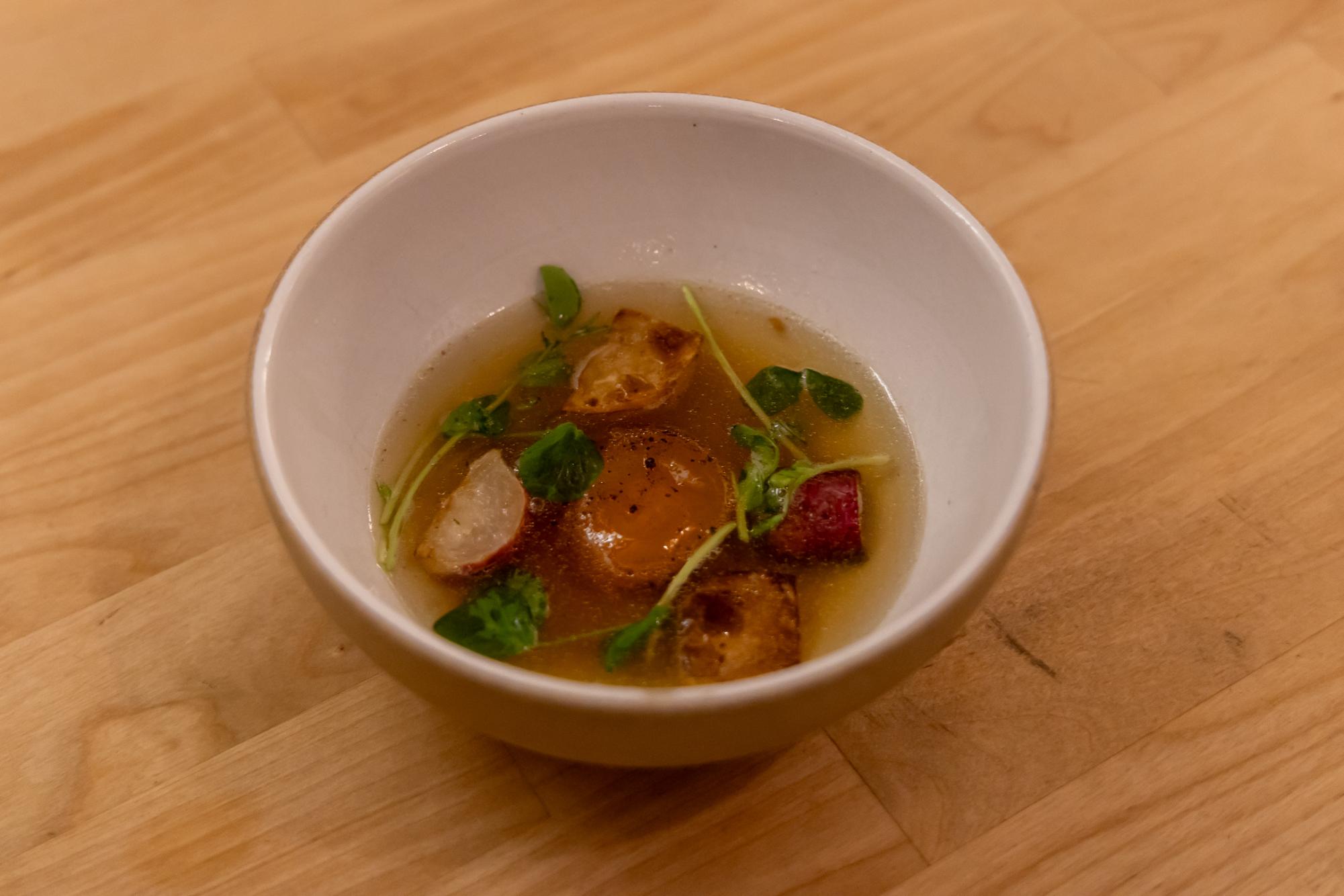
The rest of the menu remains straightforward in presentation, highlighting local food production along with global influences: The aptly named “Bread” course is sourced by Brooklyn Granary & Mill, while the “Fonio” — a granular, couscous-like West African grain — is served in a simple chicken broth with seared radishes, pea shoots and a salted egg yolk cured with garlic and juniper berry.
As the team reevaluates its unconventional model following the end of the pilot, the kitchen will have a few knots to untangle. The Friday I came in for dinner, the chicken broth for my fonio was only a few degrees above lukewarm, my sixth and seventh courses arrived in tandem and the eighth was served before I had finished either of them.
Such are often the tribulations of opening a restaurant — let alone one that substitutes profit for food justice as its driving force.
“We are modeling what a restaurant would look like if it were doing everything right,” Bittman said. “Doing everything right doesn’t necessarily mean breaking even.”
Community Kitchen is open Wednesday through Saturday from 6 to 10 p.m. until Dec. 13, and is expected to relaunch within the next year and a half.
Contact Lauren Ng at [email protected].