






















For the past two weekends, Not-a-Normal Spring Show curated a marketplace to the left of a Barnes & Noble store on East 17th Street filled with hundreds of vendors selling clothing, jewelry, furniture, home decor, artwork and other pieces. Tickets offered entry for one ($42.30) or both weekends ($71.09), single-day passes ($28.45), preview passes that give attendees access three hours prior to opening ($55.09) or night shopping featuring a DJ on Fridays at 6 p.m. ($44.43). The event was hosted by Normal New York, a pop-up retail platform that aims to create a collaborative space for independent brands to gain recognition and find their audience. Holding locations in New York City, Los Angeles and the Hamptons, the brand puts together these shows quarterly, with their “Not-A-Normal Summer Show” occurring June 5-7 in Union Square.
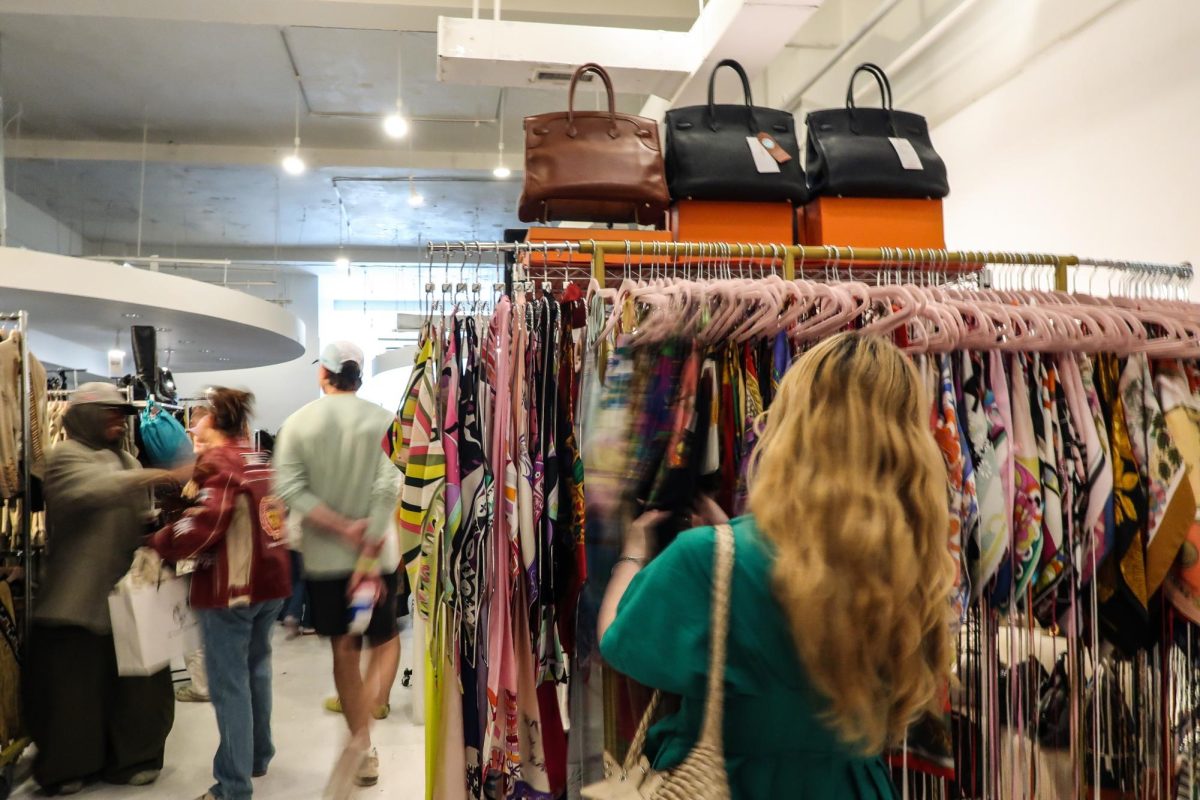
The venue space was densely packed with tightly squeezed rows of racks and tables overflowing with heavy coats, statement jewelry pieces and bulky, patterned purses covering tabletops. Upbeat music played as shoppers navigated the pieces on display, and vendors stood beside their collections to explain how their pieces were sourced. The marketplace brought to light a diverse range of authentic and largely homemade styles, including articles of clothing made from hot pink fur, bags imprinted with cloud designs and home goods sporting cheetah print. Those looking for simpler wear could also find structured beige trench coats and simple gold necklaces, creating a shopping experience that suits everyone’s personal style.
Several of these vendors focused on sustainable and ethical practices when curating their collections. Social Studies, a company focused on regenerative retail and creating a positive impact on the planet and those behind the production of its pieces, had its own stand at the show.
Co-founder Daniel Lewis explained that individual brands working towards sustainable practices from around the world can be scattered and hard for individuals to pinpoint. To combat that, Social Studies aims to create a collective space for these brands, eradicating barriers such as duty costs and handling returns to deter audiences from the hype surrounding mass-produced clothing.
“What we try to do is lead with fashion,” Lewis said in an interview with WSN. “So in our view, you need to like the piece — and it happens to be sustainable — rather than buying something because it’s sustainable.”
-
(Sophia Graves for WSN)

-
(Sophia Graves for WSN)


When deciding who to incorporate into its work space, Social Studies evaluates a series of ethical data points related to a brand’s impact on the planet. A notable piece the vendor sported was a clutch bag, which the company collected from a Brooklyn-based designer whose supply chain services underprivileged communities in India.
“Even though the leather technically doesn’t have anything different relative to most leather, it’s all been hand-woven and supports that community — so that’s really more about the people component,” Lewis said of the bag.
Similarly, VF Design NYC brings to the forefront a culmination of sustainable and upcycled cultural wear with pieces that feature vintage textiles. Founder Valerie Fitch brings her own background in the fashion industry, having spent over two decades as a visual designer at Crate and Barrel. Fitch wanted to focus on homemade and repurposed luxury pieces when opening her store, with her brand later using silk to create wearable pieces such as saris, robes and adjustable sets, alongside offering home goods such as rugs.
“I wanted to have really beautiful luxury home boots that were handmade, upcycled and had less waste going into our landfills,” Fitch told WSN. “With the rugs, they were always handmade, hand-knotted, all wool, washable and built to last. And then I started doing upcycled, vintage saris. It’s really about having beautiful pieces of fabric that have a really strong cultural significance.”
Fitch emphasized that her work is not only about aesthetics, but also about rethinking how clothing is made and consumed. By repurposing existing textiles and focusing on quality materials, her designs challenge the idea of disposable fashion and encourage more intentional purchasing habits. For her, sustainability is not just a design choice, but a responsibility that extends to both the production process and the consumer.
“If you care about the environment, you’re gonna stop buying things that are basically polypropylene, that are made in a factory that has 10 million different emissions that are killing your environment,” Fitch said. “Plus, when we shop unintentionally — when you buy an Ikea rug and when you’re done with it, you throw it away — all of that sits in landfills. It’s fabric that doesn’t break down over time.”
Other vendors also brought to light their hometown roots throughout their pieces, with vintage clothing brand One That Got Away spotlighting co-founder Sophie Katzman and her sister’s coastal origins by incorporating seashell and ocean-inspired accessories. The organization sells a diverse range of pieces ranging from sweaters and blazers to blouses and sleepwear. Furthermore, the brand’s collections are curated to have a variation of aesthetics, with notable pieces featuring chunky gold jewelry, clip-on earrings and brooches that can be styled into both everyday looks and more expressive outfits.
“A lot of our stuff is vintage, so it was just made better, the materials are a lot higher quality, they last longer and also they’re more unique because it’s not reproduced over and over the way fast fashion is,” Katzman told WSN. “Some are one-of-a-kind pieces or very small collections, so you’re really buying something you can keep for a long time and wear for years in your closet.”
Contact Rachael Khan at [email protected].