






















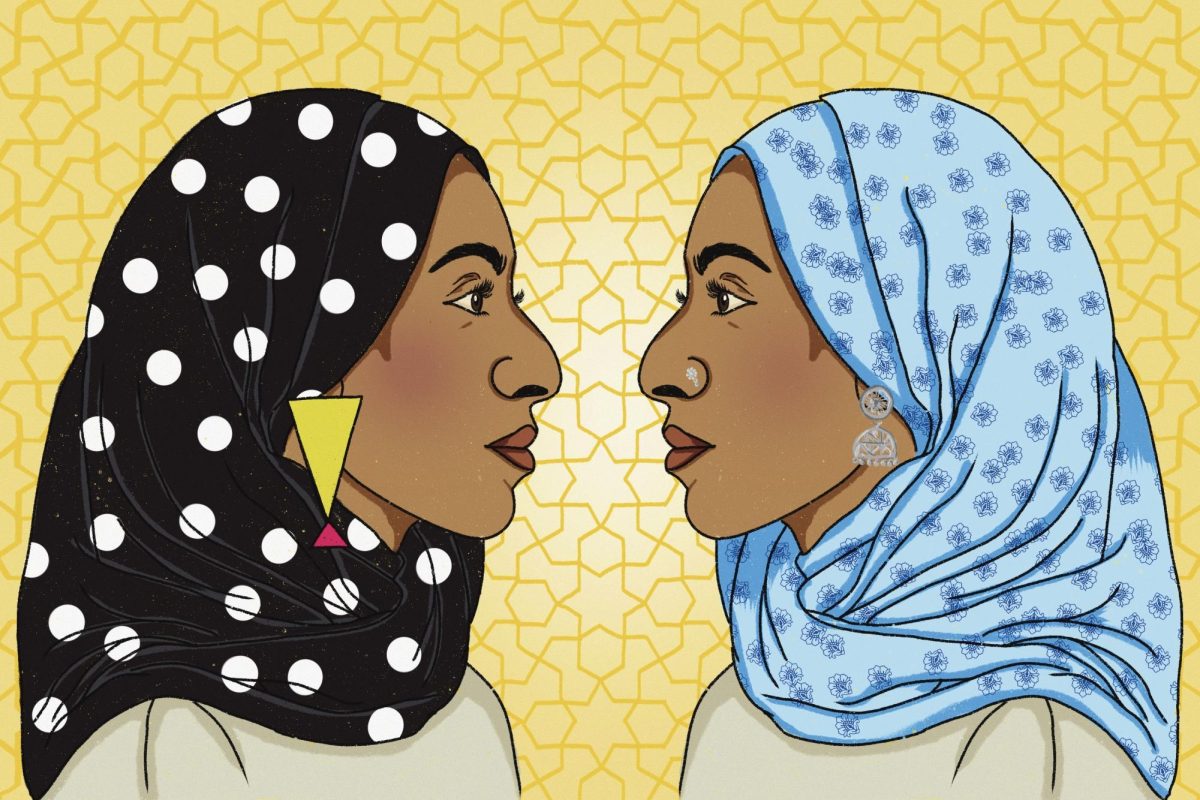
As worshippers this Ramadan pursue haya — an Arabic word that encompasses righteousness and inhibition from immoral behavior — students are challenging the assumption that modernity and modesty are mutually exclusive. Rather, NYU’s Muslim community shares how these virtues can complement each other as an expression of personal style and religious belief. Believers found solace in being connected to their faith while allowing them to participate in current trends and develop their style identities.
Ramadan is celebrated by around 2 billion people around the world, as well as by many in the university’s student body. Living in one of the global fashion capitals in the world, NYU students are making strides to honor Islamic principles while embracing the city’s fashion-forward ideals.
CAS junior Maryam Babar noted how the very act of wearing religious clothing adds a note of reverence to her everyday life, amplifying the sense of community to her religious peers in the city.
“Wearing the hijab is something that is really meaningful to me,” Babar said. “Although I don’t practice wearing it permanently yet, I think wearing the hijab exemplifies and beautifies the religion of Islam as a whole — especially in such a big city like New York, where it can be really intimidating to wear the hijab. I think that the hijab is an expression of community.”
Modern trends such as printed Bambi print abayas and polka dot hijabs, layered lace under ripped jeans and bows tied onto purses are prevalent and popular across Islamic clothing brands.
“I have noticed with a lot of Muslim brands that they are trying to bring about that modern and Westernized sense, and I think they do it in a very nice and creative way,” Babar said. “Like my friends are always trying to get the latest prints of the hijab, but they’re always sold out.”
An especially notable outfit a student wore during a Friday night prayer was a pink monochromatic outfit with billowed structured shoulder pads and a matching pink chiffon hijab. The silhouette was strikingly simple, creating an elegant look with puffy shoulders and thin sleeves, and served as an example of how unconventional modest fashion can be.
In the midst of a busy city, wearing the hijab provides students time in their day to slow down and center their days around their faith. For CAS senior Fatou Kamara, wearing the hijab more frequently during Ramadan provides her liberation from superficial beauty standards and the pressure attached to them.
“Understanding that I have to worship Him and not worship Western and societal beauty standards is what makes it easier for me to balance beauty standards with being modest,” Kamara said.
As societal expectations for the way that women are supposed to look are constantly changing — ranging from the way they do their hair to the shoes they wear — several students deter from the monocolored fabric, instead bringing to the forefront artistic designs such as multicolored, dyed hijabs. First-year SPS graduate student Ada Diallo described her process of incorporating modernity into her style as a full-time hijabi.
“Last year, during the summer, the color of the summer was butter yellow, and I really liked this color, so I bought a butter yellow hijab,” Diallo said. “I also like to coordinate my outfits, so I’ll match my hijab with my bag or to my shoes, and I feel like that’s a great way to incorporate trends.”
Babar also spoke about how she wished misconceptions regarding modesty could be put to bed. She recounted witnessing heavy backlash against Muslim women on social media and misconceptions that they were being forced to dress modestly, but went on to explain the danger of assuming each practicing worshipper doesn’t make that choice themselves.
“I feel really happy and comfortable wearing the hijab and being around others who are wearing the hijab too,” Babar said. “I think it’s a really beautiful and empowering message for so many different women … A lot of people do tend to misconstrue the whole idea of what the hijab is. They see it as violent or threatening to them, and that is absolutely not the case at all for what the hijab means and what the hijab symbolizes.”
Shreeya Goyal contributed reporting.
Contact Anishka Khatwani at [email protected].