
















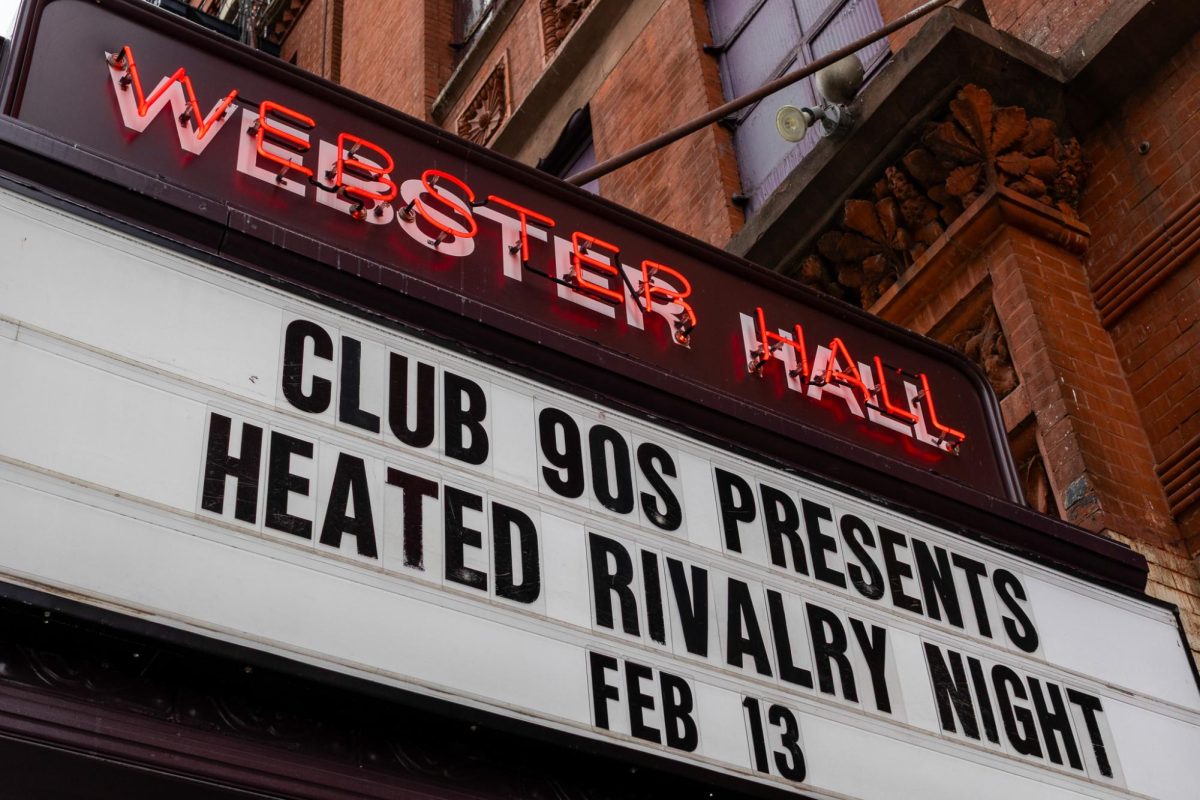
“Where are all my queer folks at?” the DJ shouted out to the crowd at Club 90s’ “Heated Rivalry” rave. As excited yells filled the room, I let out a whoop.
“And where are my allies?”
The hall filled with deafening noise as people erupted into shouts and applause. It was earsplitting and shocking. This was a space where most people weren’t LGBTQ+ but were so unabashedly excited to show their support and genuinely interested in the queer community.
Like most of the internet, I’ve fallen into the collective psychosis that is the current “Heated Rivalry” craze. Since the first episode of this Canadian ice hockey romance came out in November, it’s been months of reheating the books and episodes and saving my, no exaggeration, thousandth edit on TikTok. So obviously, when Club 90s dropped tickets for a “Heated Rivalry Night” at Webster Hall for Feb. 6, I bought them immediately. I was expecting a fun night out — but I was surprised to find the best feeling of queer community I’ve had in years.
Club 90s’ “Heated Rivalry Night” was an event by queer people, for queer people. Part of the party promoter’s ongoing tour, the event’s framing went beyond the surface-level gay label and into the political and cultural queer. GVRLFRND, the DJ who identified herself as queer, played LGBTQ+ artists like Troye Sivan and Chappell Roan, even when there wasn’t a clear connection to “Heated Rivalry.” Throughout the night, she was casually trans-inclusive, seamlessly including nonbinary people in otherwise gendered dance contests. The night’s set also featured a drag performance to platform queer art beyond what’s explored in the TV series.
These choices felt purposeful. They not only created a space where everyone could be themselves, but also demonstrated a level of political awareness that made the experience more impactful, while still fun.
This was the kind of space I was looking for when I went to the “Heated Rivalry” look-alike contest in early February. But there, I was quickly disappointed to see that the queer experience was completely sidelined in favor of the straight gaze. At the look-alike contest, there wasn’t a single mention of current LGBTQ+ current events: how, just a week earlier, USA Hockey banned transgender athletes from hockey leagues that match their gender identity. Apart from two rainbow hockey sticks with the words “gay sex,” it seemed like both the organizers and the crowd had forgotten that the event was based on a show with two LGBTQ+ male main characters, who met in 2008 — seven years before gay marriage was legalized in the United States.
The organizers prompted look-alikes to divulge details: their names, age, where they were from, and whether or not they were looking for love. When the answer was yes, the crowd would get louder. A contest that was supposed to be about a queer show quickly became a speed dating event that excluded the very community it was claiming to highlight. As it unfolded before me, I felt like I was surrounded by straight women fetishizing the image of gay men and like those in charge had exploited the aesthetics of a queer show to entertain a straight audience.
In contrast, the DJ at the New York “Heated Rivalry” rave actively centered queer politics. The DJ brought out the winners and organizers of the look-alike contest that took Washington Square Park by storm a month ago. Even in a brief moment of dancing around on stage and taking selfies, the rave was still politically queer in a way the contest wasn’t. That night, Ilya Rozanov’s look-alike wore a shirt that read “The only ICE I like is the ice that my two gay boyfriends skate around on.”
After drawing attention to the shirt, the DJ continued, “Shout out to all the immigrants that make this country great. Be you, protect others, support queers, support your immigrant friends, support everyone.”
Immediately switching the tone from political to lighthearted, the DJ played a round of edits, including the famous “Google Drive edit,” which features the show’s most sexually explicit moments. It was both a shamelessly fun night of cheering for Ilya’s ass and a serious political discussion about equality and civil rights.
The rave itself was electric, filled with 2000s and 2010s hits including Pitbull’s “Hotel Room Service,” Zedd’s “Clarity,” and Britney Spears’ “Toxic.” Behind the DJ, a massive screen displayed TikTok fan edits of the TV show — including some with almost 9 million views — synced up to the songs blaring over the speakers. The crowd, decked out in hockey jerseys and “stupid Canadian wolf bird” shirts, was locked in — barely any phones out, screaming every word to Madonna’s “Like a Prayer,” and cheering each other on during the interactive moments.
As expected, the audience skewed female, as gay male romances have historically offered a safe space for straight women to explore equal-partner relationships. But, it didn’t feel like how it does when a bachelorette party disrespectfully takes over a drag bar. Of course, women were at the rave to watch hot men kiss — we all were — but they acted in a way that felt appreciative and supportive rather than demeaning or fetishizing. The crowd showed no toxic masculinity, no rigid gender roles, just love and excitement for “Heated Rivalry” and our community — making the space one that celebrates the whole queer experience.
The climax of the series comes at the end of the fifth episode, when Scott Hunter and Kip Grady kiss publicly on the ice. When that moment from the TV show came on the DJ’s big screen, the balcony I stood on physically shook from the rhythmic jumping of excited attendees around me. I looked around and saw so many people, so many allies, there to celebrate queer love and joy. And I thought of myself coming out almost a decade ago — with almost no popular representation on screen — terrified that I was different and that my love would never be celebrated the way that I saw straight love celebrated in both media and real life. I let myself watch two men kiss on screen, cheered on not just by the audience in the fictional world, but by the real people around me, and I let my old fears slip away.
With every new legal attack on LGBTQ+ rights or tweet from major politicians and celebrities criticizing our community, it becomes harder to remember that there are people who celebrate us, a reminder that we are not alone. As silly as it is, this “Heated Rivalry Night” not only reminded me of how incredible my own community is, but how many others are on our side.
Contact Sam Kats at [email protected].
margaux • Mar 18, 2026 at 6:02 am
hey, i’m actually the editor behind the “google drive edit” mentioned here (big ole freak / heated rivalry). so cool seeing it show up in a piece like this!
i wrote a breakdown of how it spread across tiktok/reddit/clubs etc: https://margsedits.com/big-ole-freak