
























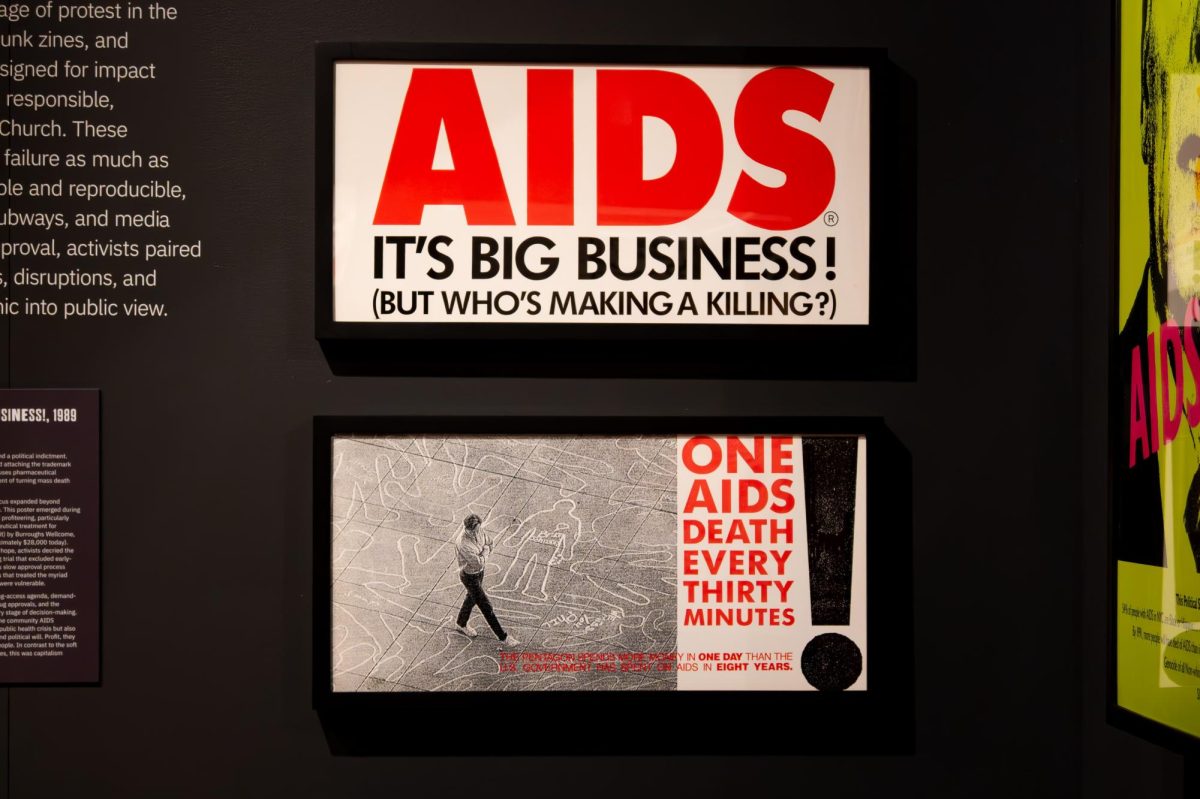
The American AIDS crisis exists in an interesting limbo: It’s recent enough to remain a lived memory, yet distant enough that it’s sometimes flattened into an archive. Poster House’s exhibition “Love & Fury: New York’s Fight Against AIDS” situates itself in that tension between past and present. The show, which opened on March 13 in Chelsea, raises questions about how New York City remembers AIDS and how that memory is taught and lost.
Curated by Ian Bradley-Perrin, the exhibition draws from a wide range of posters that range from the late ’70s to early 2000s in order to explore the role of graphic design in shaping public understanding of the epidemic.
“It seemed like a really great opportunity to engage with a subject that would be new for some generations, and lived reality for other generations,” Bradley-Perrin told WSN.
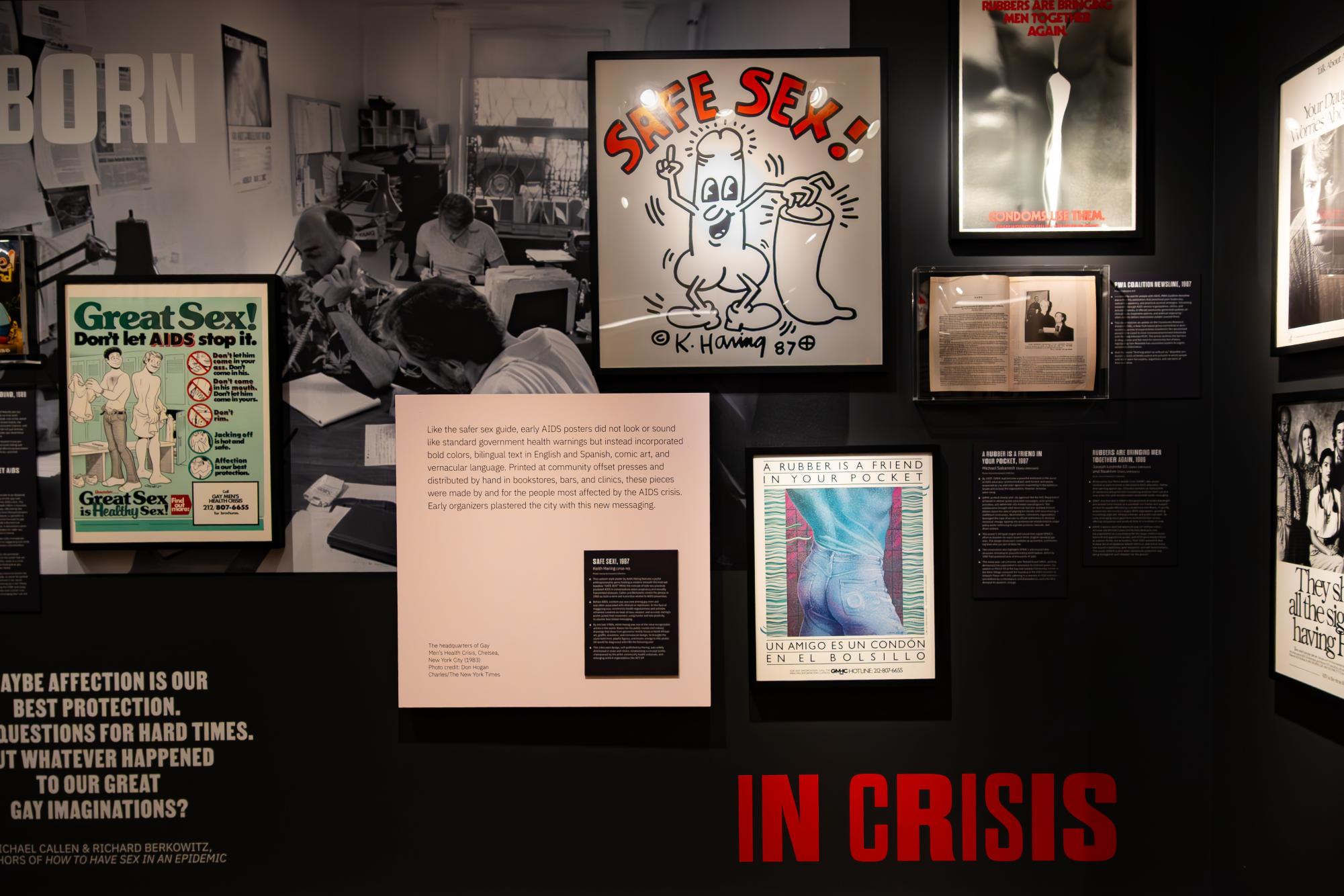
As you enter the exhibition, the first cluster of posters immediately grounds the show in community response. Early works from activist groups like ACT UP sit alongside frank, instructional graphics about homosexuality and safe sex, forming a section titled “A response born in crisis.” Among them, “Great Sex! Don’t Let AIDS Stop It” (1984) stands out for both its tone and intent. The explicit “dos and don’ts” and bright red and green colors embed a sense of urgency in the poster’s design. Featuring deliberate illustrations of two men engaging in sex, the poster rejects fear-based messaging in favor of the idea that pleasure and precaution could coexist. It’s a reminder that, in the absence of institutional guidance, queer communities created their own systems of care that made safe sex more enjoyable and accessible
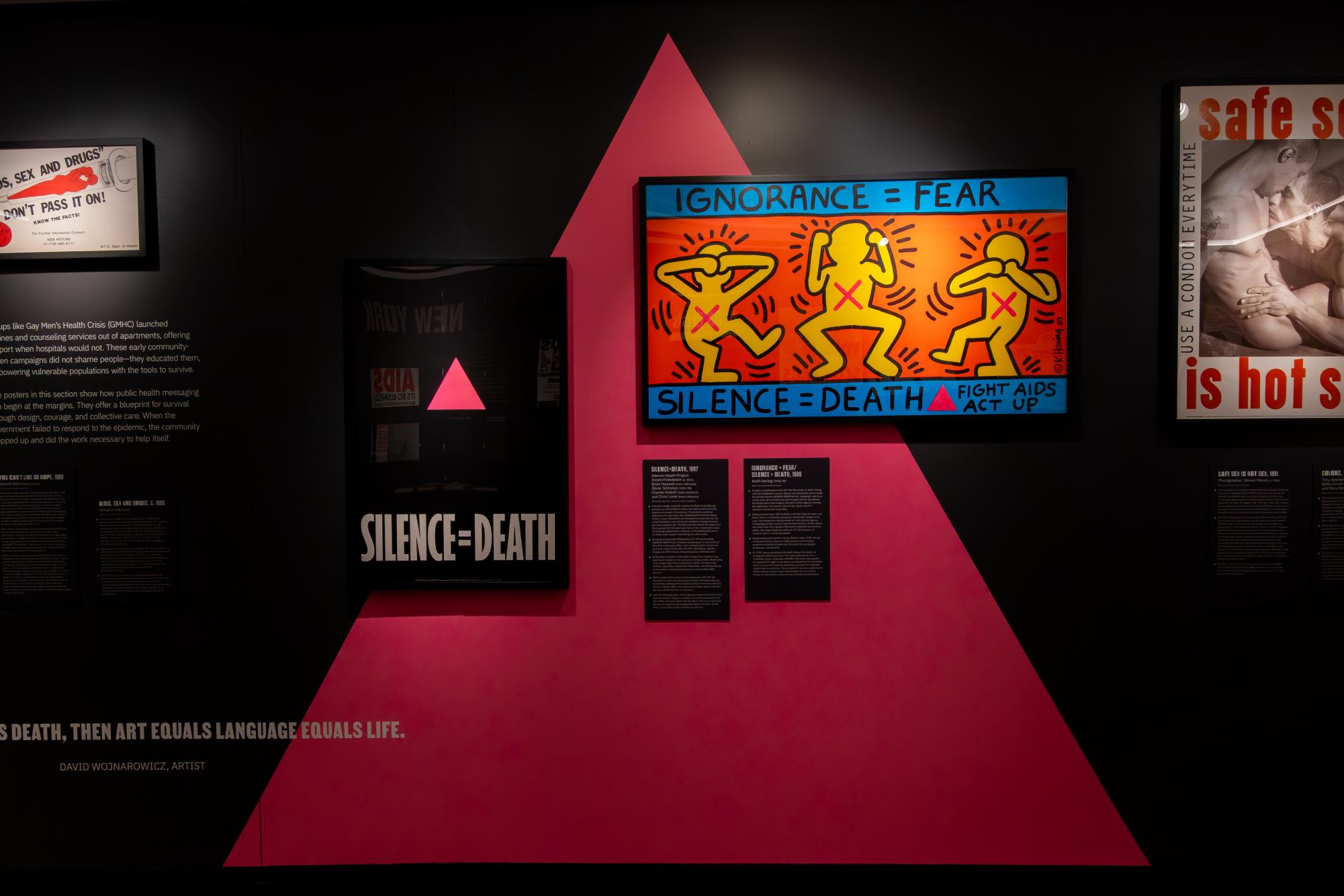
That ethos of community makes way for something more confrontational as the exhibition unfolds. The posters shift to being more political, reflecting a growing frustration with government inaction. At the center of this transition is the famous “SILENCE = DEATH” (1987) poster. Stark and unmistakable, the work features a black background interrupted by a pink triangle, with direct wording that holds plenty of emotional weight. The triangle itself carries historical significance, reclaimed from its use by the Nazi regime to identify and persecute gay men during the Holocaust. Here, the shape is a symbol of resistance, serving as a reminder that unchallenged marginalization can become deadly. Many of the poster designers came from backgrounds in marketing, bringing an understanding of strategic branding.
“I think it really speaks to the intentionality with which the poster designers at the time approached their work,” Bradley-Perrin said.
In the section across from “SILENCE = DEATH,” the posters shift to direct confrontation, calling out political figures like former President Ronald Reagan for the government’s failure to adequately respond to the AIDS crisis. The “AIDSGATE” (1987) poster is hard to miss. Its neon green filtering and Reagan’s glowing, bright pink eyes politically demonize him. The term “AIDSGATE” is slapped across the poster in the same loud pink and huge capitalized letters, making the work even more jarring. Cartoons like this insist that the scale of lives lost to AIDS was shaped and enabled by institutions and those in power.
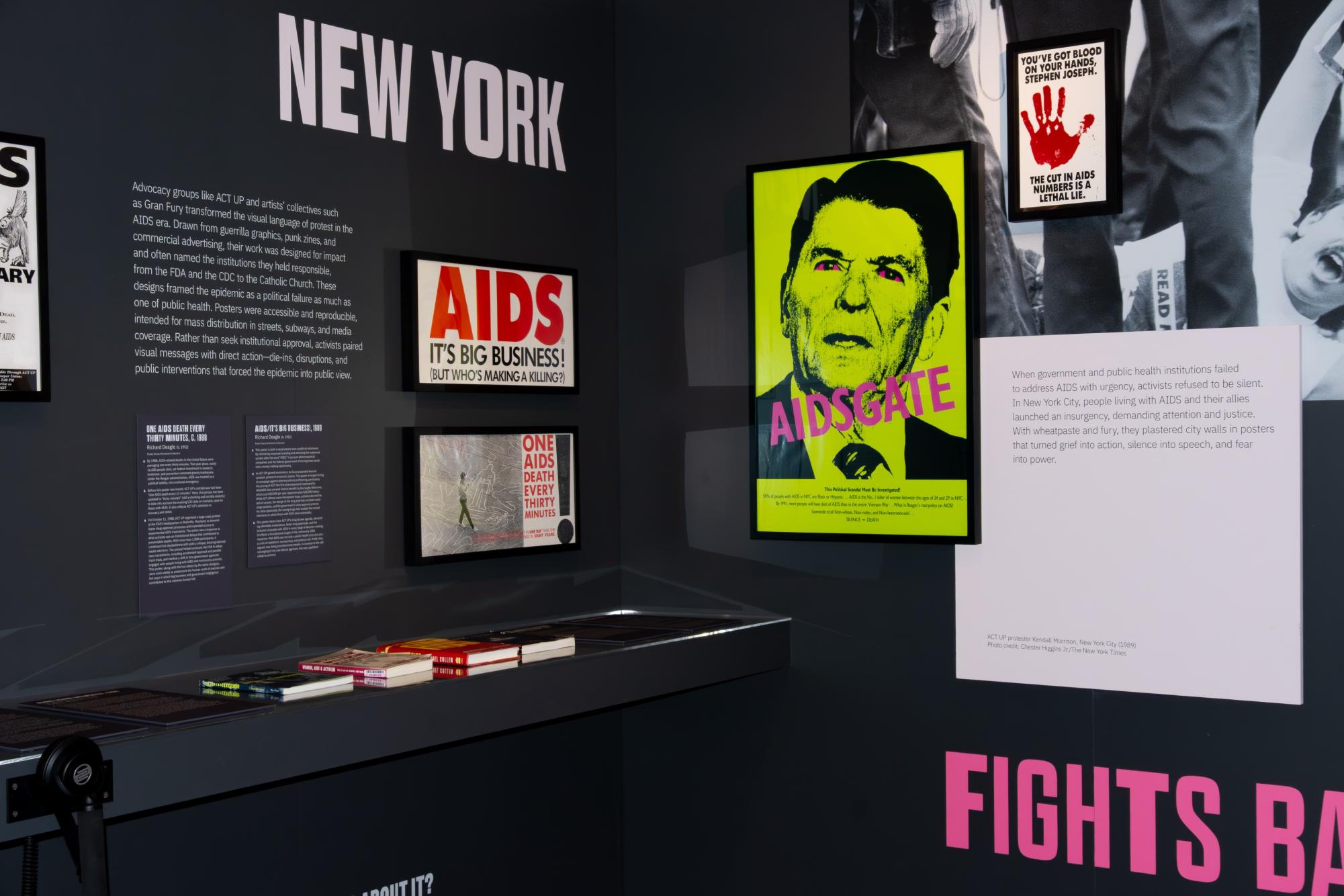
“Something that posters can do really well is speak to a broad audience in a very specific way in a public space,” Bradley-Perrin said. “It is fundamentally the poster that you encounter day to day, whether it’s advertising messaging from the government, on the subways, on billboards or posted on the walls.”
The exhibition also displays works beyond posters, expanding into multimedia in order to make the history feel more immediate and lived-in. Alongside the graphics are books, video screens, and telephone-style audio stations that invite viewers to listen in. One installation, “Fight Back, Fight AIDS: 15 Years of ACT UP” (2002), compiles footage from ACT UP protests, showing police dragging activists away, the camera shaking as it captures the chaos in real time.
Many of the movements traced throughout “Love & Fury” unfolded near NYU in neighborhoods like Greenwich Village and the East Village. The exhibition cements its significance by offering a reminder of why the AIDS crisis remains a vital part of the city’s history. The stories are much closer than people think, both in time and distance.
“I feel like, as a gay man, you don’t come into your community’s history,” Bradley-Perrin said. “It’s not something that’s naturally taught to you, so you really have to seek it out.”
“Love & Fury” will be on display until Sept 6. Video installations like “Fight Back, Fight AIDS: 15 Years of ACT UP” (2002) are accessible through NYU’s library system.
Contact Rhea Kohli at [email protected]