




















Walking into the newest exhibition at the 80WSE Gallery in the Steinhardt School of Culture, Education and Human Development, visitors are met with a plethora of crafts and protest memorabilia. Curated by Steinhardt Costume Studies Master’s Candidates, “DIY Grrrl: Constructing, Disrupting and Reclaiming Girlhood in the 1990s,” opened Jan. 17 and traces the empowering do-it-yourself spirit explored by riot grrrl culture and the movement’s lasting political impact.
Amidst the third-wave feminism movement in the ’90s, concerns about limited intersectionality and a male-dominated music scene inspired a DIY angle to activism and the education of feminist values. This approach reflected the experiences of young girls and women participating in alternative communities, where they could explore ideas of creative expression. Bands such as Bikini Kill, Bratmobile and Le Tigre started the genre of riot grrrl — an underground, female-led punk scene emphasizing female rage through song lyrics and their on and off-stage presence. Beyond the genre, riot grrrl encouraged young women to create their own crafts, zines and communities outside of mainstream culture.
The exhibition spans decades, featuring ’90s arts-and-crafts zines and contemporary objects like the Skims Faux Hair Thong. One display includes three pages from “Grit,” a zine by Canadian author Frances Duncan that includes poetry, personal reflections and opinion writing.
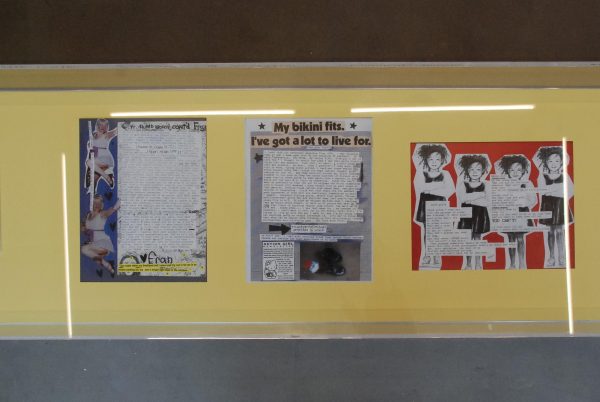
In an entry titled “My bikini fits. I’ve got a lot to live for (Fran gets snotty),” Duncan reflects on finding an old “Seventeen” magazine advertisement equating teenage success with appearance and milestones like graduation and prom.
“I realized there really are still people today that follow the same logical thought progression as that ad,” Duncan observes. “It’s sad. Scary even.”
Later in the piece, Duncan acknowledges feeling constrained by her surroundings while rejecting patriarchal expectations. Written in the informal, confessional style typical of DIY grrrl zines, the entry captures anxieties about growing up in a male-dominated, image-conscious culture. Its candid tone makes the message especially resonant considering its 1990s context, drawing younger readers to the activists’ crowd of third-wave feminists.
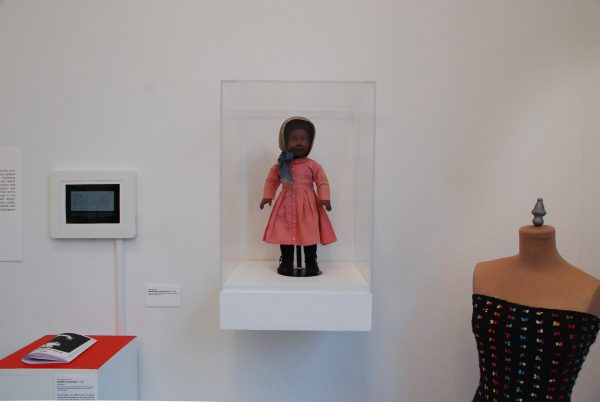
Nearby, a glass display case mounts Addy Walker, the first American Girl doll of color, released in 1993. Part of the company’s “Historical Characters” series, Walker was created to educate children on Civil War history through her experience of being born into slavery. As noted in the text beside the display, dolls are often among the first role models that girls encounter, shaping early understandings of the female experience. American Girl’s brand and inclusion of stories like Walker’s demonstrates a growing recognition of intersectionality in the late 20th century.
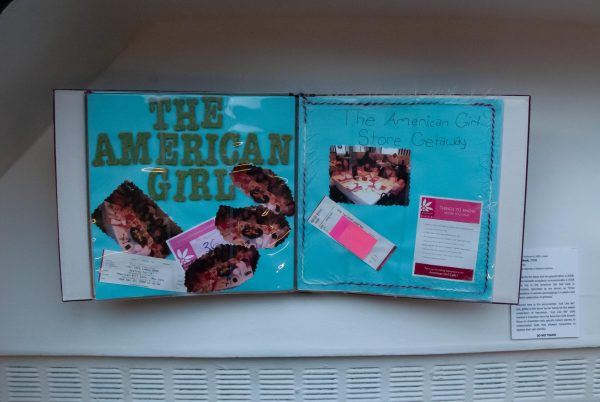
Centered in front of the exhibition’s large windowsill lies a sky-blue scrapbook full of family photographs. Puffy sticker letters spell out “THE AMERICAN GIRL” across its pages, which hold decorative, scissor-cut edges and cutouts of candid family moments. Created by Rebecca Kaufman and her grandmother in 2008, “Scrapbook” is a piece that commemorates a family trip to the American Girl Doll Cafe — a place Kaufman describes as “three generations of women participating in a playful and youthful celebration of girlhood.” The dolls featured are from the “Truly Me” line, marking the brand’s shift toward customization and allowing consumers to explore their own identities. By placing “Scrapbook” in context with riot grrrl culture, the exhibition links personal and formative experiences of femininity with the larger activist movement.

Mounted on a mannequin head against a white wall is the yarn-knitted “Pussyhat.” Its soft, pink fabric and pointed corners resemble cat ears, a pattern shared between volunteer crafters during the 2017 Women’s March. Protesters wore these hats as symbols of collective resistance to President Donald Trump’s misogynistic policies, and the Pussyhat’s inclusion in the exhibition bridges DIY approaches in 1990s feminist organizing to modern movements for reproductive rights and gender equity.
“DIY Grrrl” speaks to the complexities and possibilities embedded in girlhood, tracing how personal expression has long been intertwined with political resistance. From riot grrrl’s grassroots activism to modern debates surrounding bodily autonomy in the overturning of Roe v. Wade, the gallery situates femininity within a broader history of feminist movements shaped by struggle and defiance against the status quo.
By placing artifacts that document how young women have confronted and redefined femininity within mainstream institutions, the exhibition preserves the legacy of DIY culture and invites students to reflect on how feminist histories are remembered, challenged and reimagined. In doing so, “DIY Grrrl” affirms that female creativity and activism are a political and cultural space that have and always will demand critical engagement.
“DIY Grrrl: Constructing, Disrupting, and Reclaiming Girlhood in the 1990s” will be on display until March 7.
Contact Macey Zhang and Yukki Lubin at [email protected].