























Every year, the Department of Photography and Imaging’s senior thesis exhibition marks the final chapter of four years of creative and technical growth at the Tisch School of the Arts. The DPI exhibition opened on Feb. 6, where the artwork of 46 students filled the halls of 721 Broadway with dreamlike landscapes and intimate portraits.
Curated by Tisch adjunct professor Kalia Brooks, the exhibition spans the eighth floor gallery and the ground floor of Gulf + Western Gallery. Together, these works explore nostalgia and storytelling, offering a window into how these photographers create meaning with their cameras. Four seniors spoke to WSN about their projects, which position photography as a personal archive and a source of public conversation.
“Look Up” by Sienna Geddes
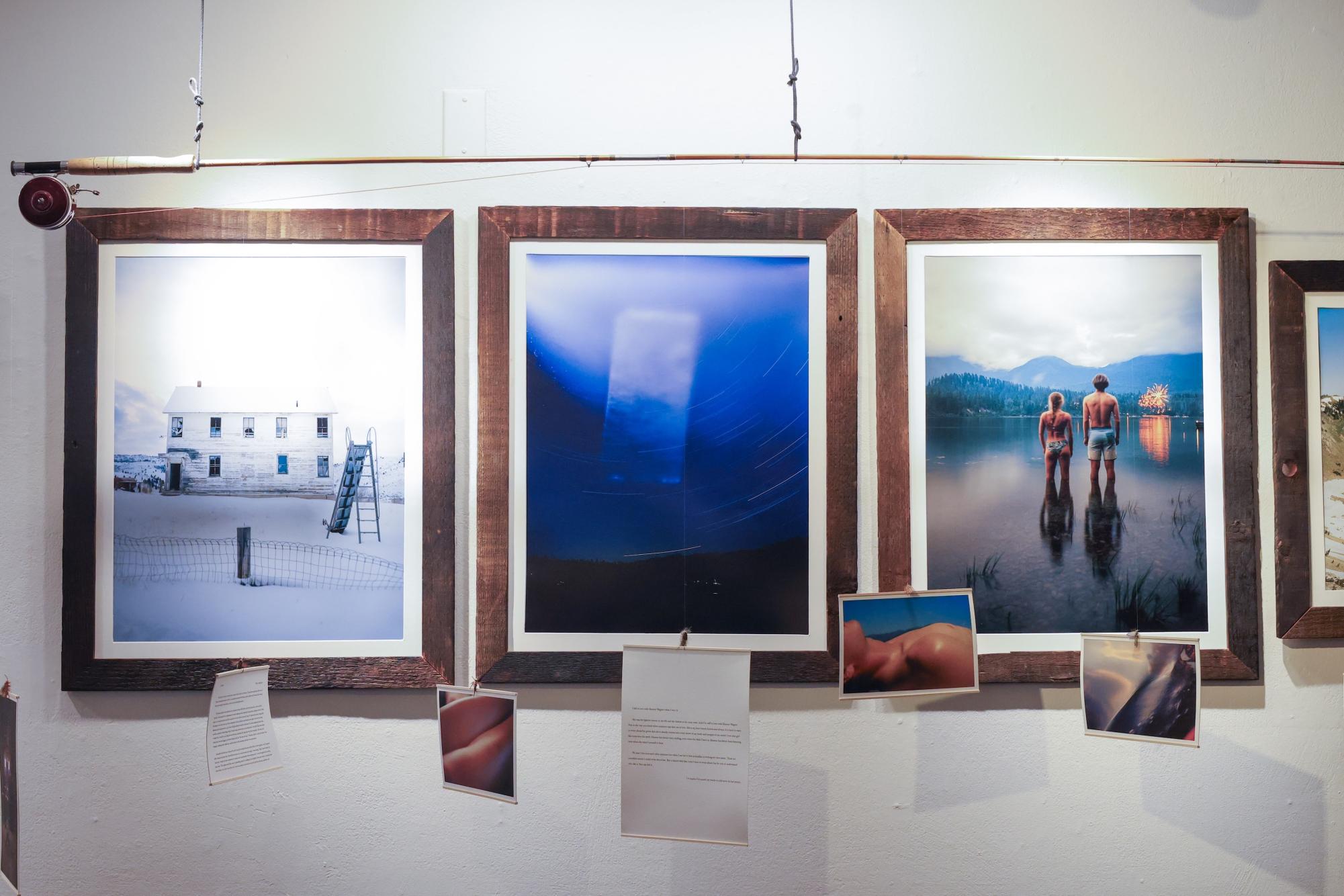
Sienna Geddes crafts a quiet meditation on memory, time and home, rooted in the landscapes of Montana in “Look Up.” Geddes encapsulates the beauty of rural areas, her photos ranging from a snowy, abandoned schoolhouse to a pair of teens knee-deep in a river, staring at fireworks. Shot entirely on film, the process was very physically rigorous with Geddes needing help from family members to lug her camera equipment up and down the Montana mountains. For Geddes, the photos are an “exploration of how memory shifts over time,” where each recollection becomes a little more exaggerated.
“Every time you re-remember something, the memory becomes a little bit more different, Geddes said. “The fish was two inches bigger, or the drive was two hours longer.”
Influenced by the block universe theory and the concept of time as a river we move through, Geddes’ images test how far memory can stretch while still feeling true. She subtly pushes against cowboy-centric representations of the American West, offering instead an intimate, lived-in perspective.
“I really wanted people to have the opportunity to experience a memory, and to step into this book installation that I had made,” Geddes said. “To go back in time and have some thoughts about their own childhood or their kids.”
“Guilty Conscience” by Em Higgins
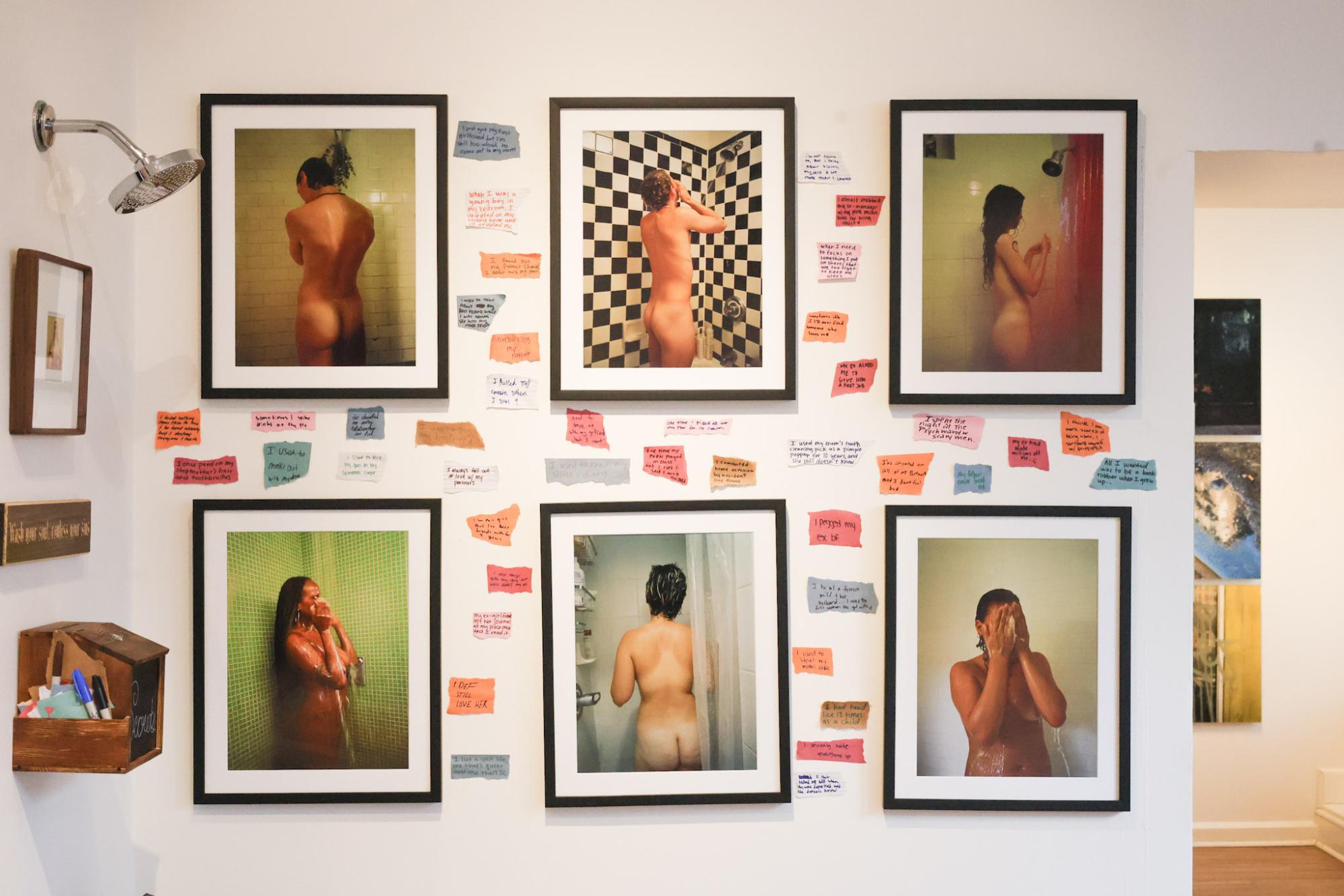

In “Guilty Conscience,” Em Higgins turns the everyday ritual of showering into a potent site of confession, merging their Christian upbringing with a vulnerable documentary practice. The thesis begins from a formative memory — an ex-boyfriend confessing their secrets in the shower — and expands into a broader question.
“I feel like Western society is so ingrained in confession and the art of confession,” Higgins said. “I started thinking about, how do we cleanse ourselves of guilt and shame, and how do we wash off daily stressors?”
Higgins photographs close friends in their own showers, insisting that each photo be taken in the subject’s own living environment to serve as a more personal confession space. Some images include partial nudity while others have subjects’ backs facing the camera as water streams down their bodies. During each session, Higgins asked their friend to confess a secret — these written disclosures were later collaged around the portraits.
“It was really interesting to get those responses,” Higgins said. “I think it creates a coterie of solidarity and consolation. It’s just nice to know that people are with you and to feel like you’re not so evil.”
The physicality of Higgins’ thesis stands out. The installation’s pew, showerhead, confession box and a Polaroid of Higgins themselves — partially nude in a priest costume — complicate power and vulnerability, as they look over and protect their loved ones while also confronting the viewer head on. Spectators can quite literally kneel and confess any and all secrets they hold. In Higgins’ project, tender reckonings with guilt transform secrecy into shared, cathartic relief.
“To Relive Old Dreams” by Jerry Li

Jerry Li’s project is a deeply personal act of remembrance and return. Large-format photographs and carefully constructed images function as surrogate shrines, standing in for his relatives whose resting places and records were erased during the Chinese Cultural Revolution.
“I’m reconciling with my grandmother’s fading family history and our ancestral city of Suzhou in China, which we’ve lost touch with over the years,” Li said.
The emotional core of the project lies in Li’s recognition that photographs can be fragile proof of existence. Li’s attentive use of scale, light and sequencing turns the gallery into a reflective, almost devotional space. The result is a resonant portrait of heritage recovered through photography. Along with landscape photos that trace his ancestors’ footsteps, the middle of the exhibit hosts a physical shrine dedicated to his great-grandparents, composed of photographs and incense.
“People should think about where they’ve come from,” Li said. “I think as long as you have pictures, looking back at those albums is enough.”
“Collective Fiction” by Paras Musallam
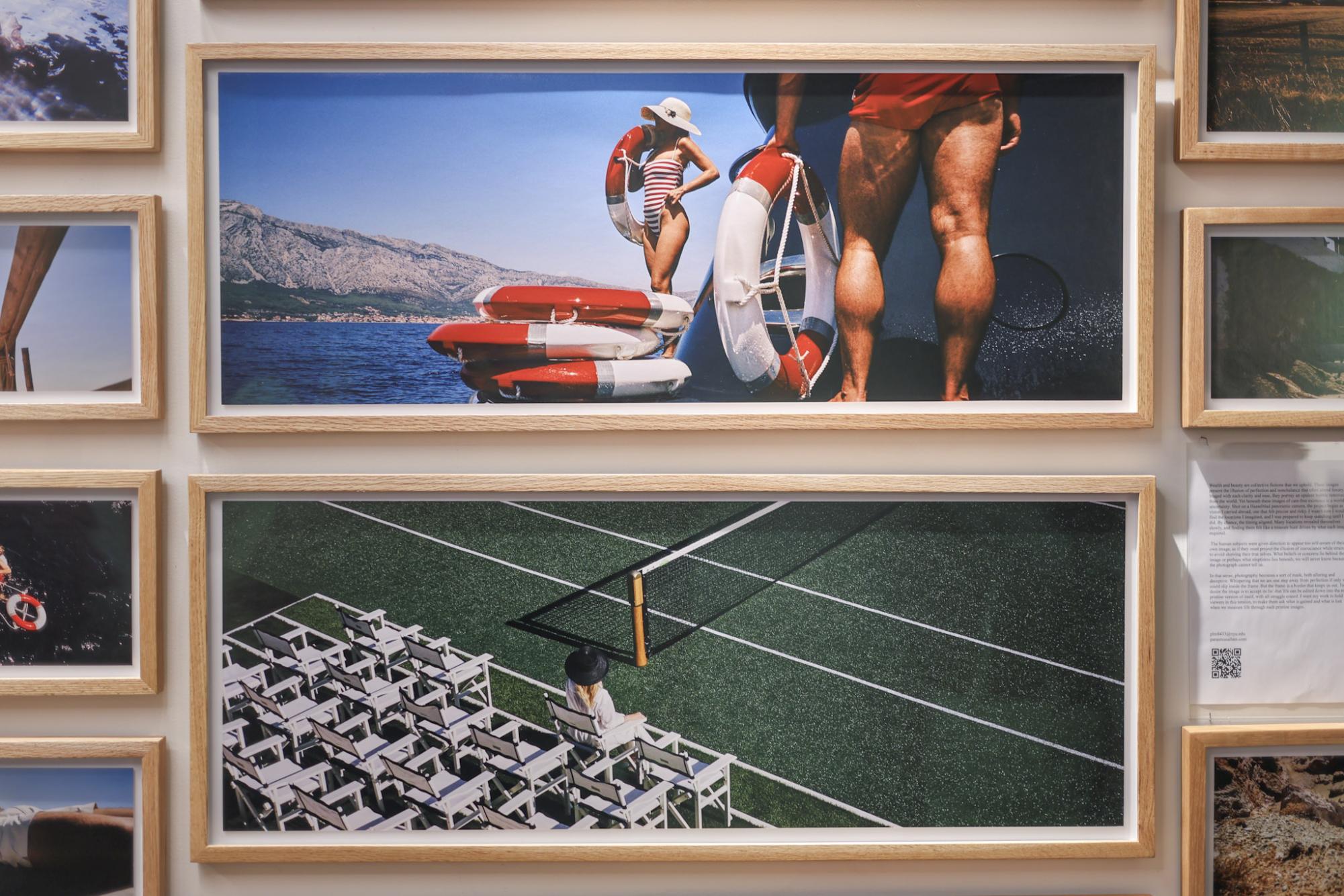
Paras Musallam’s “Collective Fiction” is a lush, cinematic exploration of desire, class and constructed identity, deeply inspired by film. Drawing from the 1999 film “The Talented Mr. Ripley,” Musallam builds a world where beauty and unease coexist. Sun‑drenched coastal scenes in Greece and Croatia evoke luxury and perfection with subjects poised in swimsuits and sunglasses on private boats.
“I had a very specific idea for each photo that I had planned,” Musallam said. “I was determined to find the setting that I had envisioned in my mind.”
Working with friends and family, Musallam staged each frame with the precision of a filmmaker, often treating the shoot and subjects as actors reading a script. She explained that viewers have compared the work to “White Lotus” — visually pristine, but fusing glamour with psychological tension and a forced confrontation with class.
“That’s something that I was aiming to do — this overall theme of beauty and perfection, but an underlying sense that something is sinister,” Musallam said.
The 2026 DPI BFA Exhibition will be on display until May 17, 2026.
Contact Rhea Kohli at [email protected].
Garret • Feb 13, 2026 at 6:48 pm
This is sick!