




















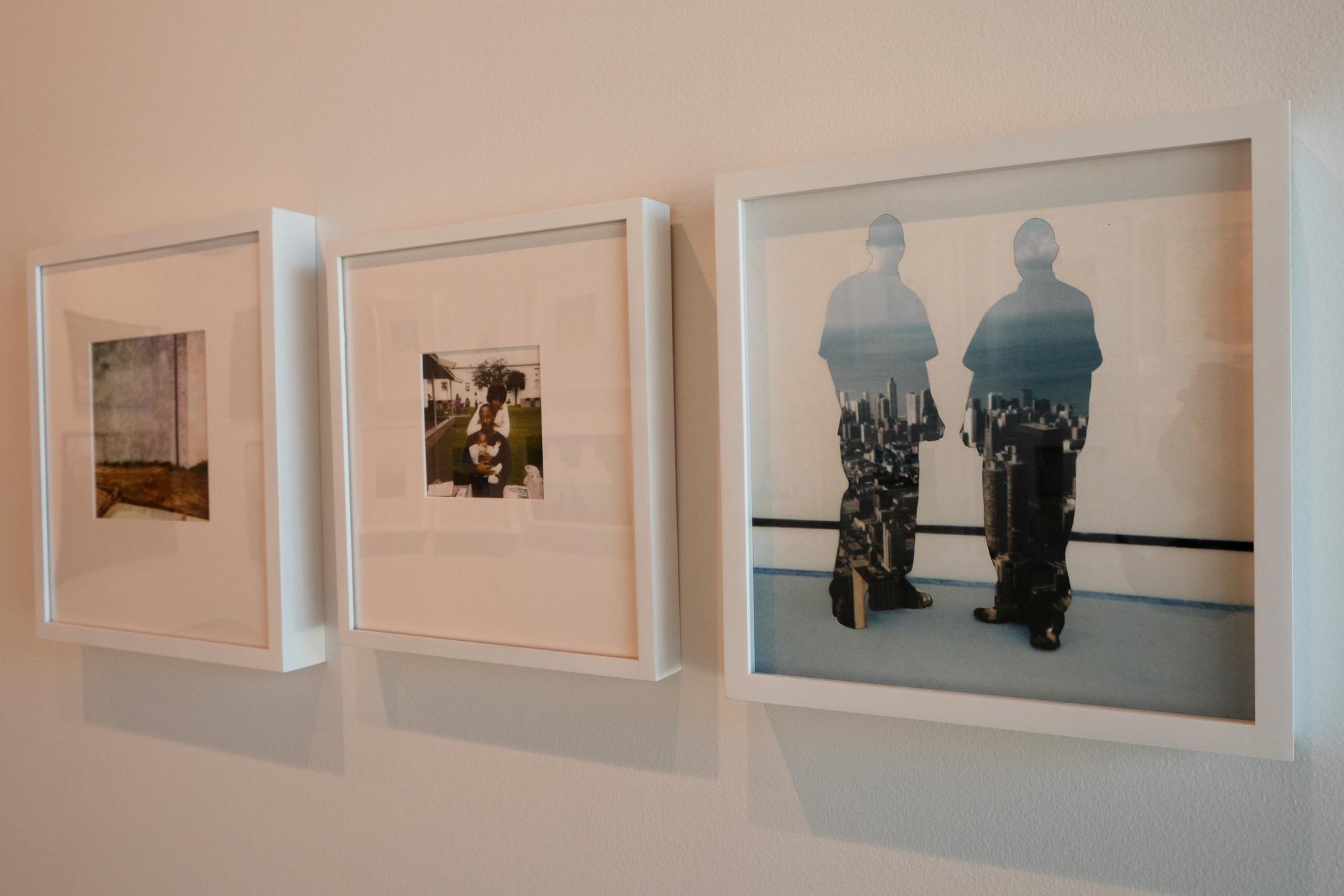
Photographs of towering skyscrapers edited into the silhouettes of figures and portraits layered with identification cards jump out against the plain white walls of the Cooper Square Gallery at NYU. The images have no titles, no artist names and no accompanying descriptions to guide interpretation. Yet, as viewers move through this exhibition, the photographs come together in a powerfully human narrative.
“Wherever There is Light” showcases the work of four formerly incarcerated artists and their experiences within the penal system. Led by photographer Larry Cook and featuring work from José Diaz, Don “Ike” Jones, Vernon Ray and Akeil Robertson, these artists share images that explore the impact mass incarceration has on identity, self-expression, family and community.
Beginning in 2020, Cook, who founded the exhibition, constructed a studio and exhibition space in Los Angeles and led a cohort of five photographers with carceral experience to share their craft and stories. Starting in 2022, Cook collaborated with the TILT Institute for the Contemporary Image to create a Philadelphia cohort of artists with the same purpose of sharing their experiences through image-making.
Divided into three sections — “Artist archive,” “The Other Side of Landscape” and “Horizons” — Cook’s work featured in the exhibition work together to disrupt the carceral eye by combining lived experience with imagined liberation. “Horizons” consists of photographs of incarcerated men within the physical backdrop of the prison. Instead of reinforcing the invasive tradition of prison photography, however, Cook then hollows out their silhouettes, ridding them of identifiable facial or bodily features, and replaces them with the images of city skylines, mountainous plains and sand dunes to envision post-carceral freedom.
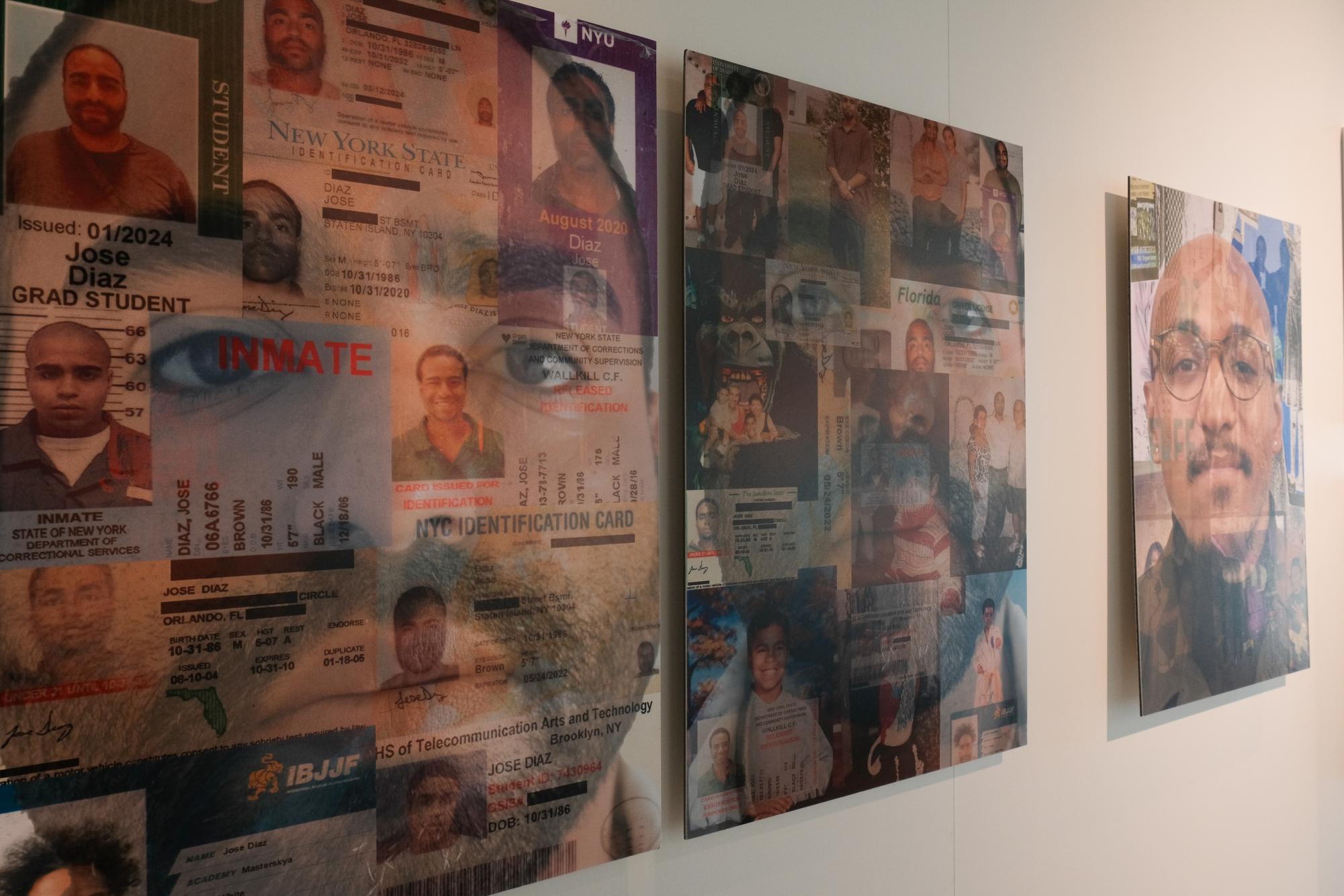
The back of the exhibition features Diaz’s work, in which he utilizes familiar documentation from daily life to juxtapose how former state documentation fails to fully capture the essence of one’s personality. His duo of portraits,“The State of Me” and “Beyond the State of Me,” defines the section. Both begin as a self-portrait but are then juxtaposingly layered with either a semi-translucent collage of government-issued ID photos or baby photos, family snapshots and school photos. As a formerly incarcerated individual, documentation is intertwined with surveillance, and Diaz’s collaging showcases how people with conviction histories are much more than the government IDs associated with their prison time.
Continuing to contemplate surveillance, Robertson explores imprisonment’s impact on identity and self-expression on his project, “Blues.” Robertson depicts a series of images of his prison uniforms positioned in various locations across the United States, emphasizing the tension between his freedom as a Black man and deep fear of returning to a prison system that systematically targets Black and brown communities.
At its core, “Wherever There Is Light” positions photography as a collective practice rooted in community and dialogue rather than an individual pursuit. Throughout the expansive artwork in the exhibition, each piece holds an approach to how image-making can reshape carceral experiences and how the camera can become a tool for introspection, activism and self-definition.
After New York, the exhibition will move on to Washington, D.C., landing at Howard University. “Wherever There Is Light” will remain open until Feb. 27, 2026 and is open to the public during the gallery’s opening hours.
Contact Mariana Arboleda and Macey Zhang at [email protected].