














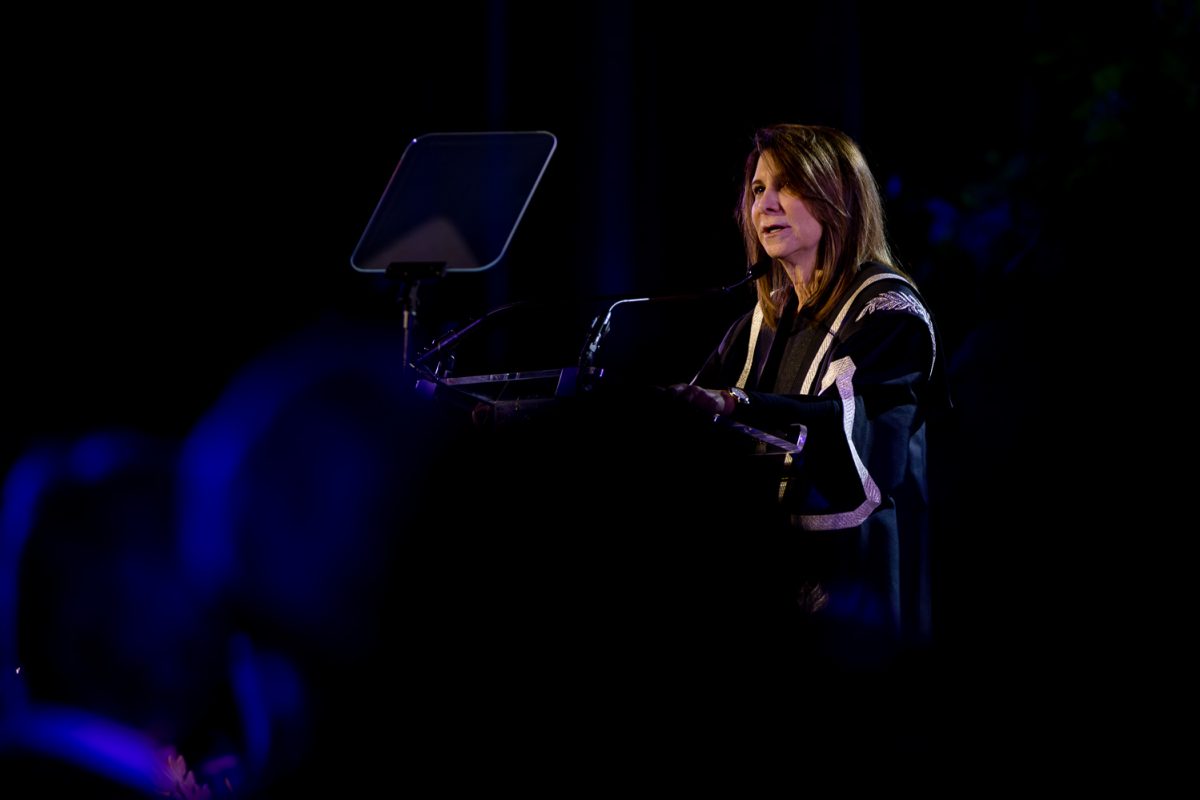

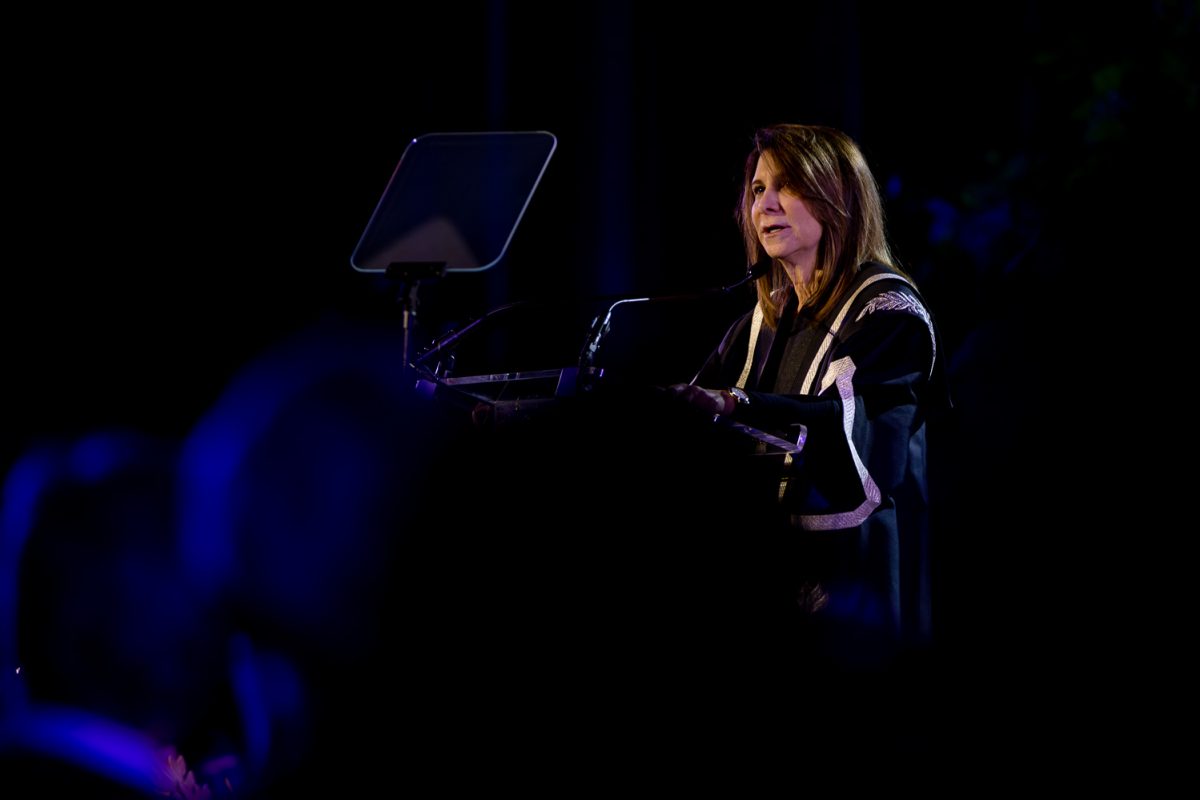













At the annual Tisch Gala celebrating the work of students and alumni earlier this month, one honoree stood out from the rest. Cristóbal Valenzuela, co-founder and CEO of Runway — a startup that uses generative artificial intelligence to create video content — was recognized for his contributions to the field of AI. By honoring Valenzuela, the university took a clear stance in the AI-generated art discourse. But it doesn’t stop there.
Just three days prior, The Hollywood Reporter announced that NYU’s Hypercinema Lab — a research initiative that serves the Film & Television, Interactive Telecommunications and Interactive Media Arts programs — will include AI video generation tools courtesy of Runway on “a generous if not unlimited basis.” Though NYU’s Kanbar Institute of Film and Television itself is not currently associated with the initiative, the lab’s resources are available to undergraduate and graduate students across the university.
Giving film students limitless access to this technology as early as their first year with no comprehensive ethics education is detrimental to the next generation of artists that NYU claims to be fostering. The partnership is also a slap in the face to Tisch contract faculty, who recently went on strike, as one of their demands being increased protections against AI.
The debate over AI’s place in art — if any — is developing as rapidly as the technology itself. But this partnership is not just caught up in the ethical question of what counts as art — it’s steeped in Runway’s recent copyright controversy.
A February lawsuit alleged that the company used data-scraping tools on an array of YouTube content to train its program without creator consent. A leaked internal document obtained by 404 Media revealed this was part of a companywide effort to pirate thousands of videos for the purpose of improving Runway’s generative AI capabilities. Given this track record and larger industry trends, it’s plausible that the company will train software on students’ work at one of the top art schools in the country, reaping data from vulnerable young artists who aren’t acquainted with the ins and outs of copyright law.
The counterargument to anti-AI attitudes in higher education often goes like this: This new technology will inevitably shape the future of the economy, and universities should prepare their students accordingly. But partnering with a corporation that has a current valuation of $5.3 billion and a documented history of murky ethics is not updating students’ toolkits — it’s making them the tools.
In a future where generative AI is ubiquitous at art school, the postgraduate world will be filled with AI-driven monopolies that have already gleaned what they need from recently graduated artists. Soon enough, NYU will be advertising an advantage in a job market that it is actively complicit in destroying.
AI advocates tout convenience and efficiency as the technology’s main benefits, but this obsession with efficiency seems to be a misguided focus when it comes to art. As major media companies merge and the amount of content at our fingertips grows exponentially, we seem to be forgetting what and who is behind our favorite works of art. Tisch should be focused on encouraging emerging artists’ unique visions and helping them hone their individual processes, not streamlining human emotion to increase shareholder value.
Since the earliest special effects, creative human solutions have stretched the limitations of film. This is where the real learning happens. Collaborative efforts to problem solve and deliver a creative vision that resonates with audiences are the beating heart of filmmaking as a craft. It can be seen in everything from the groundbreaking stop-motion techniques in 1933’s “King Kong” to the thousands of VFX artists behind the “Avatar” franchise. The inherent humanness of filmmaking is why we connect with it so deeply.
In the article announcing Runway’s collaboration with NYU, Valenzuela compares Tisch’s AI partnership to film programs’ adoption of Adobe subscriptions when that technology first came out — in his words, “For newer generations, this is the new normal.” But unlike Adobe editing tools or even CGI programs with elements of AI in their functioning, there is no skill, learning process or worthwhile creative discoveries that come from prompting a computer to spit out a result for you.
Whether we like it or not, some AI tools will find their way into filmmaking — many already have. But generative AI specifically and its logic of exploiting artists’ work and mangling the process of human craftsmanship doesn’t have to be an inevitable truth. In order to protect the sanctity of creativity in the sectors where we rely on it most, we must reject the notion that big, profit-minded entities should determine the future of an industry that thrives on human connection and empathy.
It’s time for NYU to reckon with its place in the new landscape of the art world. Technology will advance, and the university will no doubt constantly struggle to keep up. But Tisch must always remember that its true investment is in human storytelling. If unchecked AI tools from shady corporations continue to creep into curricula, all that will do is highlight the increasingly visible dissonance between NYU’s corporate interests and the community of artists it promises to uplift.
Contact Alice Rogers at [email protected].