




















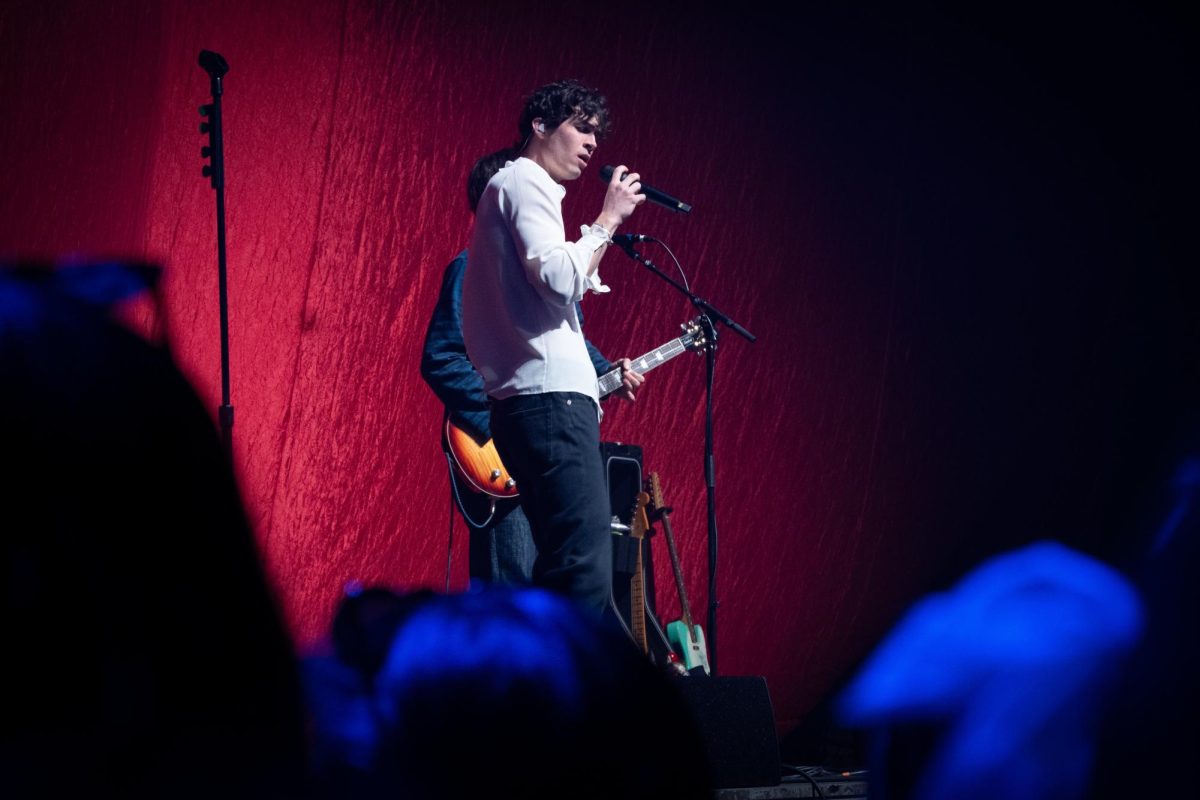
Like much of Generation Z, Aidan Bissett spent his COVID-19 quarantine posting on TikTok. With ample knowledge of guitar and a gravitation toward the “shared emotional response” of music, his videos ranged from acoustic Wallows covers to personable vlogs documenting his music-making process, some of which Bissett now admits is “cringe shit.” But unlike the creators using TikTok to simply pass boredom, Bissett used it as a strategic path to stardom.
“I have no choice if I want to do this,” Bissett told WSN. “The only way to get eyes and ears on the music was to post across social media.”
His steady flow of catchy, indie-pop songs on the app caught the attention of Capitol Records in 2021, propelling his career from makeshift bedroom recordings in Tampa, Florida to national tours. His debut record, “shut up and love me,” released last July, offers a defined vision for the singer, leaning toward an alternative pop-rock sound akin to The 1975 or Role Model. The pulse-pounding synths and guitar riffs on singles like “ricochet” and “are we in love yet?” are electric in concert, where Bissett’s charming stage presence stands out as a keen indicator of his passion.
Currently opening for alternative pop band LANY on tour, Bissett played his first arena show at the Barclays Center in Brooklyn on April 11. Following the show, Bissett joined WSN on Zoom from his hotel room to speak about his exciting trajectory.
This interview has been edited for length and clarity.
WSN: How was playing your first arena show, and how does touring with LANY differ from a normal headlining set?
Bissett: It was insane. Ever since I started making music, playing shows of that size has just been a dream. Stepping on that stage felt like fulfilling some sort of weird prophecy.
It’s definitely different than headlining a show. You’re having to introduce yourself to new people and also win them over by the end of your short set. I like opening because it’s a challenge, and I tend to be motivated by challenges.
WSN: Are there any artists that help influence your performing style?
Bissett: 100%. I watch a lot of old rock videos like The Rolling Stones, Led Zeppelin and a lot of David Bowie’s stuff. They didn’t have video walls and stuff like that. They really had to command the crowd with their presence. Being able to do that is really important especially when you’re doing an opening slot or weird headline where you don’t have a lighting package. It’s important to be able to carry the show on your own back, rather than relying on big-scale production.
WSN: Throughout your career, you’ve kept a loyal fanbase — there are probably even fans coming out to LANY shows just to see you. How would you characterize that bond and how has it felt to see it grow over time?
Bissett: It feels very intimate and personal. I feel like I recognize a lot of them, and they travel to shows, which is so crazy. There were a couple people at the Nashville show who drove 24 hours from North Dakota. You wouldn’t make that drive if the music didn’t leave a lasting impact on you. Seeing that impact is really moving, because that’s how I got into doing it. The way that music affects me is how I want to affect people. I want to give them that same sort of release and response.
WSN: In your debut album, you share a lot of personal stories about heartbreak and grief. When you’re writing songs, how do you draw the line between fully exploring those emotions and also knowing that they are going to be released for millions of people to hear?
Bissett: I weirdly don’t have much of a wall when it comes to that. I’m totally fine being super personal and just allowing people to read it as they will. I tend to be fine with exposing myself. The only time I might draw the line on that is if it’s at the expense of somebody else’s emotions. I don’t ever want to paint somebody in a horrible light, unless they are just a bad person.
WSN: You’re a part of this specific generation of artists that emerged amid COVID-19, which meant you had to rely on TikTok to make a name for yourself. There sometimes seems to be a stigma around being a TikTok artist and using the platform to promote your music. How do you find that term and idea?
Bissett: Everyone at some level is online, so it’s hard to be pretentious and be like, ‘I’m not going to be online.’ When it comes to pop music in general, social media is the greatest outreach. And do I think there is a stigma? Yeah, for sure. And it’s interesting, because my relationship with it is that I want to use the tools that are at our service, but at the same time, I don’t really want to sell my soul to the tool.
A lot of artists now are toeing that line where it feels like it’s becoming less about the music and more about social media — that’s where the stigma comes in place and maybe holds some validity. Honestly, the point of the music should never be virality. You wrote this song because you felt a certain way about something, and now it’s being turned into music for people to share that experience. But that’s definitely a little pretentious to say, hence why I still use social media. People should really just remember what the point of making music is, so that the stigma doesn’t take over.
Contact Amelia Knust at [email protected].