


























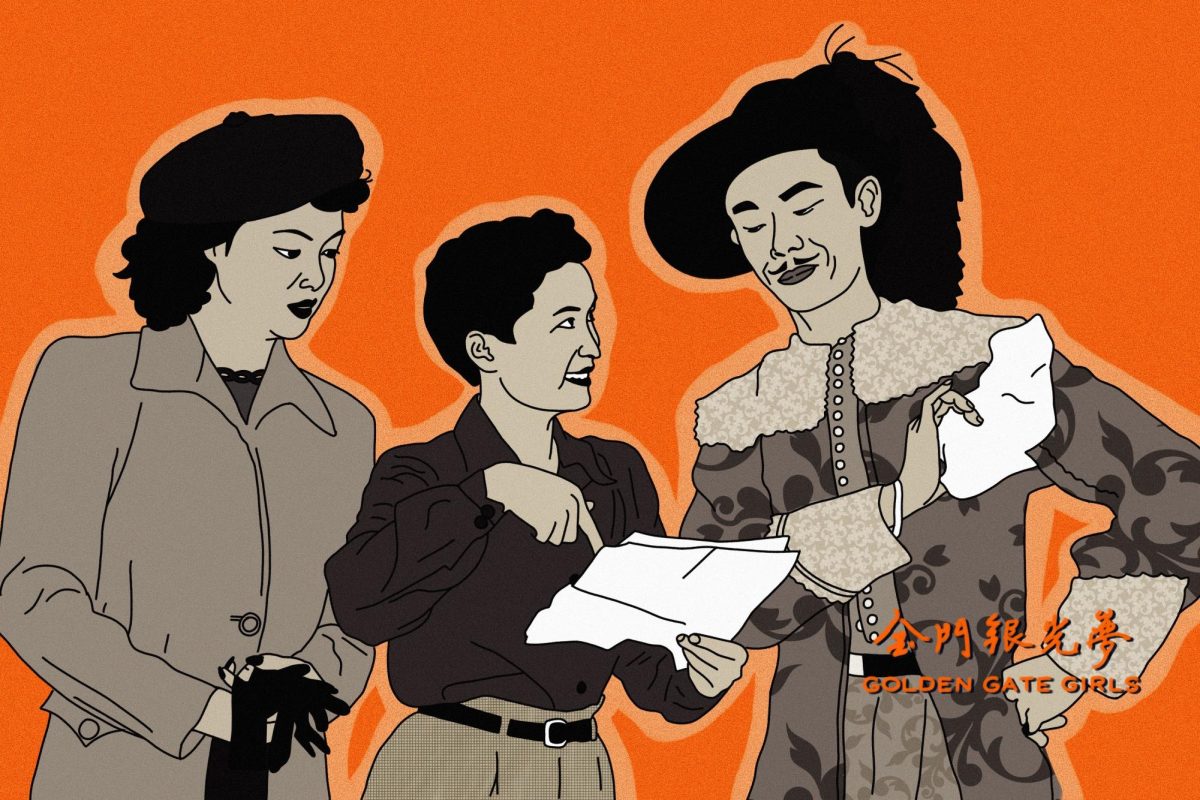
Men have always dominated the film industry. Thankfully, archival work has revealed influential women’s stories that have been lost or shut away. The 2013 documentary “Golden Gate Girls” shines a spotlight on Ng Kam-ha, or Esther Eng, a revolutionary lesbian and Asian American silent film director.
Born in 1914, Eng grew up in San Francisco, California. She quickly fell in love with film and worked at the box office of the historic Mandarin Theatre. After working with her father at his Kwong Ngai Talking Pictures Company, Eng founded her own production company, Silver Light, in 1948, where she produced 10 feature films in both Hollywood and Hong Kong. Her filmography consisted of romance and war films relevant to the time period, such as “Heartaches” (1936), which tells the tragic story of a romance between a young opera star and an aviation student.
Despite being an open lesbian, the authority and respect Eng commanded earned her the nickname Brother Ha among colleagues. No one questioned that she wore pants and collared shirts instead of dresses.
“Golden Gate Girls” comes to life through stories rediscovered by Chinese filmmaker S. Louisa Wei. In 2009, valet shop owner Jack Dooley found a box of 600 photographs in a dumpster near San Francisco International Airport. He sold it to pharmacist and movie lover James Wong, who allowed Wei to scan the photographs and discover that the woman featured was Eng. Through interviews with old colleagues, Wei retraces Eng’s steps and pieces together her life story. We come to learn about Eng’s influence in a time of gender inequality, as she stood among her male colleagues without acknowledgement of difference.
But “Golden Gate Girls” doesn’t just spotlight the highs of Eng’s life and work. We also see the fragility and near-disappearance of her legacy. Almost all 10 of Eng’s films are lost — meaning the original negatives and copies are damaged or misplaced — and history books often neglect her story, instead highlighting the success of her white colleagues like Dorothy Arzner and Ida Lupino.
Eng’s stories have failed to gain recognition in the film community. Eng went unmentioned in frequent collaborator Hu Peng’s memoir and was improperly credited in their 1961 film, “Murder in New York Chinatown.” While Chor Yuen is listed as the writer, he disagrees with this credit in “Golden Gate Girls,” claiming Eng wrote and directed it.
Despite this erasure, Eng’s legacy held strong in China and stands today in New York City, where her restaurants and friends lived. After moving back to the States, she opened several restaurants in the city, including Bo Bo in Chinatown.
Every interview and accompanying photograph in “Golden Gate Girls” presents Eng with a lively presence. Even the older interview subjects describe Eng and their interactions with her as if they occurred yesterday. Wei’s film personifies Eng’s lasting impact, proof that gender nonconforming LGBTQ+ women existed and thrived.
Today, bringing stories like Eng’s into the history books is crucial. In a time where politicians are actively attempting to erase history, it’s as important as ever to show that marginalized people have and will always exist. The rediscovery of Eng’s photographs was lucky, but it also reminds us that no matter how successful someone is, they can still be targets for erasure at the hands of tradition-seeking politicians who are afraid of change.
“Golden Gate Girls” is available to stream on Kanopy.
Off the Radar is a monthly column surveying overlooked films and shows available to students for free via NYU’s streaming partnerships.
Contact Ellie DaSilva at [email protected].