























Before we had senses of individuality and healthy coping mechanisms, we had the female protagonists in the books we read. The ones who taught us it was OK to be ambitious, messy and completely obsessed with pink cupcakes. These girls raised us from beyond the page, pushing us to be unapologetically ourselves. If you’ve ever had a personal issue with any of us, blame them!
Stargirl from “Stargirl”

This pull is honestly a little bit more revealing about me than I’d like to admit. Unfortunately, I was the target audience for Jerry Spinelli’s young adult novel “Stargirl.” While you could certainly argue that she embodies all the classic “manic pixie dream girl” qualities — with her nonconformist sense of style and her insistence on literally being called Stargirl — all my 10-year-old self saw was a girl around my age unafraid to be her authentic self. As an introverted child, I admired Stargirl’s boldness more than anything, like her ability to play ukulele in the cafeteria during lunch without fear of being socially ostracized. While some of her “manic pixie dream girl” tendencies, like specialized nicknames and her bob, may have accidentally slipped their way into my life, her confidence luckily has too.
— Skylar Boilard, Arts Editor
Annabeth Chase from “Percy Jackson and the Olympians”
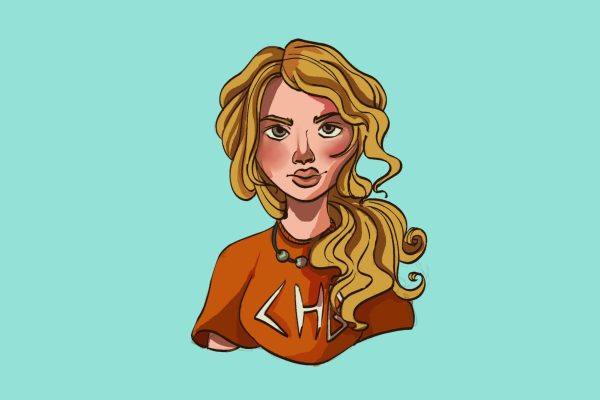
I’ve taken a hundred different “Who’s your godly parent?” quizzes, always manifesting Athena as my result. This weird craving for BuzzFeed’s validation stems from my childhood desire to be just like Rick Riordan’s Annabeth Chase. From outsmarting monsters to navigating deadly and confusing labyrinths, Annabeth proved that intelligence is just as powerful as the ability to manipulate water. And let’s be real, without her, Percy Jackson would have been toast. She undoubtedly carried every single quest on her back, even if her hubris sometimes got in the way. Kind, witty and an absolute powerhouse of a fighter, Annabeth has a thirst for knowledge that inspired me to always be curious. Her ability to save the world with nothing more than a plan and a dagger — which is way cooler than a sword — reminded me that girls can absolutely be heroes too.
— Rhea Kohli, Fine Arts Editor
Pinkalicious Pinkerton from “Pinkalicious”
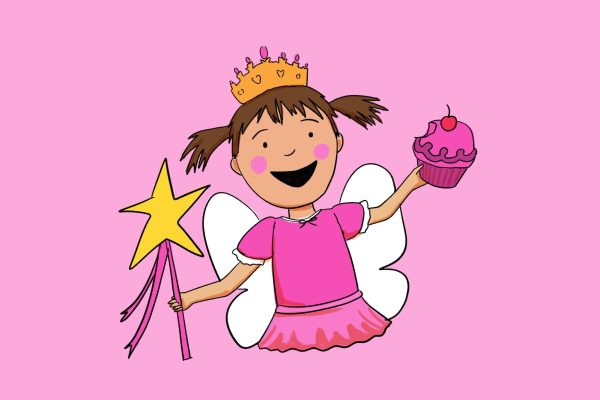
When I was a kid, equally obsessed with cupcakes and the color pink, Pinkalicious Pinkerton was my soul sister and first problematic fave. Instead of treating Pinkalicious’ story — in which she eats so many pink cupcakes that she turns pink — as a cautionary tale, I took it as a challenge and considerably increased my baked good consumption. My favorite thing about this icon is that she never learned from her mistakes, falling victim to more delusion and overconsumption in several follow-up books, including “Purplicious” and “Goldilicious.” I’m sure that “Pinkalicious” was intended to teach children life lessons about moderation and acceptance, but to me, she will always be remembered as a diva who never said no to another cupcake.
— Chantal Mann, Performing Arts Editor
Raina Telgemeier from “Smile”
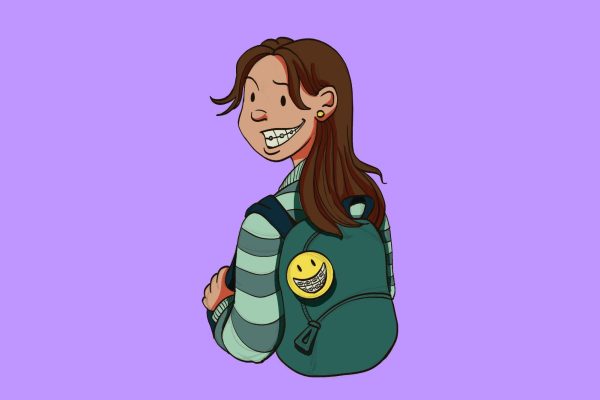
As someone who had 12 teeth pulled before I even turned 12 and suffered through the pain of being a brace face, “Smile” deeply resonated with me. The protagonist Raina Telgemeier — who shares her name and story with the novel’s author — may not have fought monsters, but she endured fake friends, puzzling puberty and dental disasters. With quirk, grit and a gift for writing, Raina eventually became a published author featured on the shelves of every Scholastic Book Fair in the country. Raina was a paragon of hope for me and my fellow casualties of the dentist’s office. Now, we both have million-dollar smiles worth flashing to the world.
— Alessa Alluin, Copy Editor
Jo March from “Little Women”

As a young girl who longed to be an author, I held Jo March as my icon. In Louisa May Alcott’s novel “Little Women,” Jo burns with the kind of hungry ambition that defied what it meant to be feminine in the late 1860s — she wants money of her own, a room of her own and a book of her own. I always respected her vulnerability and her fears of losing her freedom at a time when women were expected to simply be wives. Her rejection of romance isn’t because she’s shallow, but because she’s aware that sometimes, being dependent on others can shrink you. While she’s occasionally stubborn and selfish, Jo’s insistence on autonomy is inspirational.
— Laura Reynolds, Copy Editor
Contact the Arts desk at [email protected].